Guia do Bairro da Barra a outra Salvador, à beira-mar
Guia do bairro da Barra em Salvador: o Farol da Barra e o Museu Náutico, o Porto da Barra e seu pôr do sol, o lado atlântico, a orla reformada e onde comer.
O essencial em 30 segundos
Este guia da Barra em Salvador cobre o bairro à beira-mar na ponta da península, onde a Baía de Todos os Santos encontra o Atlântico aberto e o Farol da Barra marca a esquina. A Barra é o outro lugar onde todo mundo se hospeda, e o argumento é real: o Porto da Barra, praia de baía calma com o ritual do pôr do sol; o lado atlântico, mais bravo, seguindo até Ondina; uma orla plana e reformada que você percorre de ponta a ponta; e o Shopping Barra como âncora prática para farmácia, cinema e ar-condicionado. É também onde começa o maior circuito do Carnaval. Aqui vai o que vale o seu tempo, onde a comida deixa de ser honesta e a comparação direta com ficar lá em cima, no centro histórico.
Guia da Barra: como o bairro se organiza
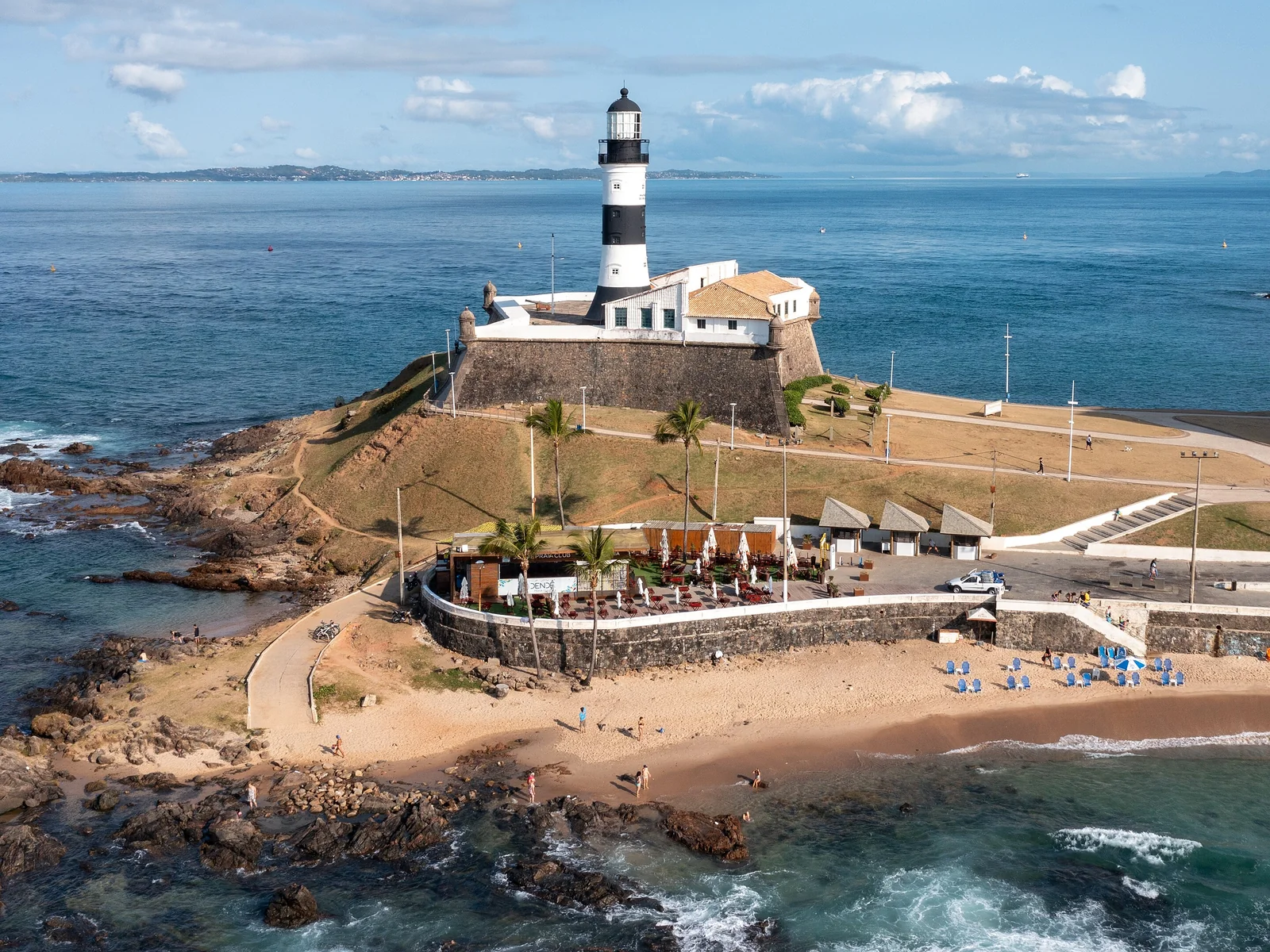
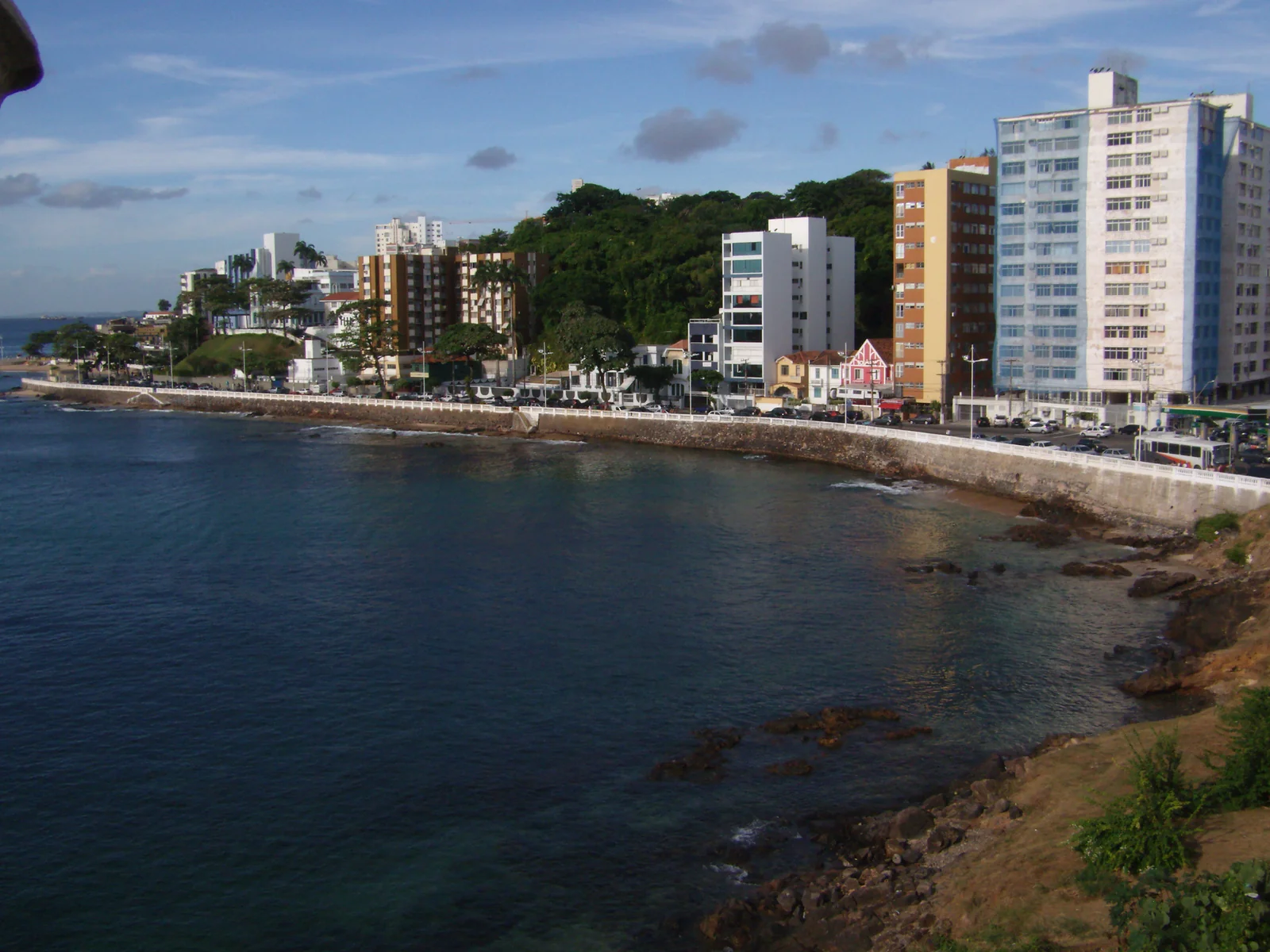
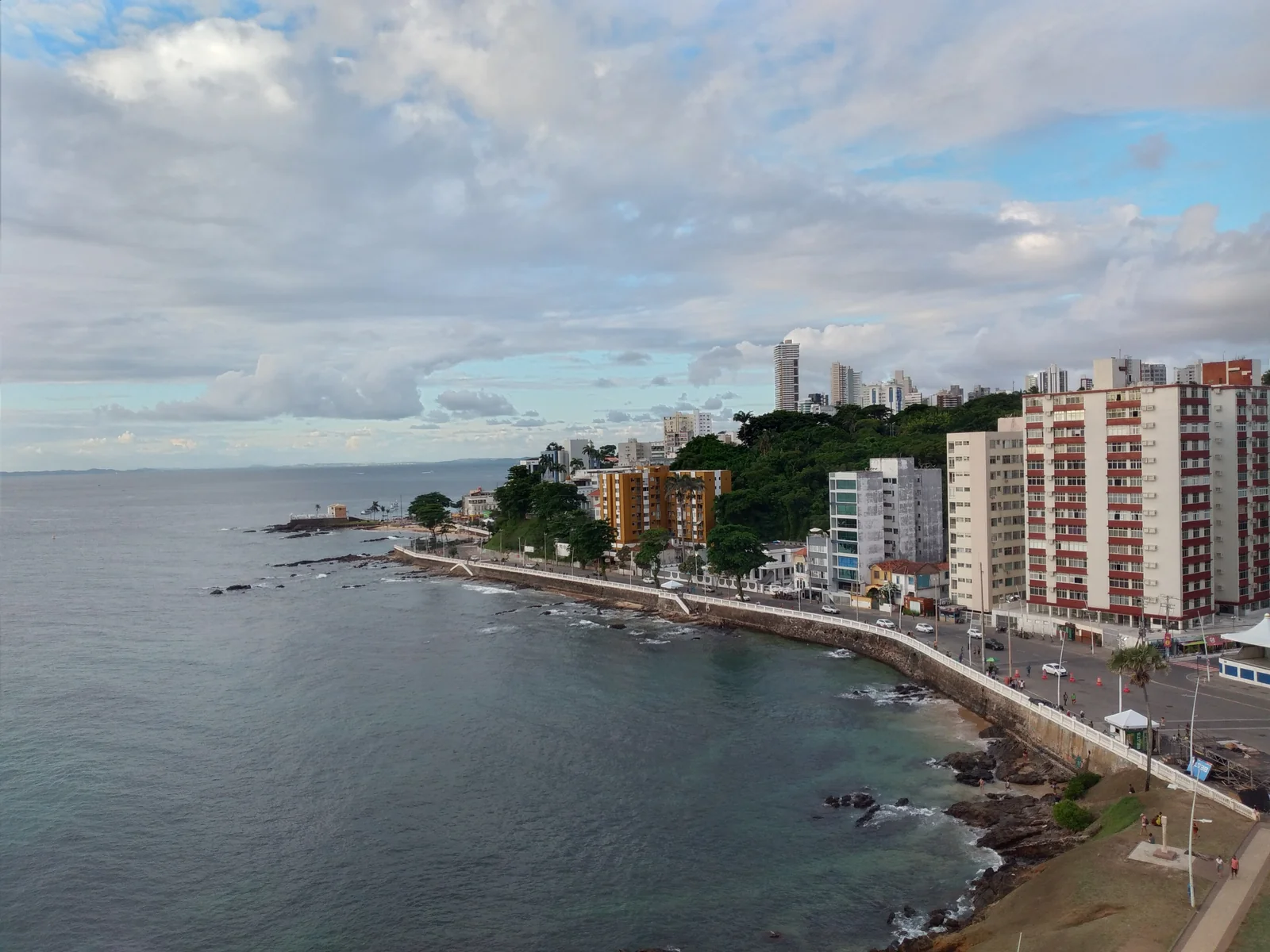
A Barra fica na ponta sul da península de Salvador, exatamente onde a grande Baía de Todos os Santos termina e o oceano aberto começa. Esse único fato geográfico explica quase tudo sobre o bairro. Fique de pé no Farol da Barra — o farol da ponta — e a água à sua direita é de baía, calma, voltada para o oeste; a água à sua esquerda é Atlântico, com ondulação e um horizonte que vai até a África. O lado calmo lhe dá o Porto da Barra e o pôr do sol famoso. O lado do oceano lhe dá a praia comprida embaixo do farol e, um quilômetro adiante, Ondina. Para dentro, algumas quadras atrás, ficam o Shopping Barra e um bairro comum de trabalho que a maioria dos visitantes nem percebe. O centro histórico — o Pelourinho, o Elevador Lacerda, o nosso canto da Cidade Alta — fica uns sete quilômetros ao norte, quinze a vinte e cinco minutos de táxi conforme o trânsito à beira-mar.
O farol e o Museu Náutico da Bahia
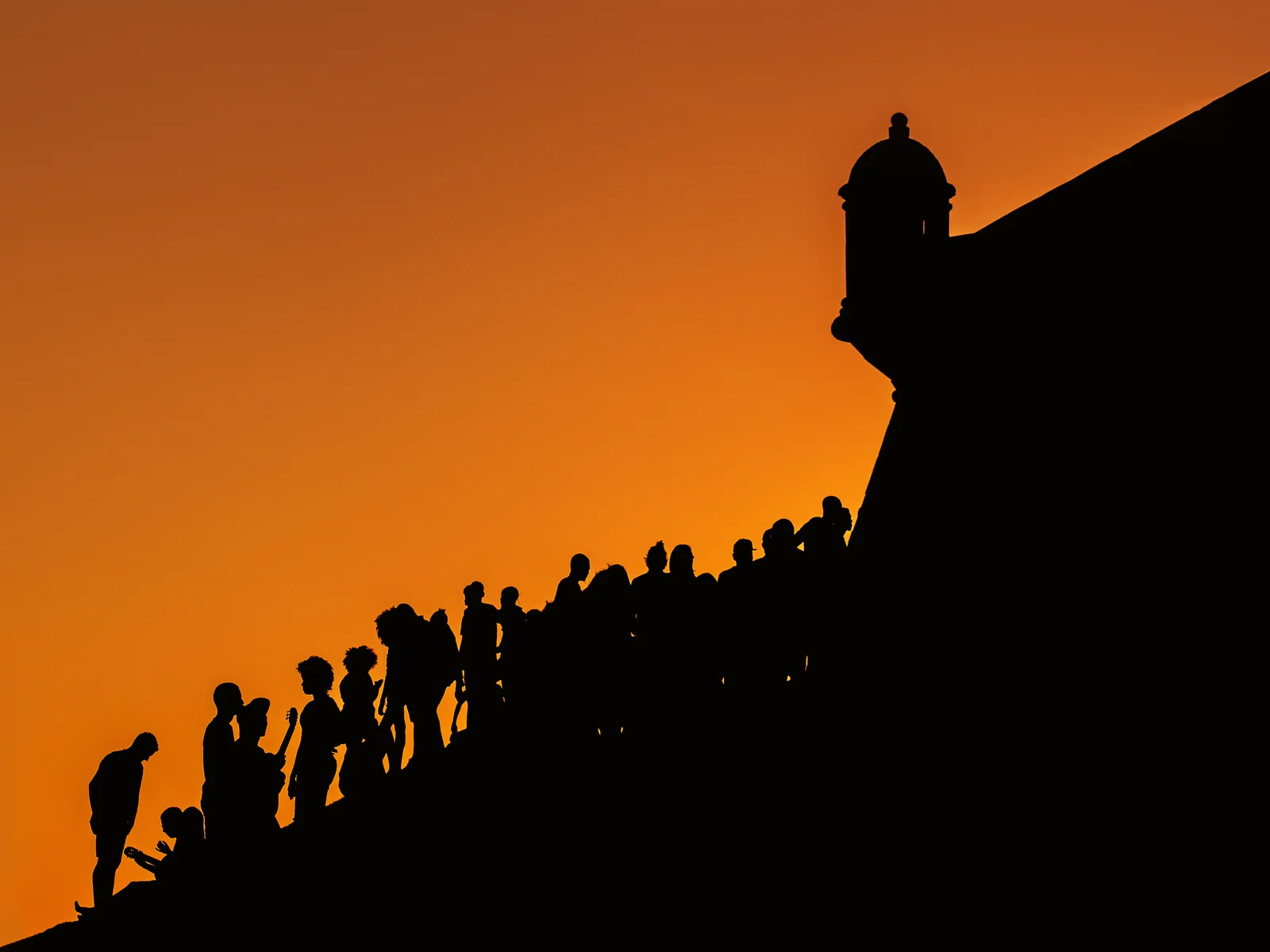
O Farol da Barra é o que todo mundo fotografa e a maioria entende errado. Não é enfeite; é um farol em funcionamento, e o mais antigo das Américas. Uma luz foi acesa aqui pela primeira vez em 1698, na ponta do Forte de Santo Antônio da Barra, queimando óleo de baleia numa lanterna de bronze para guiar os navios até a baía. A torre de faixas pretas e brancas que você vê hoje é de 1839 e ainda funciona. Dentro do forte está o Museu Náutico da Bahia, um museu marítimo pequeno e realmente bom, montado em torno de achados de naufrágios, instrumentos antigos de navegação e a história da chegada portuguesa — vale a meia hora mesmo se museu não costuma ser a sua praia. O grande atrativo, porém, não custa nada. O gramado ao redor da base do farol enche toda noite para o pôr do sol, e a plateia se justifica; o nosso guia de lugares para o pôr do sol compara esse ponto com os outros candidatos da cidade.
Duas praias, dois temperamentos
As duas praias da Barra ficam a uns cinco minutos uma da outra e mal poderiam ser mais diferentes. O Porto da Barra é a calma: uma enseada curta voltada para o oeste, com uns 400 metros, encaixada entre os pequenos fortes de São Diogo e Santa Maria, virada para a baía e não para o mar. A água é morna, rasa e parada o bastante para ficar de pé conversando por uma hora, e por isso enche de famílias, estudantes e vendedores já no meio da manhã. O jornal The Guardian já a chamou de uma das melhores praias urbanas do mundo, e numa boa tarde você não vai discordar. É praia sociável, não silenciosa — conte com uma barraca trazendo a cerveja gelada por algo entre R$ 10 e 22 (€2 a 4), alguém vendendo queijo na brasa passando por cima das suas pernas e, quando o sol enfim cai na baía, uma salva de palmas da praia inteira. Vale copiar o ritmo local: banho antes das nove, coco depois, e deixe a praia lotar sem você.
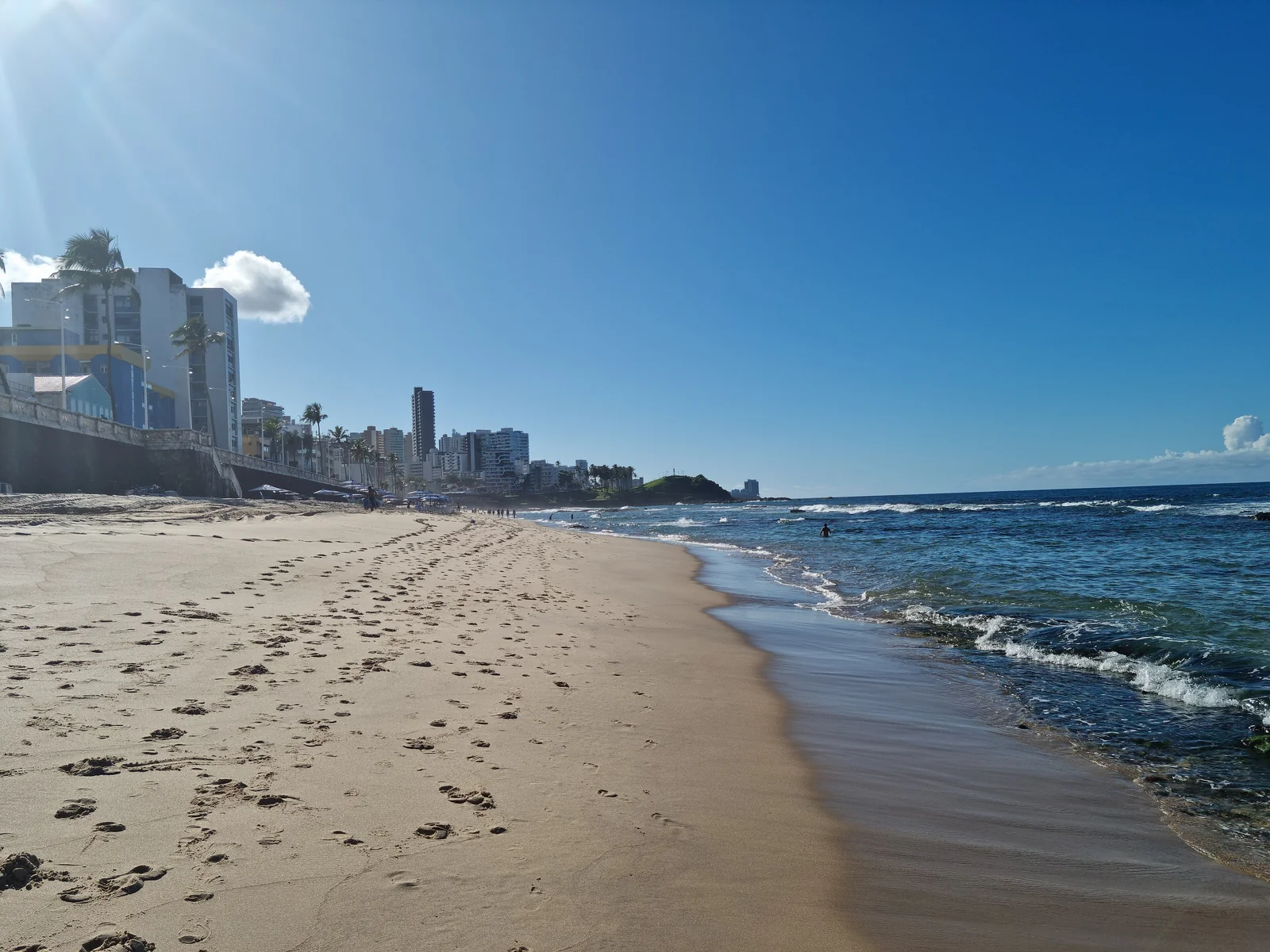
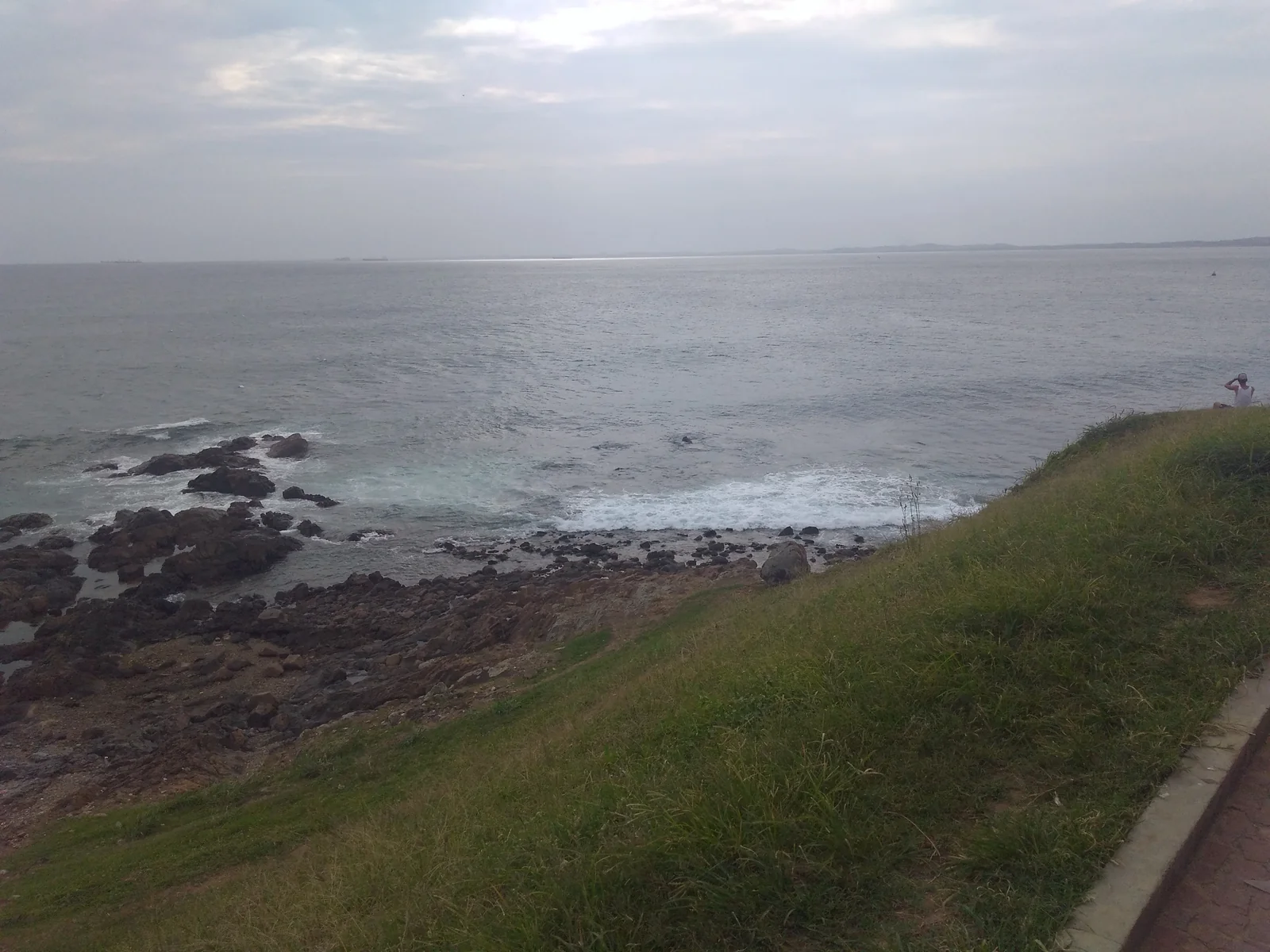
Contorne a ponta passando pelo farol e você está no Atlântico. A praia embaixo do Farol da Barra e o trecho que segue até Ondina dão para o oceano aberto, com ondulação de verdade, água mais fresca e uma fração da gente. Uma barreira de corais mais adiante tira o pior das ondas e forma piscinas naturais claras na maré baixa, boas para boiar; na maré alta a mesma água fica agitada e aparecem os surfistas. É o lado melhor para uma caminhada longa e o pior para uma criança pequena. Qual delas você quer depende do dia, e o nosso guia de praias de Salvador cobre as duas, além das areias mais bravas lá para os lados de Itapuã.
A orla depois da reforma
Durante anos a orla da Barra foi uma calçada estreita e esburacada em que você se arriscava. A prefeitura a refez. As obras da Nova Orla, entregues aqui como parte de uma reforma maior da beira-mar, nivelaram e alargaram todo o calçadão do farol até Ondina — concreto lavado cinza, ciclovia de verdade, rampas no lugar de meios-fios, bancos e sombra. O resultado prático é que dá para caminhar ou correr os quatro quilômetros do Farol a Ondina sem pisar uma vez no trânsito, e às seis da manhã e às seis da tarde boa parte do bairro faz exatamente isso. Mais ou menos no meio do caminho a costa vira no Morro do Cristo, um pequeno promontório com uma estátua de Cristo em mármore. Essa estátua merece um segundo olhar: esculpida em mármore de Carrara pelo italiano Pasquale de Chirico e inaugurada em 1920, foi o primeiro Cristo monumental erguido no Brasil, onze anos antes de o Rio pôr o seu no morro. Foi transferida para este ponto em 1967, e o mirante ao lado é um dos lugares mais limpos para ver a luz baixar sobre o farol.
Onde comer — uma rua para dentro
A frase mais útil de qualquer guia da Barra em Salvador é sobre onde comer, não o quê. Os restaurantes bem na beira-mar — os da vista e do cardápio plastificado com fotos — são, quase sem exceção, o pior custo-benefício do bairro. Você paga pela orla, não pela cozinha. Ande uma rua para dentro e os preços caem enquanto a comida melhora. As quadras em torno da Rua Marquês de Leão e da Rua Afonso Celso, a dois minutos da areia, são onde quem mora aqui come de fato: botecos de bairro, um bom balcão de comida a quilo, pizza, frutos do mar sem sobretaxa de vista. As barracas de praia estão de bom tamanho para o que são — uma cerveja, uma porção de peixe frito, um coco — mas trate os restaurantes da beira-mar como último recurso, não como plano. Para onde comer bem pela cidade, da Barra às casas de moqueca do Rio Vermelho, veja o nosso guia de restaurantes de Salvador.
Shopping Barra, a âncora prática
Todo bairro em que você possa se instalar tem uma âncora prática, e na Barra é o shopping. O Shopping Barra, algumas quadras para dentro, na Avenida Centenário, é onde o bairro resolve as coisas comuns que numa viagem importam mais do que se imagina: farmácia, supermercado, caixas eletrônicos que funcionam, um quiosque de conserto de celular, praça de alimentação e um cinema multiplex para quando o calor da tarde passa dos limites. Funciona de segunda a sábado das 9h às 22h e domingo do meio-dia às 20h, com o cinema aberto até mais tarde. Numa tarde de chuva — e Salvador tem muitas entre abril e julho — uma praça de alimentação com ar-condicionado e um filme legendado em português não é o pior jeito de esperar a pancada passar. Saber que o shopping está ali é metade do motivo de a Barra ser cômoda para ficar.
O Carnaval começa aqui — o Circuito Dodô
Há uma semana no ano em que tudo o que está acima muda, e você quer saber disso antes de reservar. O Carnaval de Salvador, uma das maiores festas de rua do mundo, faz passar o seu circuito principal — o Circuito Dodô — bem pelo meio da Barra. Os trios elétricos rolam por uns quatro quilômetros do Farol da Barra pela beira-mar até Ondina, e em 2026 mais de sessenta deles trabalharam esse trecho, levando nomes como Ivete Sangalo, Daniela Mercury e BaianaSystem diante de multidões ombro a ombro. Se foi para isso que você veio, a Barra na semana de Carnaval é a primeira fila e não há lugar melhor. Se não foi, entenda que a praia, a orla e a calma pelas quais você reservou o lugar somem sob a festa por uns seis dias, e o bairro fica dificílimo de dormir ou de circular.
Barra ou a Cidade Alta?
Então, dá para ficar aqui? A resposta honesta é que depende do que você veio buscar em Salvador. A Barra é a base certa se a praia é o ponto — se você quer nadar antes do café, correr a orla no fim da tarde e ter shopping, farmácia e mar calmo a poucas quadras. É segura, caminhável, bem servida e dá para a água. O que ela não é é a cidade histórica. O Pelourinho, as igrejas barrocas, o Elevador Lacerda, os tambores de terça e todo o centro antigo tombado pela UNESCO ficam a sete quilômetros e uma corrida de táxi, o que na prática significa que você os visita em vez de morar no meio deles.
Esse é o argumento silencioso a favor da outra escolha. Mantemos quatro suítes lá em cima, na Cidade Alta, a poucos minutos a pé do Elevador Lacerda e do Pelourinho, justamente porque ficar no centro histórico transforma a cidade antiga de bate-volta na rua para a qual você abre a porta — e mesmo assim dá para estar numa praia da Barra vinte minutos depois. O contrário, ficar na Barra e ir todo dia ao centro, é a versão de que a maioria se arrepende calada. Pese tudo direito com o nosso guia de onde ficar em Salvador, que é justo com a Barra e com todos os outros bairros; e, se o centro antigo vencer, dê uma olhada nas nossas quatro suítes, todas a uma curta caminhada do que fez você querer vir.
Salvador, em imagens
Fotografias do bairro, do restaurante e da praia que aparecem neste guia, com crédito a cada autor.
Pronto para conhecer Salvador?
Reserve uma das quatro suítes da Via Avantgarde no Pelourinho — e receba os guias completos com recomendações para a sua estadia.