Barra Neighbourhood Guide the other place everyone stays
Barra Salvador guide: the Farol da Barra lighthouse and Museu Náutico, Porto da Barra and its sunset, the Atlantic side, the remodelled orla and where to eat.
The essentials in 30 seconds
This Barra Salvador guide covers the seafront district at the tip of the peninsula, where the Baía de Todos os Santos meets the open Atlantic and the Farol da Barra lighthouse marks the corner. Barra is the other place everyone stays, and the case for it is real: Porto da Barra, a calm bay beach with a nightly sunset ritual; the wilder Atlantic side running out to Ondina; a flat, remodelled orla you can walk or run end to end; and Shopping Barra as the practical anchor for a pharmacy, a cinema and cold air. It is also where Carnival's biggest circuit begins. Here is what is worth your time, where the food stops being honest, and the straight comparison with staying up in the historic centre.
Barra Salvador guide: how the neighbourhood is laid out
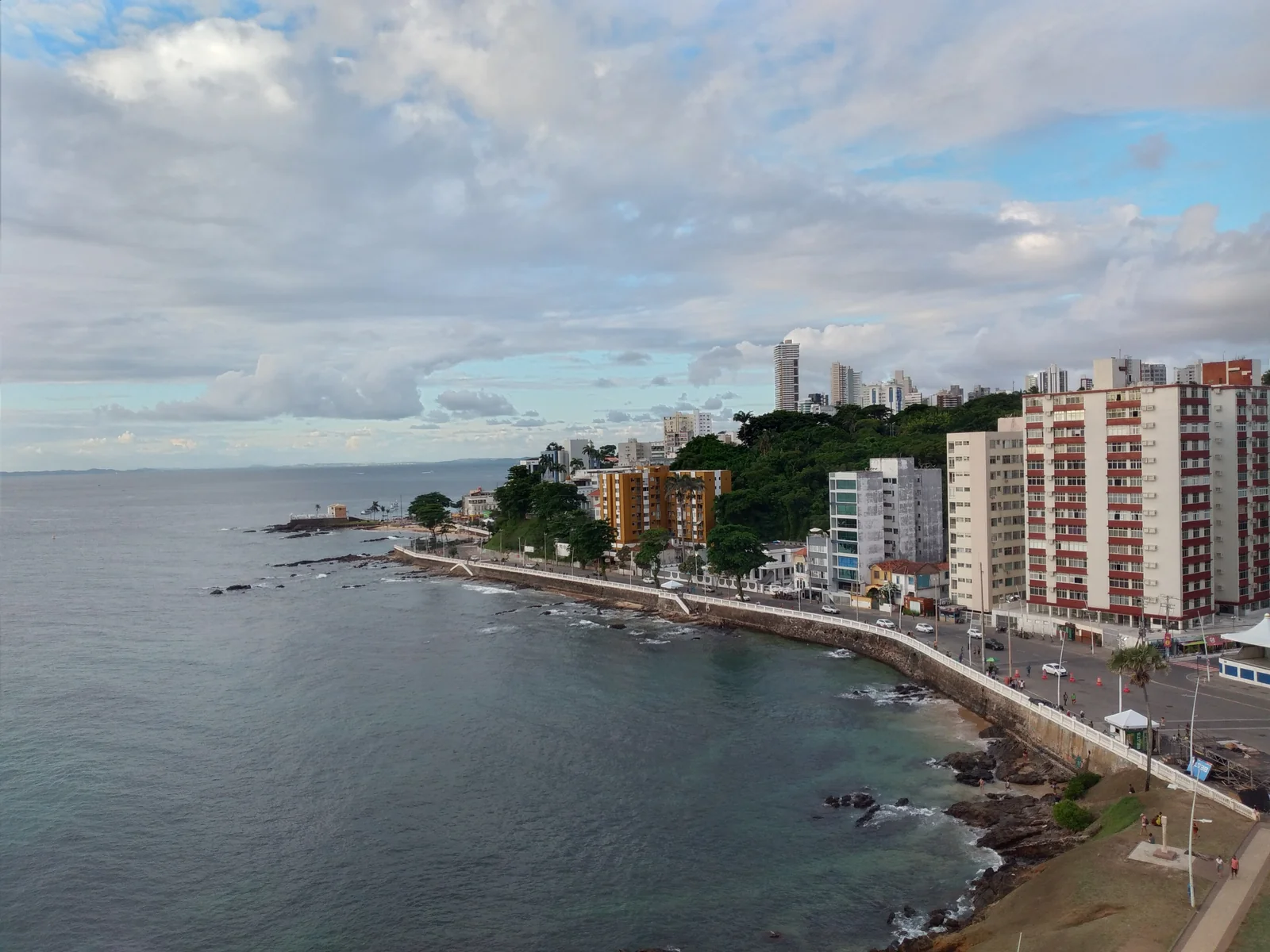
Barra sits at the southern tip of Salvador's peninsula, the exact point where the great bay of the Baía de Todos os Santos ends and the open ocean begins. That one fact of geography explains almost everything about the place. Stand at the Farol da Barra — the lighthouse on the point — and the water on your right is bay-calm and faces west; the water on your left is Atlantic, with a swell and a horizon that runs to Africa. The calm side gives you Porto da Barra and the famous sunset. The ocean side gives you the long beach below the lighthouse and, a kilometre on, Ondina. Inland, a few blocks back, sit Shopping Barra and an ordinary working neighbourhood most visitors never register. The historic centre — the Pelourinho, the Elevador Lacerda, our own corner of the Cidade Alta — is about seven kilometres north, fifteen to twenty-five minutes by taxi depending on the traffic along the water.
The lighthouse and the Museu Náutico da Bahia
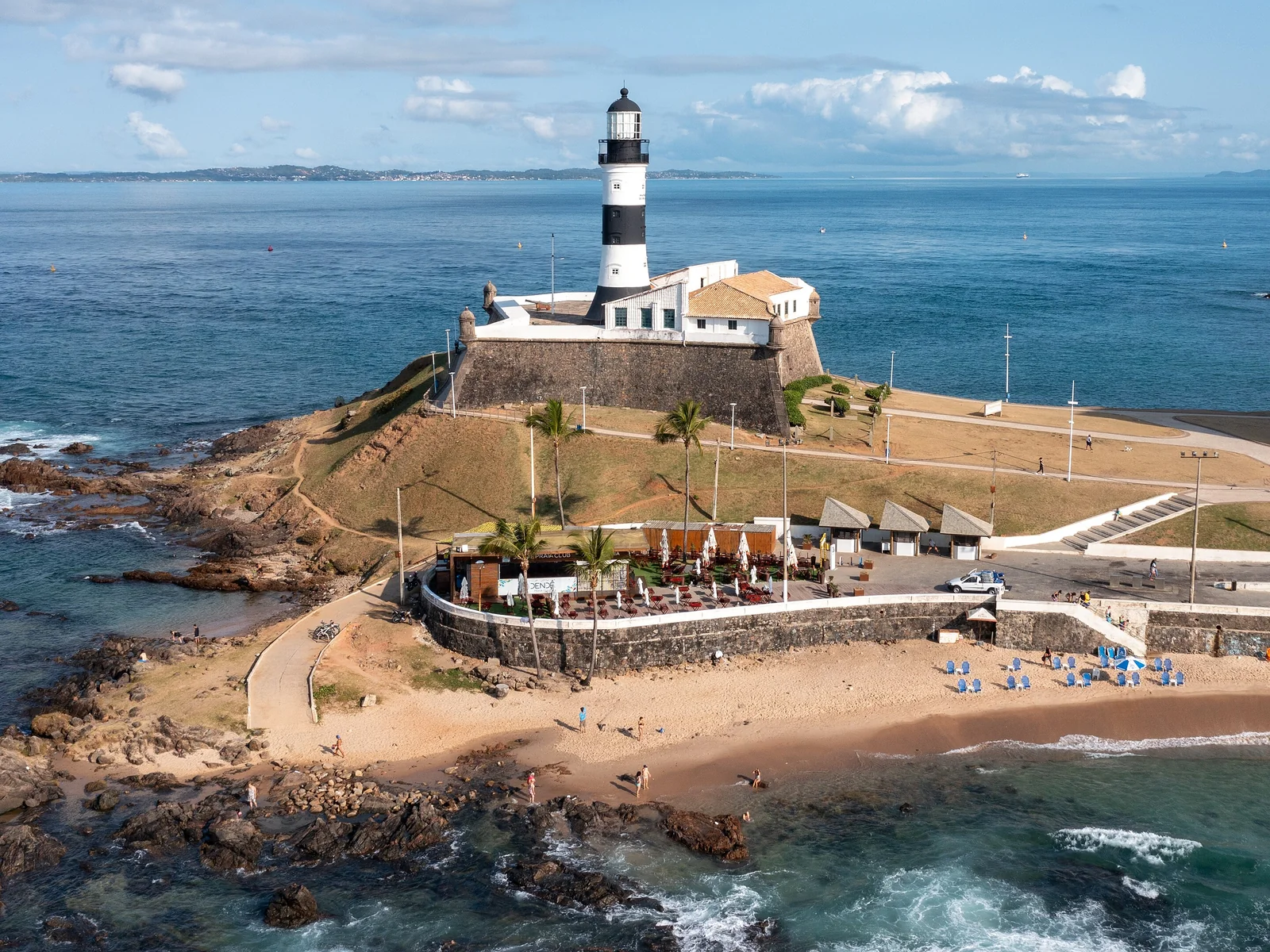
The Farol da Barra is the thing everyone photographs and most people misread. It is not an ornament; it is a working lighthouse, and the oldest in the Americas. A light was first lit here in 1698, on the point of the Forte de Santo Antônio da Barra, burning whale oil in a bronze lantern to bring ships into the bay. The black-and-white banded tower you see now dates from 1839 and still runs. Inside the fort is the Museu Náutico da Bahia, a small and genuinely good maritime museum built around shipwreck finds, old navigation instruments and the story of the Portuguese arrival — worth the half-hour even if museums are not usually your thing. The real draw, though, costs nothing. The lawn around the base of the lighthouse fills up every evening for the sunset, and it earns the crowd; our sunset spots guide ranks it against the other contenders in the city.
Two beaches, two personalities
Barra's two beaches sit barely five minutes apart and could hardly be more different. Porto da Barra is the calm one: a short, west-facing crescent of maybe 400 metres, tucked between the small forts of São Diogo and Santa Maria, turned toward the bay rather than the ocean. The water is warm, shallow and still enough to stand around in for an hour, which is why it fills with families, students and vendors by mid-morning. The Guardian once named it one of the best urban beaches in the world, and on a good afternoon you will not argue. It is a sociable beach, not a quiet one — expect a barraca to bring you a cold beer for something like R$ 10 to 22 (€2 to 4), someone selling grilled cheese to step over your legs, and, when the sun finally drops into the bay, a round of applause from the whole beach. The local rhythm is worth copying: swim before nine, coconut after, and let the beach get crowded without you.
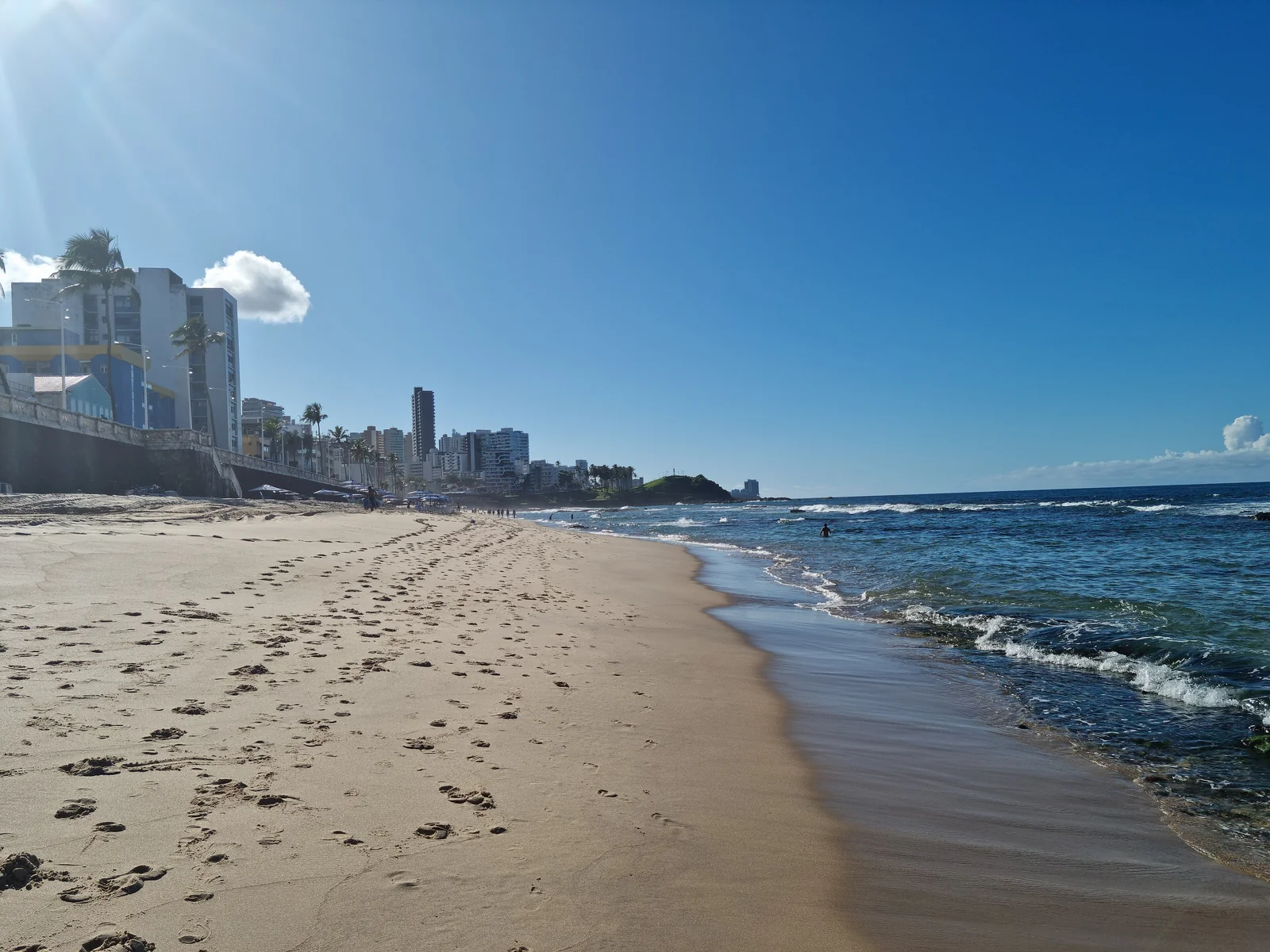
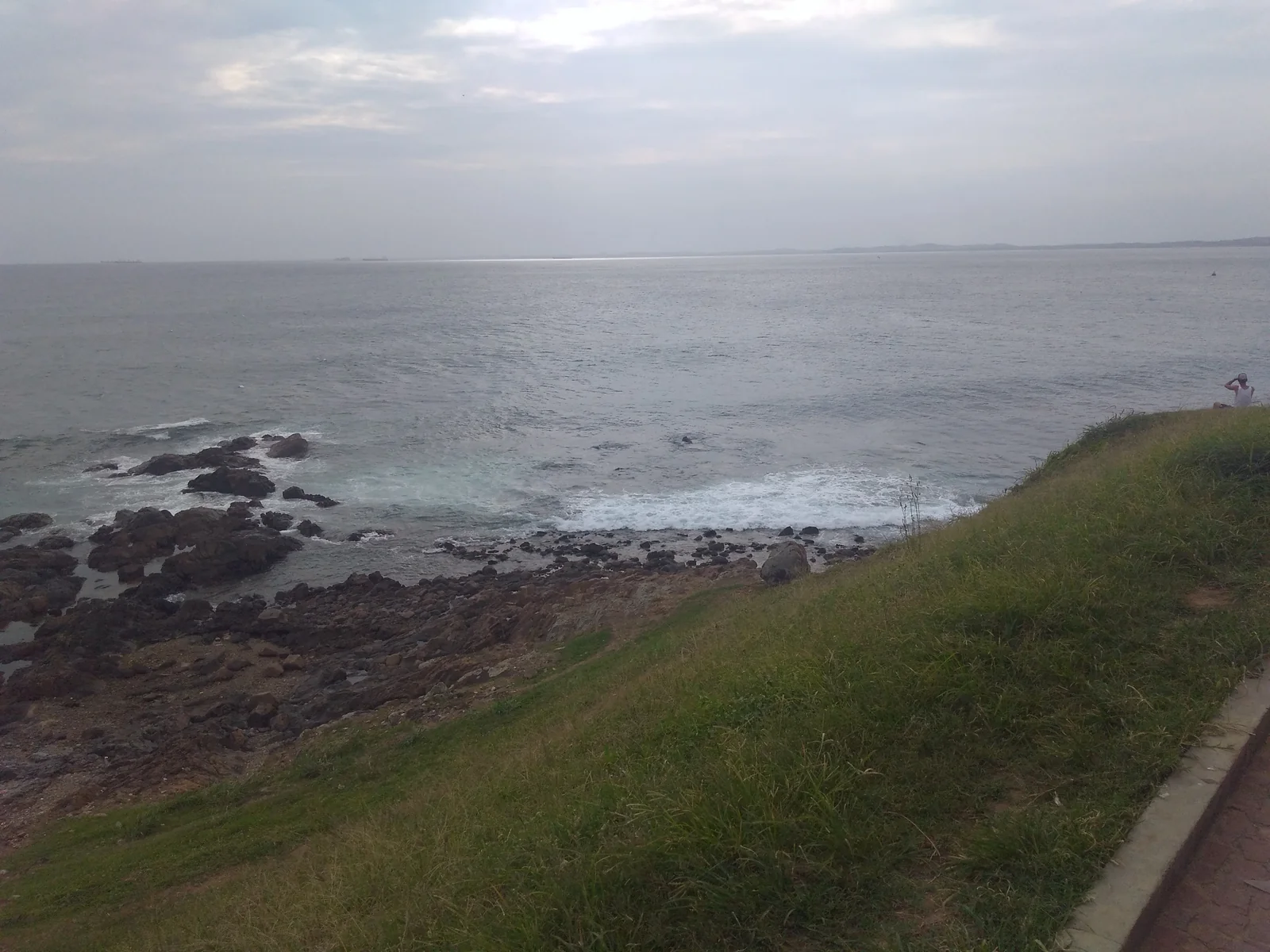
Walk around the point past the lighthouse and you are on the Atlantic. The beach below the Farol da Barra and the stretch running on to Ondina face the open ocean, with a real swell, cooler water and a fraction of the crowd. A coral barrier offshore knocks the worst off the waves and traps clear natural pools at low tide, good for a float; at high tide the same water turns choppy and the surfers appear. It is the better side for a long walk and the worse side for a toddler. Which one you want depends on the day, and our Salvador beaches guide covers both, along with the wilder sands further out toward Itapuã.
The orla after the remodel
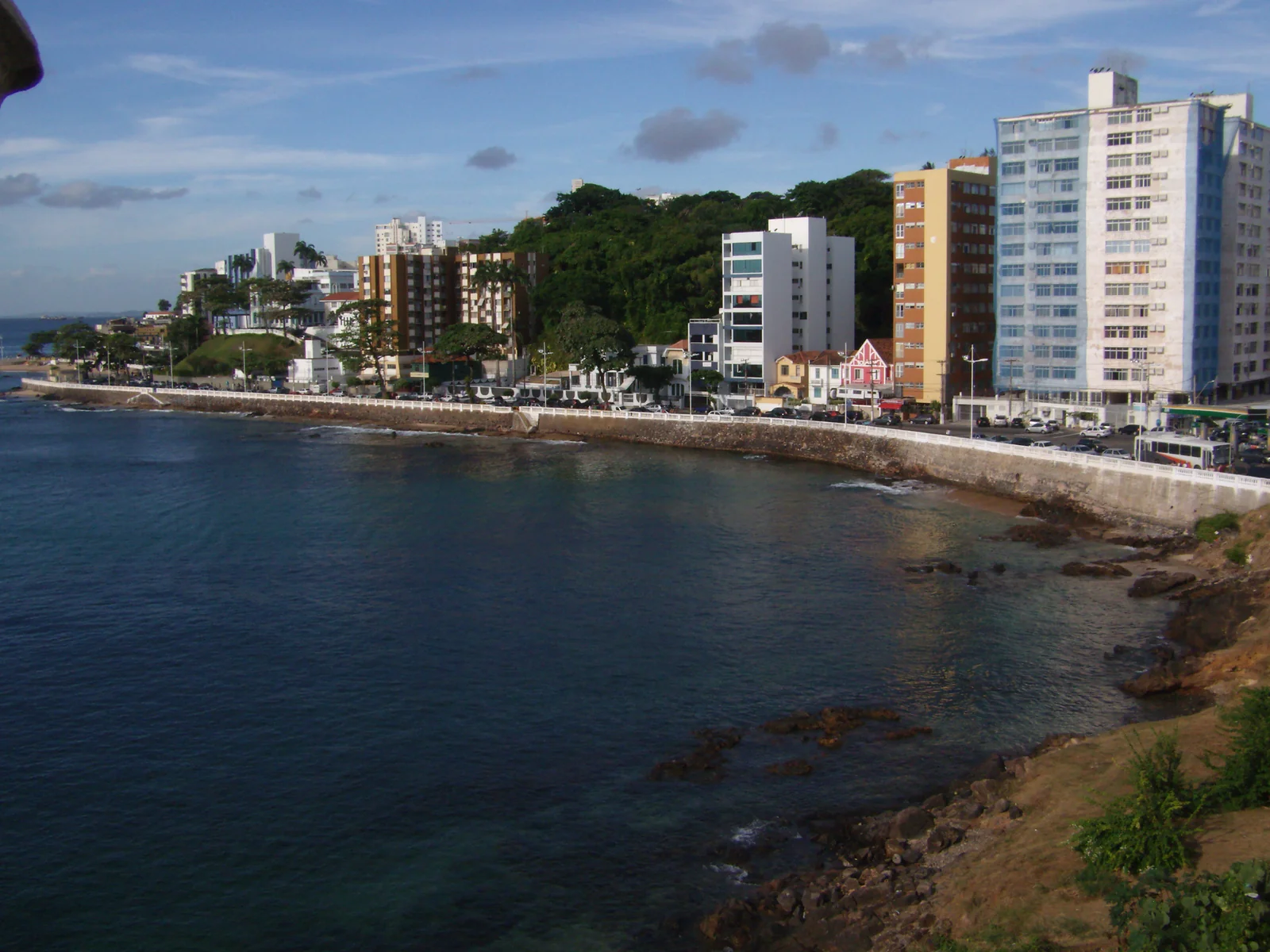
For years the Barra seafront was a narrow, broken pavement you took your chances on. The city rebuilt it. The Nova Orla works, delivered here as part of a wider waterfront overhaul, flattened and widened the whole promenade from the lighthouse round toward Ondina — washed grey concrete, a proper cycle lane, ramps instead of kerbs, benches and shade. The practical result is that you can walk or run the four kilometres from the Farol to Ondina without once stepping into traffic, and at six in the morning and six in the evening a good part of the neighbourhood does exactly that. About halfway along, the coast turns at the Morro do Cristo, a small headland with a marble statue of Christ on it. That statue is worth a second look: carved in Carrara marble by the Italian sculptor Pasquale de Chirico and unveiled in 1920, it was the first monumental Christ raised in Brazil, eleven years before Rio put one on its mountain. It was moved to this spot in 1967, and the little viewpoint beside it is one of the cleaner places to watch the light go down over the lighthouse.
Where to eat — one street back
The single most useful line in any Barra Salvador guide is about where you eat, not what. The restaurants directly on the seafront — the ones with the view and the laminated photo menus — are, almost without exception, the weakest value in the neighbourhood. You are paying for the orla, not the kitchen. Walk one street back and the prices fall while the cooking improves. The blocks around Rua Marquês de Leão and Rua Afonso Celso, a couple of minutes inland from the sand, are where people who live here actually eat: neighbourhood botecos, a good per-kilo lunch counter, pizza, seafood that is not marked up for a view. The beach barracas are fine for what they are — a beer, a plate of fried fish, a coconut — but treat the seafront restaurants as a last resort rather than a plan. For where to eat well across the city, from Barra to the moqueca houses of Rio Vermelho, see our Salvador restaurant guide.
Shopping Barra, the practical anchor
Every neighbourhood you might base yourself in has a practical anchor, and in Barra it is the mall. Shopping Barra, a few blocks inland on Avenida Centenário, is where the district goes for the ordinary things that matter more than you would expect on a trip: a pharmacy, a supermarket, ATMs that actually work, a phone-repair kiosk, a food court and a multiplex cinema for when the afternoon heat turns unreasonable. It runs Monday to Saturday from 9h to 22h and Sunday from noon to 20h, with the cinema open later. On a wet afternoon — and Salvador has plenty of those between April and July — an air-conditioned food court and a film with Portuguese subtitles is not the worst way to wait out a downpour. Knowing the mall is there is half of why Barra feels easy to stay in.
Carnival starts here — the Circuito Dodô
There is one week a year when everything above changes, and you want to know about it before you book. Salvador's Carnival, one of the largest street parties anywhere, runs its main circuit — the Circuito Dodô — straight through Barra. The trios elétricos roll for roughly four kilometres from the Farol da Barra along the seafront to Ondina, and in 2026 more than sixty of them worked that stretch, carrying names like Ivete Sangalo, Daniela Mercury and BaianaSystem past crowds packed shoulder to shoulder. If that is what you came for, Barra in Carnival week is the front row and there is nowhere better. If it is not, understand that the beach, the orla and the calm you booked the place for vanish under the party for about six days, and the neighbourhood becomes very hard to sleep in or move through.
Barra or the Cidade Alta?
So should you stay here? The honest answer is that it depends on what you came to Salvador for. Barra is the right base if the beach is the point — if you want to swim before breakfast, run the orla at dusk, and have a mall, a pharmacy and a calm sea within a few blocks. It is safe, walkable, well-serviced and it faces the water. What it is not is the historic city. The Pelourinho, the baroque churches, the Elevador Lacerda, the Tuesday-night drums and the whole UNESCO old town are seven kilometres and a taxi ride away, which in practice means you visit them rather than live among them.
That is the quiet case for the other choice. We keep four suites up in the Cidade Alta, a few minutes on foot from the Elevador Lacerda and the Pelourinho, precisely because staying in the historic centre turns the old town from a day trip into the street you step out onto — and you can still be on a Barra beach twenty minutes later. The reverse, staying in Barra and commuting into the centre every day, is the version most people quietly regret. Weigh it up properly with our where to stay in Salvador guide, which is fair to Barra and every other neighbourhood; and if the old town wins, have a look at our four suites, all a short walk from the things that made you want to come.
Salvador, in images
Photographs of the neighborhood, restaurant, and beach featured in this guide, with credit to each photographer.

Ready to discover Salvador?
Book one of the four Via Avantgarde suites in the Pelourinho — and receive the complete guides with recommendations for your stay.