Morro de São Paulo from Salvador catamaran, air taxi and the day-trip math
Morro de São Paulo from Salvador: 2026 catamaran times and R$ 150–170 fare, the 20-minute air taxi, the Itaparica plan B, the R$ 90 fee, and day trip versus overnight.
The essentials in 30 seconds
The question we hear most at check-in has an honest answer: yes, you can do Morro de São Paulo from Salvador in a day — and you mostly shouldn't. The direct catamaran leaves the Terminal Náutico, ten minutes downhill from our suites, five times a day and takes 2h15–2h45 for R$ 150–170 each way, about US$ 30. The last boat back leaves around 3 pm as of 2026, which leaves a day-tripper barely three hours on the island. There is a 20-minute air taxi, a slower overland plan B via Itaparica for rough-sea days, a R$ 90 entry fee since 1 August 2026, no cars, wheelbarrow porters, and five numbered beaches ruled by the tide. If you can possibly stay a night, stay a night.
Getting to Morro de São Paulo from Salvador: the catamaran
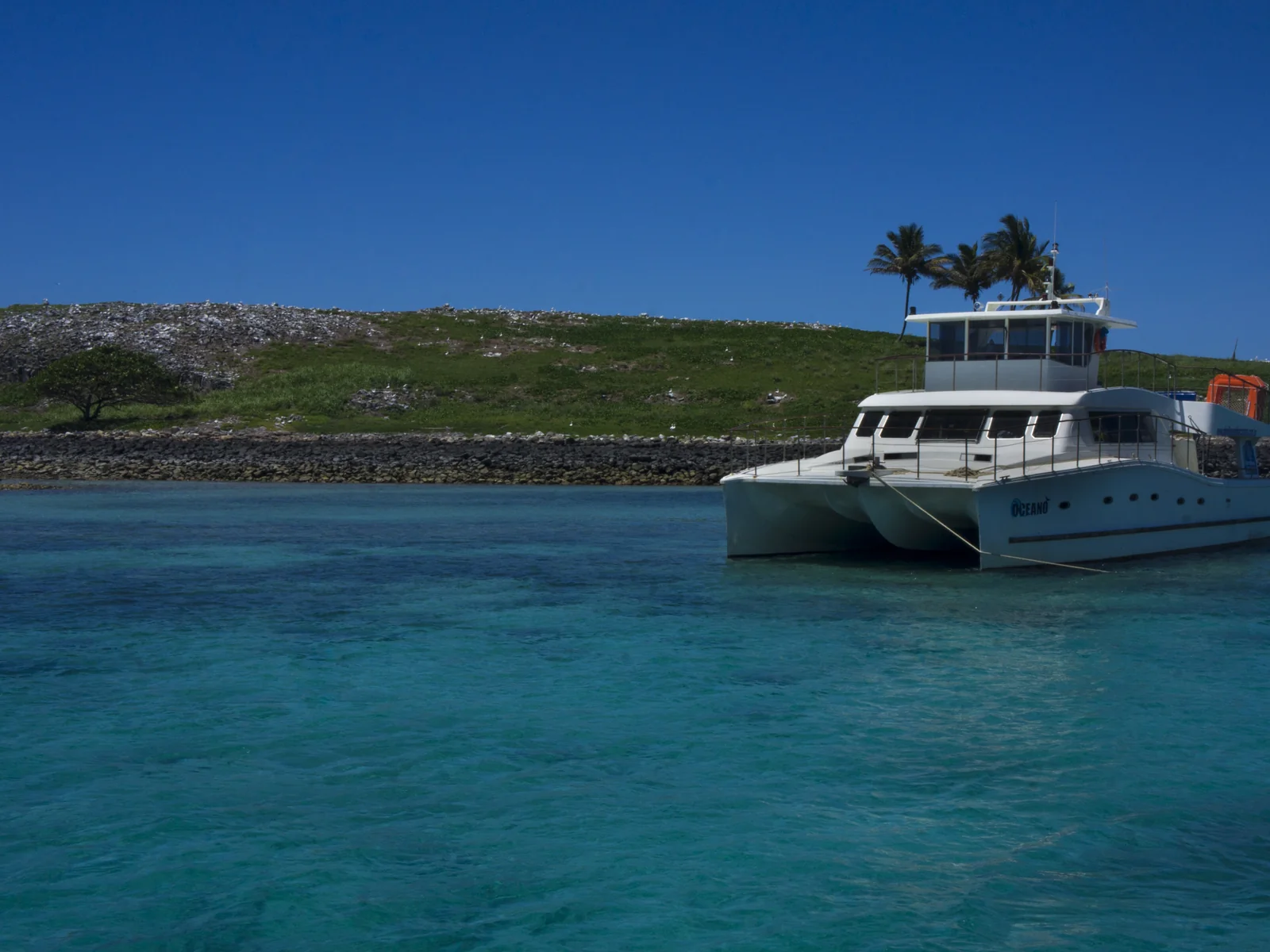
The workhorse route is the direct catamaran from the Terminal Turístico Náutico da Bahia, the pier beside the Mercado Modelo at the foot of the Elevador Lacerda. Three companies share the run as of 2026 — Biotur, Ilha Bela and Farol do Morro — with boats ranging from a 25-seat launch to Biotur's 21-metre, 128-seat flagship, which cruises at 18–22 knots. Between them they cover five departures a day, roughly 8:30 am to 2:30 pm, and the 64-kilometre crossing to the northern tip of the Ilha de Tinharé takes anywhere from 2h15 to 2h45 depending on the boat and the sea.
The fare is regulated by AGERBA, the state transport agency, so there is no bargain operator: expect R$ 150–170 each way, about US$ 30 or €27, whoever you sail with. Buy the outbound at the terminal or online the day before; in high season, buy the return at the same time, because the afternoon boats off the island sell out first. If your plans are loose, ask for a ticket with a changeable return date — the weather reshuffles this route often enough that flexibility is worth more than a locked seat.
The open-water stretch
Inside the Baía de Todos os Santos the ride is smooth. Then the boat clears the shelter of Itaparica and runs a long stretch of open Atlantic, and this is where the crossing earns its reputation: a rolling beam swell that genuinely troubles anyone prone to seasickness, worst from June to November when the wind picks up. Crews hand out sick bags before departure as a matter of routine. Sit outside on the lower deck if you can, watch the horizon, and take the tablet an hour before boarding, not when the rolling starts. The consolation prize is real: from July to October humpback whales migrate along this coast, and the catamarans cross their path often enough that a spout or a breach mid-crossing is a plausible bonus — our best time to visit guide covers the seasons in detail.
When the sea is genuinely bad, operators switch the trip to what they call the semi-terrestre — van and small boat via Itaparica — at no extra cost, or refund you. It happens without drama and with reasonable frequency; build slack into any plan that depends on this crossing.
Plan B: through Itaparica, the long way round
The land-and-water combination is slower but almost never cancelled, and you can buy it as a package or assemble it yourself. The packaged version — sold by the same ticket agencies as the catamaran — is a van to Valença and a fast launch across to the island; count on four to five hours door to door. The do-it-yourself version is the local way and the cheapest: the ferry from São Joaquim to Bom Despacho on Itaparica (roughly hourly from early morning, about an hour, a few reais on foot), a bus or van on to Valença (around two hours, in the R$ 30–40 range), then the lancha from Valença's pier to Morro, 30–45 minutes for about R$ 35. It is a proper little journey — bay, island, mangrove river — and for the seasick-prone it stays in sheltered water the whole way.
The 20-minute air taxi
There is also the shortcut, and it is the fastest way to Morro de São Paulo from Salvador by a wide margin: a light plane from Salvador's airport to the island's airstrip in about twenty minutes. Abaeté quotes 23 minutes in a Cessna Caravan, and Axé Táxi Aéreo flies the same hop. Seats are sold per person at floating fares, roughly R$ 500–1,500 depending on season and demand, and chartering a whole nine-seater runs around R$ 11,600, about US$ 2,300. It turns half a day of travel into a coffee-length flight over the bay and the channels of Tinharé, which is worth something in itself — if flying over the water appeals even without an island at the end of it, our panoramic flight does the loop over Salvador. Book air taxis as far ahead as you can; capacity is a handful of seats a day.
Arriving: the fee, the wheelbarrows and the climb
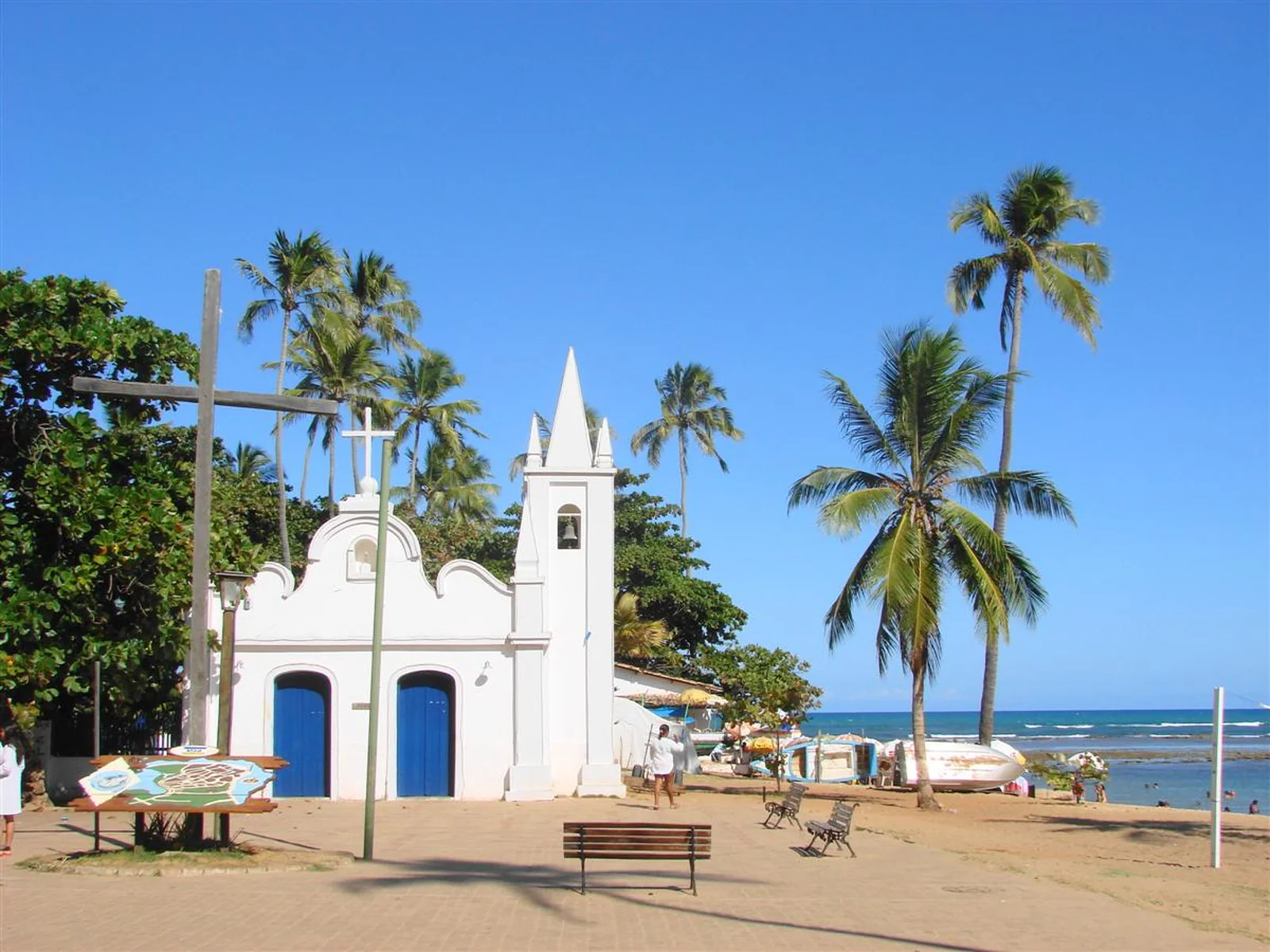
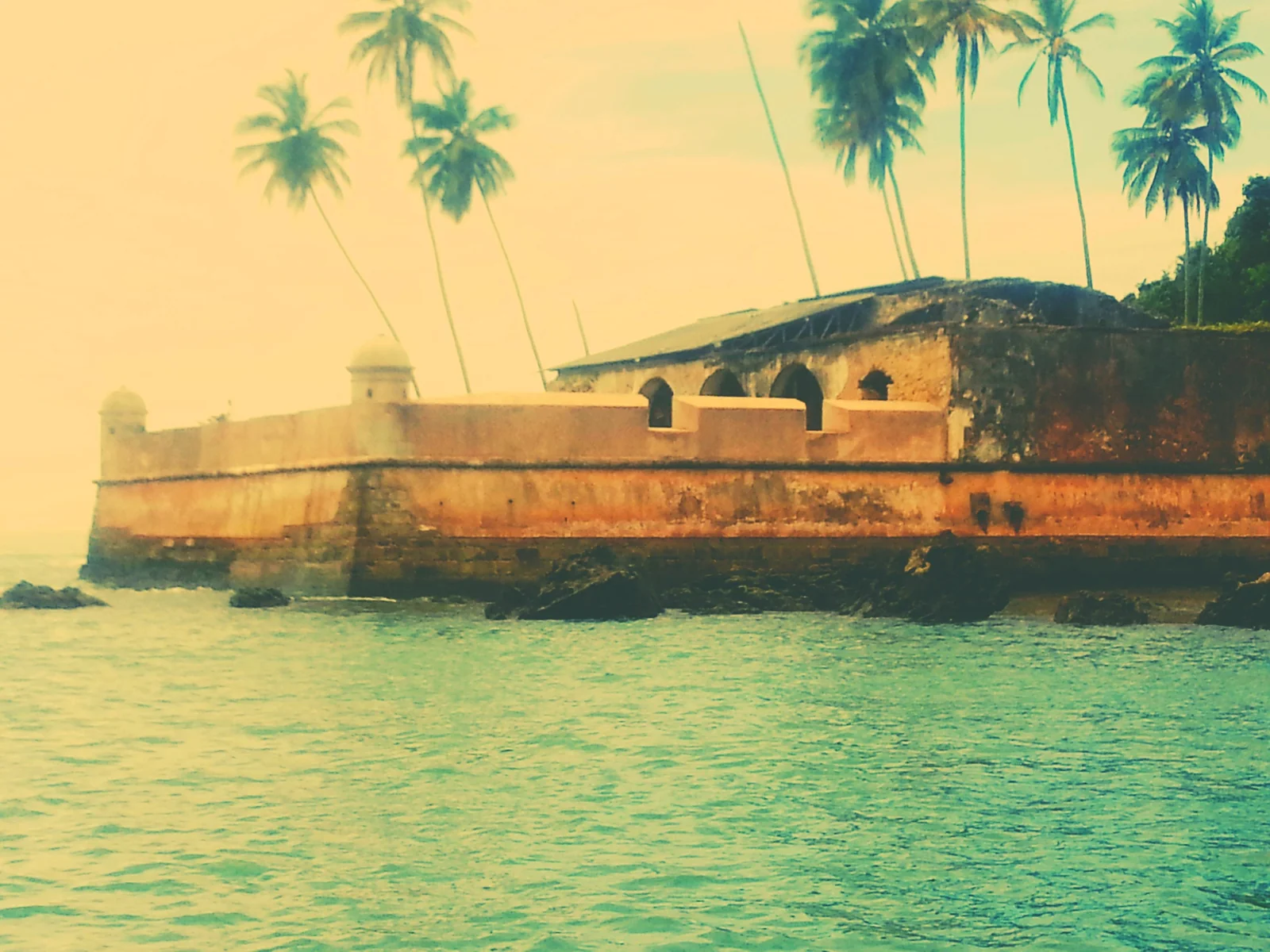
Morro de São Paulo has no cars. You step off the boat onto the pier, pass through the stone gateway of a fortress begun in the 1630s, and climb a steep cobbled ramp to the village square; from there every street is sand. Luggage moves by wheelbarrow: the carregadores who meet the boats are organised into four local associations and will run your bags to any pousada.
The five numbered beaches, decoded
The village solved beach-naming the practical way: the beaches are numbered, first to fifth, in order of distance from the square.
- Primeira Praia — two minutes from the village, the surfers' beach, with the island's zipline splashing down just offshore: the Tirolesa do Farol runs about 340 metres from the lighthouse hill into the sea here, R$ 95 at last check, cards accepted.
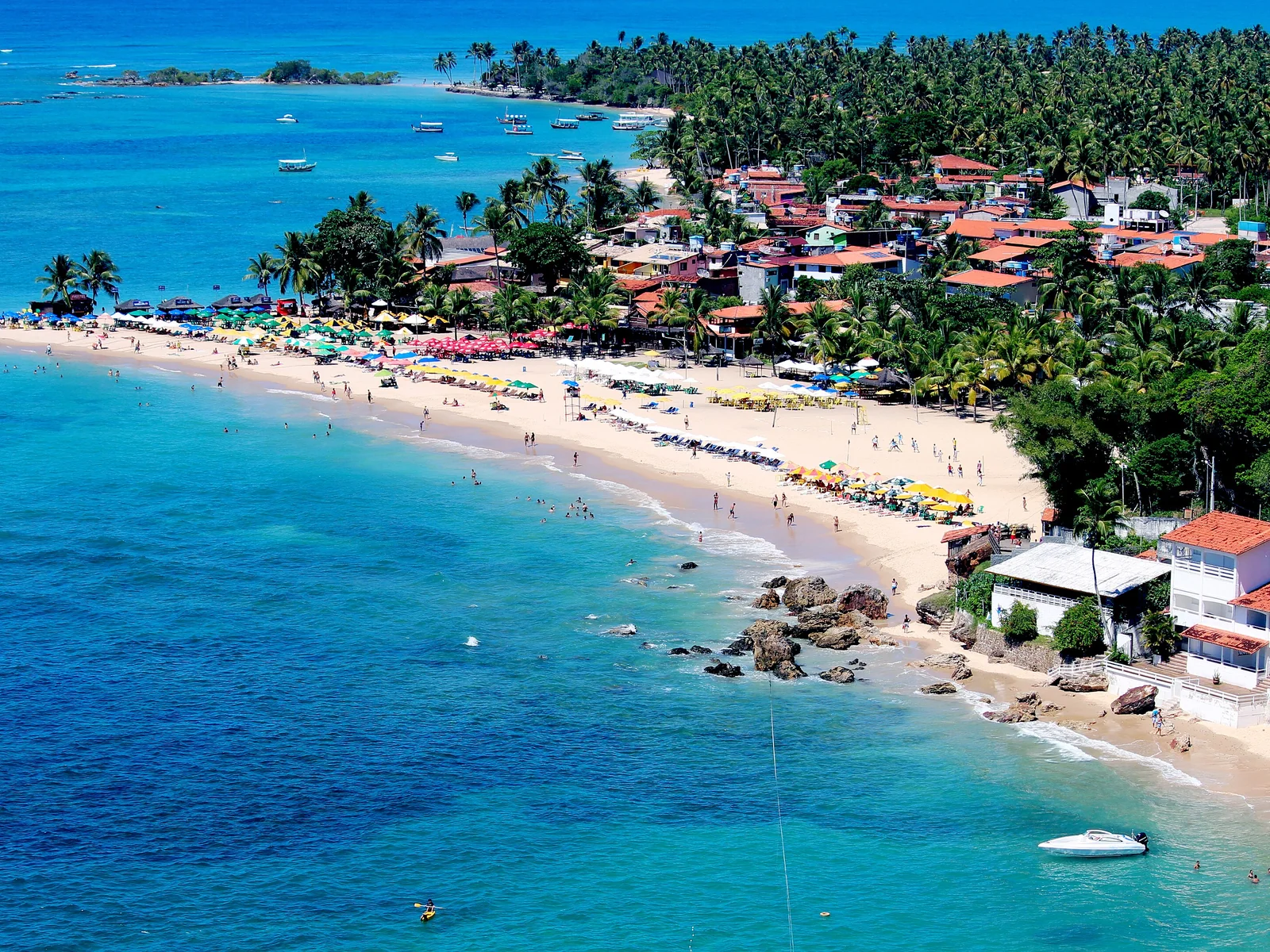
- Segunda Praia — the scene. Barracas and day clubs shoulder to shoulder, DJs by mid-afternoon, football at the tide line and a postcard view of the Ilha da Saudade. Calm, shallow water; very little quiet in season.
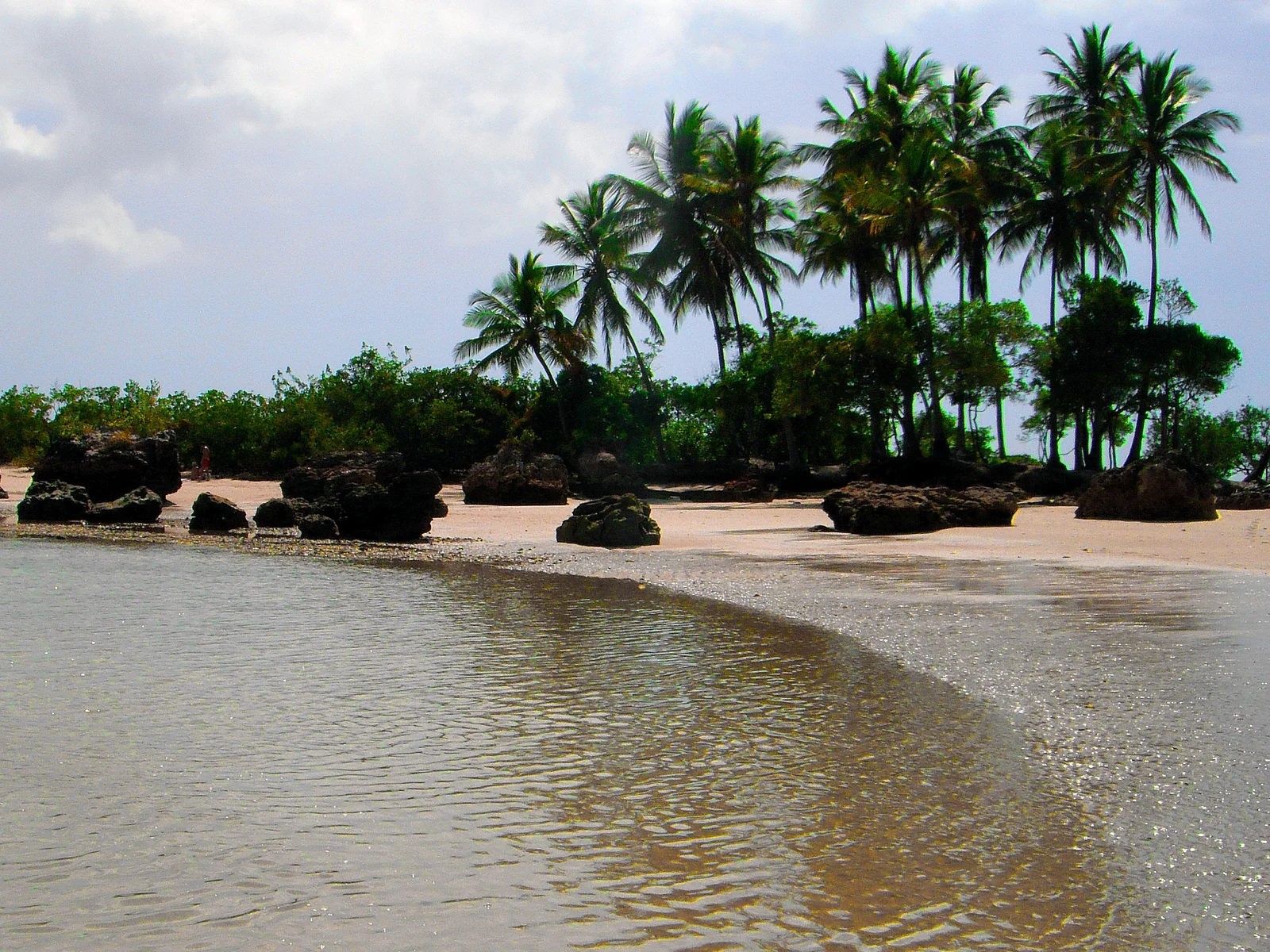
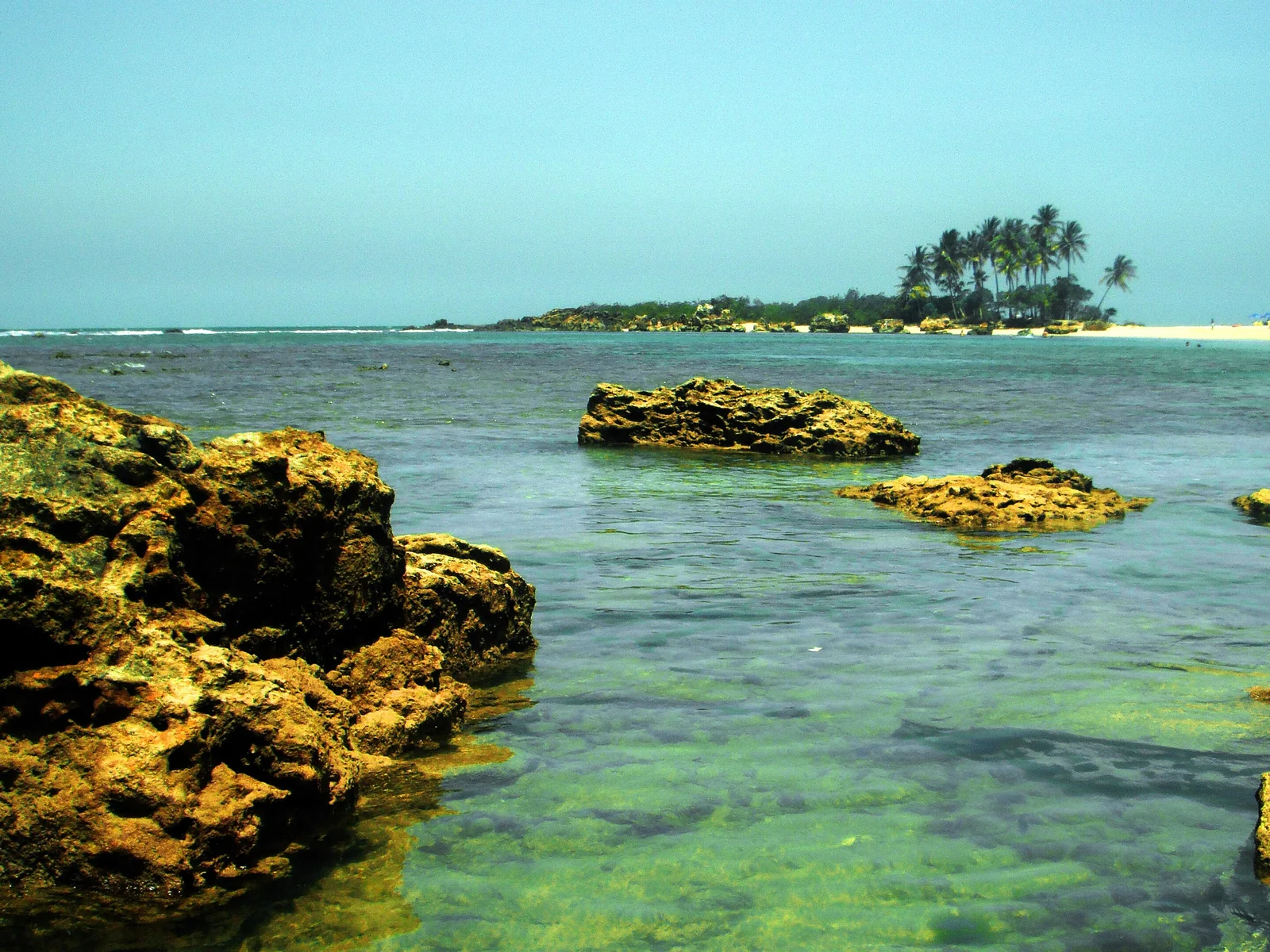
- Terceira Praia — the compromise, and where a day-tripper should probably walk to: restaurants at the near end, and at low tide the far end turns pool-like, glassy and waist-deep over sand and reef.
- Quarta Praia — long, quiet and emptier with every step, with natural pools standing on the flats at low tide and a handful of slow-paced hotels behind the palms.
- Quinta Praia, also called Praia do Encanto — the far end of the map, near-deserted, a long walk past the last hotels — and worth it for exactly that reason.
The tide sets the timetable — and Gamboa waits across the water
More than the season, the tide decides what kind of day you get. The natural pools off Terceira and Quarta exist only around low water; at high tide parts of the shoreline narrow to nothing and the beach walk between stretches closes. Check the tide table — every pousada and half the barracas post one — and plan the pools, and any long beach walking, around the low.
The tide also governs the best cheap adventure on the island: the walk to Gamboa, the fishing village on the bay side. It is about two kilometres — forty minutes — along the sand past Porto de Cima and the Ponta da Pedra, doable only at low tide; time it wrong and the route is underwater against rock. On the way you pass the clay cliffs whose pinkish mud locals credit as a skin treatment, and from Gamboa's pier small boats run out to the empty coconut sweep of Ponta do Curral. If the tide turns behind you, a lancha brings you back to Morro in ten minutes for a few reais.
Day trip or overnight: the arithmetic
Here is the day-trip version of Morro de São Paulo from Salvador, priced out. The 9 am boat lands you on the island around 11:30. The last catamaran back leaves around 3 pm as of 2026 — confirm the exact time when you buy, because it shifts with season and operator. Subtract the fee queue, the climb and lunch, and you are down to roughly three hours of actual island: enough to walk to Terceira, swim, eat and turn around. You will have spent five hours on boats and more than R$ 400 per person in fares and fees to do it — a ratio only the boat company loves. It can still be worth it on a flat-sea day, if a car-free island beach is the one thing your trip is missing, and the arithmetic improves slightly on the 8:30 boat.
But the plain answer is that overnight wins. The island empties of day-trippers by late afternoon, Segunda's music softens into the evening, and the tide often puts the best pools outside a day-tripper's window entirely. If Morro is on your list, give it one night minimum — two is right — and we can set up the boats, the pousada and the timings as our Morro de São Paulo experience. If what you actually have is a single spare day, spend it on the water closer in: a schooner day around the bay islands gives you more for the same hours, and our Bay of All Saints boat guide and the wider day trips guide lay out those options.
One seasonal note: from Christmas through Carnival the island runs at capacity. Boats sell out in both directions, Segunda Praia is elbow to elbow and pousada prices double. Book everything in advance, both boat legs included.
One practical advantage is specific to this trip: the catamarans leave from directly below the Cidade Alta. From our suites you can walk out of the door at eight, ride the Elevador Lacerda down — or take the ten-minute walk — and be at the pier with coffee in hand for the first boat, while travellers staying out by the ocean beaches are still in a taxi. And when the last boat drops you back at dusk, the old town, a shower and dinner are the same ten minutes uphill.
Salvador, in images
Photographs of the neighborhood, restaurant, and beach featured in this guide, with credit to each photographer.
Ready to discover Salvador?
Book one of the four Via Avantgarde suites in the Pelourinho — and receive the complete guides with recommendations for your stay.