Music, Nightlife & Carnival Olodum, Ilê Aiyê, axé, samba-reggae
How the Carnival circuit actually works with its three sound-truck routes, where to hear samba-reggae every Tuesday in the Pelourinho, and the Rio Vermelho late-night crawl. Thirty-plus addresses with hours and prices.
The essentials in 30 seconds
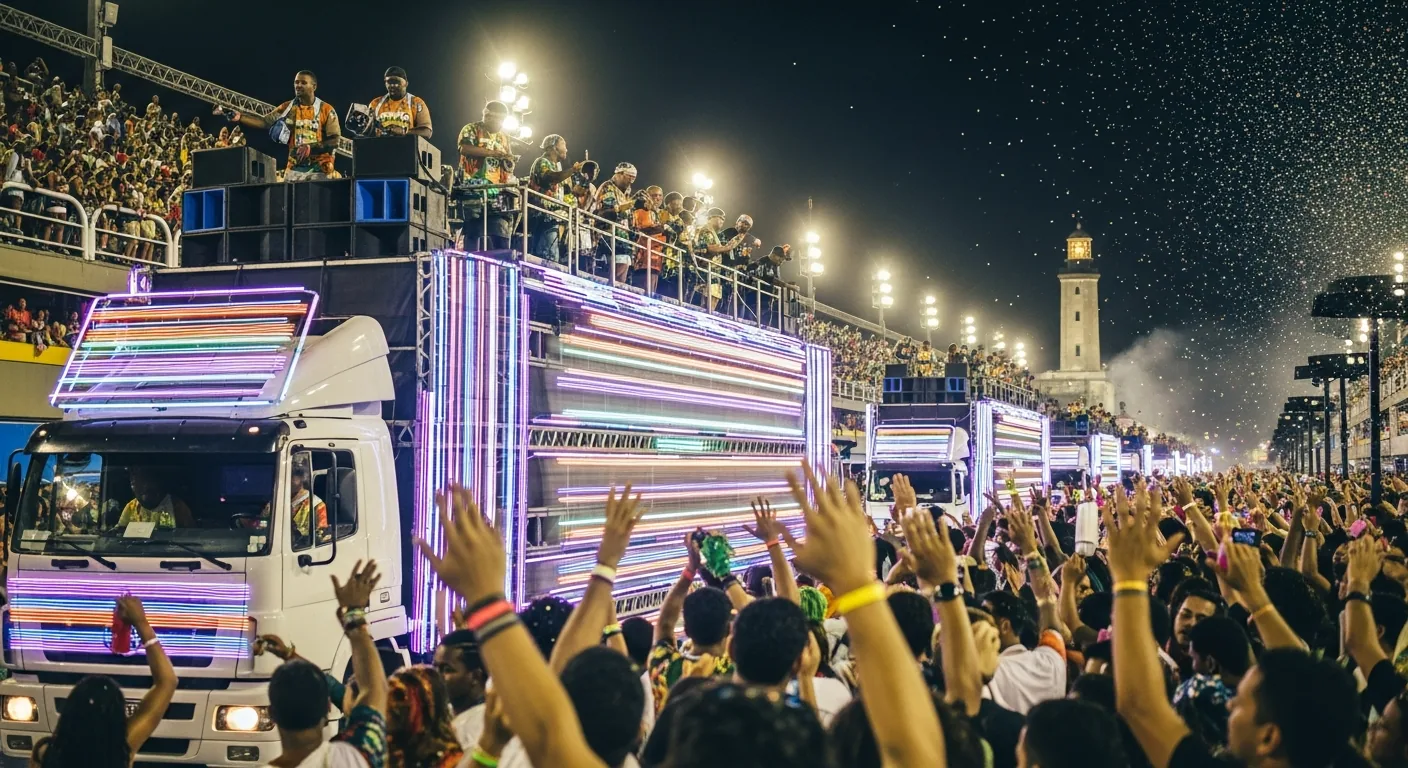
Salvador is the Brazilian city that lives on music year-round, not just in February. The Salvador Carnival is the largest in the world (2.5 million people across six days) and is radically different from Rio's: there is no sambodrome here — there are trio elétricos, sound trucks moving through three street circuits, with the crowd walking alongside. Outside Carnival, the city has three distinct scenes: Pelourinho Tuesdays (Olodum, Filhos de Gandhi, samba-reggae live in the streets), Rio Vermelho at night (bars, MPB, jazz, the city's most sophisticated nightlife), and the axé/pagode circuit (Concha Acústica, Wet'n Wild, Casa de Inovação Sertaneja). This guide maps it all, with hours, prices, and what to wear.
Why Salvador's music is different
Bahia is where African rhythms arrived intact and were never diluted. While in Rio the samba became national pop, in Salvador the drums kept playing in Yoruba and Jeje style inside the terreiros, and at some point in the 1970s and 80s they spilled into the streets and became samba-reggae, axé, afoxé, arrocha, and — more recently — pagode baiano. Almost all of these genres can be traced to a specific corner of the historic center or a specific neighborhood. Listening to music in Salvador is a live geography: every rhythm has an address, and the addresses are still open.
Salvador Carnival — how it actually works
Let's start with the event that defines the city. Salvador Carnival officially runs six days (Thursday to Tuesday of Carnival, usually in February), with the Furdunço and Pipoca do Senhor do Bomfim stretching it back to the previous Saturday, and the Ash Wednesday Arrastão as the epic close. On every one of those days, three parallel circuits run at the same time:
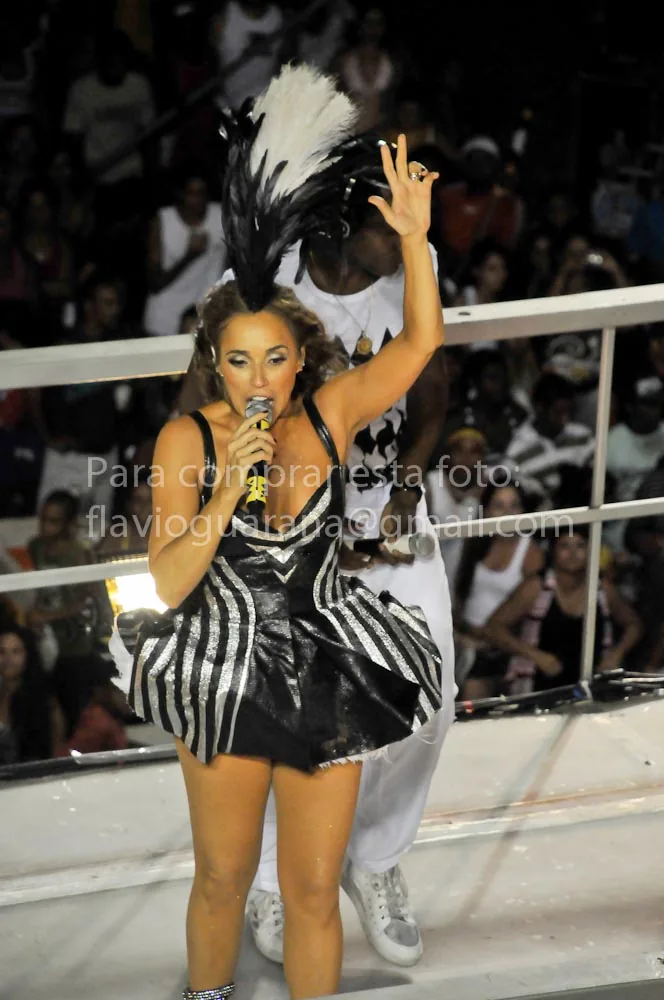
Circuito Dodô (Barra–Ondina) — three and a half kilometers between the Farol da Barra and the Hotel Pestana Bahia in Ondina. The most commercial circuit, the most upscale, and home to the biggest pop names — Ivete Sangalo, Bell Marques, Daniela Mercury, Léo Santana, Claudia Leitte. The trios pass between the kiosks and camarotes along the seaside Avenida Oceânica.
Circuito Osmar (Centro) — almost five kilometers between the Praça Castro Alves and the Praça da Sé, via Carlos Gomes and Avenida Sete. This is the historic circuit — the original — born in 1950 with the invention of the trio elétrico by Dodô and Osmar, owners of Salvador's "Eletro Som" shop. The most mixed crowd, the cheapest, the most authentic, with the Afro blocs (Ilê Aiyê, Olodum, Filhos de Gandhi) and the independent trios.
Circuito Batatinha (Pelourinho) — confined to the historic center, with fixed stages at the Largo Tereza Batista, Largo Quincas Berro D'água, and Largo Pedro Arcanjo. The cultural circuit: regional music, samba de roda, choro, Bahian MPB, capoeira. No trios, no endless crush, no hangover. This is where you go if you want to spend a Carnival night listening to good music instead of jumping behind a sound truck.
Bloco, camarote, pipoca, abadá — the vocabulary
Salvador Carnival has a specific vocabulary that confuses first-timers. Here it is.
A bloco is the unit: a trio elétrico (truck with stage and sound) + a rope marking the space for those who bought tickets + the revelers walking with it. You don't buy a ticket to Carnival; you buy abadás, the t-shirts/vests that are the entrance pass for a specific bloco. A big-bloco abadá (Bell, Ivete) costs R$ 800 to R$ 4,500 depending on the day, the artist, and whether open bar is included.
A camarote is a fixed structure built along the circuit (balcony, bathroom, bar, prime view of the trio passing) — daily price R$ 700 to R$ 6,000+ at the Camarote Salvador (the most luxurious) or Camarote Brahma. The Camarote Skol Folia and Camarote Salvador sit in Ondina; ticket includes open bar and buffet, and the guest enters mid-morning and leaves at dawn.
Pipoca is what they call those who go to Carnival without abadá and without camarote — just on the street, behind the blocs. The cheapest, most authentic, most democratic option, and where 80% of the actual public stays. Pipoca costs zero, but demands preparation: light clothing, small change, phone secured, small backpack, closed shoes, and an extraction plan (Uber pickup at the end of the day).
A bloco sem cordas is a 2010s innovation: a trio without a protection rope, in which the bloc walks with the pipoca. Ilê Aiyê, Filhos de Gandhi, Cortejo Afro are the principals. Carnival Thursday departure (Ilê) and Tuesday (Gandhi) — watching Ilê Aiyê leave the Liberdade neighborhood, or the 10,000 Filhos de Gandhi processing down Conceição da Praia, is one of the most moving cultural experiences in Brazil.
The Afro blocs — where samba-reggae was born
Salvador Carnival as we know it only exists because, in the 1970s, a group of young Black people from the Liberdade neighborhood — 100% Afro-descendant — decided that the city's Carnival, then dominated by the white elite, needed an answer. In 1974, they created Ilê Aiyê — the first bloco afro in history — which paraded that year with a simple trio and one rule: "only Black people can parade" (a rule still kept today, in respect of the Black movement's principle of "racial space"). Ilê paraded on Carnival Sunday from Liberdade to the Pelourinho, with drums and Yoruba chants, and changed forever what Carnival music in Brazil meant.
In 1979, in Ilê's wake, came Olodum — in the Pelourinho, with Mestre Neguinho do Samba — who took Ilê's drums, sped them up, and codified the samba-reggae rhythm. In 1986, Paul Simon went to Salvador and recorded Olodum on The Rhythm of the Saints; in 1996, Michael Jackson filmed the They Don't Care About Us video with Olodum in the Pelourinho. The bloc became a global brand. Today, the Tuesday public rehearsal in the Pelourinho is still the same rehearsal it was in 1985 — plus a thousand tourists and cameras, but the same percussion.
Filhos de Gandhi, founded in 1949 by Bahian dockworkers after Gandhi's death, is Salvador's oldest Afro bloc (twenty-five years before Ilê). They don't play samba-reggae — they play afoxé, the rhythm directly from candomblé, and parade in blue and white turbans, beach sandals, with 10,000 men (women are not allowed) walking slowly down the Pelourinho on Carnival Tuesday. It is the definitive image of Bahian Carnival.
Cortejo Afro, founded in 1998 in the Ilê Axé Oyá terreiro in Pirajá, is the new generation of Afro blocs — more experimental rhythm, with afrobeat and hip-hop influence, and a more contemporary visual aesthetic.
Axé music — when samba-reggae went pop
In 1985, in Olodum's wake, a band called Reflexus and singers like Luiz Caldas and Margareth Menezes began mixing the Afro-bloc percussion with electric guitars, basses, and pop-rock aesthetics. The result was named axé music ("axé" = vital energy in Yoruba), and dominated Brazil between 1990 and 2005. The names you need to know:
Daniela Mercury — the first big axé star, ex-dancer, who released Swing da Cor in 1991 and made the 1992 international tour that brought Bahian music to the world. Still leads a trio every Carnival.
Ivete Sangalo — started in the 1990s with Banda Eva, went solo in 1999, and since 2003 has been the biggest star of Bahian Carnival. Madison Square Garden show, Beyoncé collaboration, prime-time Brazilian TV. Her trio's pass draws the largest crowd at any Carnival in the world.
Bell Marques — vocalist of Chiclete com Banana from 1980 to 2014, then solo. Classic Bahian style, romantic, deep voice, uninterrupted Carnival hits since the 1980s.
Léo Santana — the next generation, started in Parangolé and went solo in 2014 in pop-baile mode. Streaming success and the "Gigante" of the contemporary trio elétrico.
To hear axé outside Carnival, there are the ensaios — preparatory shows that run November to January at venues like Wet'n Wild (the water park that doubles as a concert hall), Concha Acústica do TCA, and Casa de Inovação Sertaneja. Tickets R$ 100 to R$ 400 depending on the artist.
Pelourinho Tuesdays — the most authentic cultural night
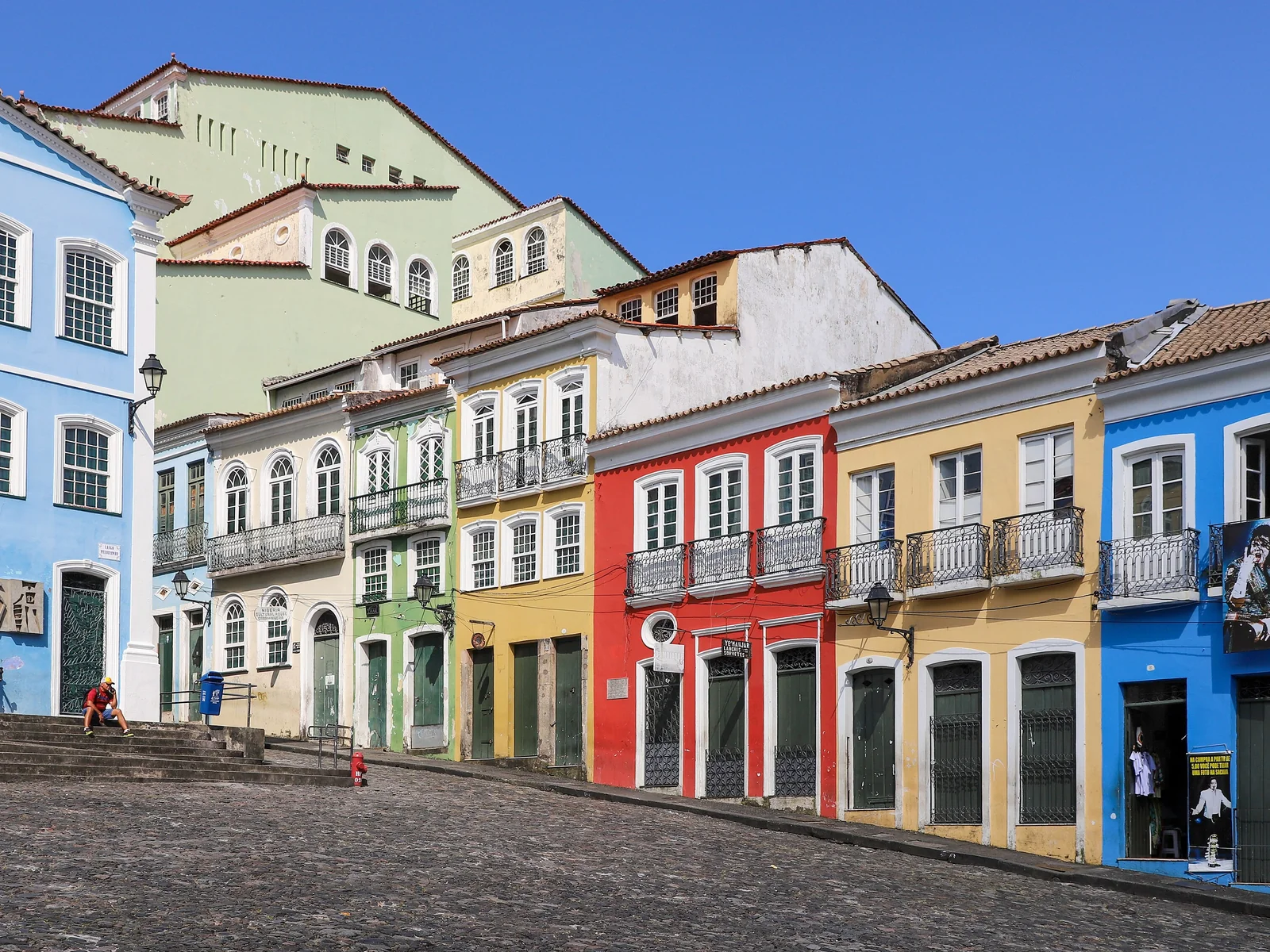
Independent of Carnival, there is one weekly event that is the spine of Salvador's cultural life: Terças da Bênção in the Pelourinho. They start at 6 p.m. with the Latin-and-atabaque mass at Igreja de São Francisco, continue with open-air programming in the historic center's squares, and close around 11 p.m.
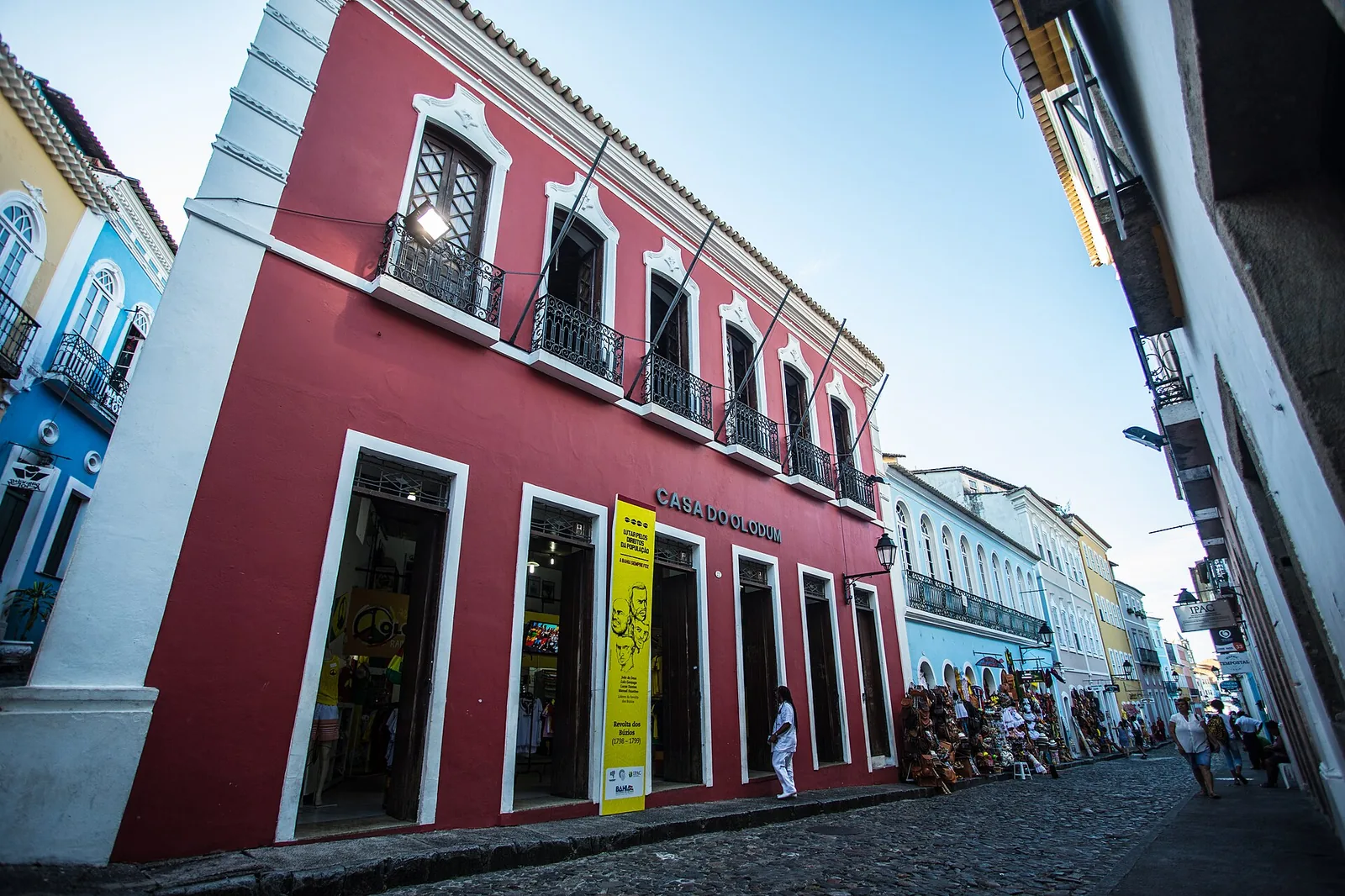
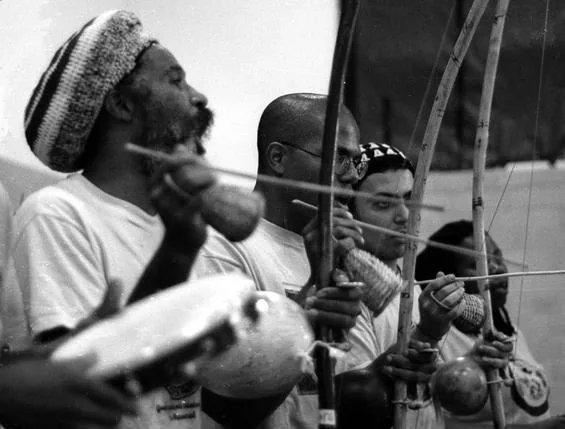
The typical Tuesday menu: at 7 p.m., open capoeira roda at Largo Tereza Batista; at 8 p.m., Olodum rehearsal at Casa do Olodum (R$ 30 to R$ 60); at 8:30, samba show at Largo Quincas Berro D'água (free); at 9, raiz samba roda at Casarão dos Quintais or Casa do Samba da Bahia; until 1 a.m., bars on Praça da Sé with live music. Via guests, lodged a 10-minute walk away, do the circuit on foot, dine en route (Maria Mata Mouro, Uauá, O Coliseu), and return by Uber or walking.
Rio Vermelho — Salvador's grown-up nights
If the Pelourinho is the touristic cultural life, Rio Vermelho is the locals' nightlife. Historic bohemian quarter, home of Caymmi, Vinicius, and Jorge Amado, it concentrated Bahia's intelligentsia in the 1950s and 60s, and still today holds the city's best bars, restaurants, and live music venues.
The cardinal points. Largo da Mariquita — the central square, with old bars: Cantina da Lua (a classic since 1950, sidewalk tables, cold beer), Cassio Olho-Maluco (ironic name, the most authentic bar in the neighborhood), Borogodó (live samba on Fridays and Saturdays, R$ 30 cover), and Mariquita (the mother house). Largo de Santana — where the acarajé women set up (Dinha, Cira, Regina) and the Bar Acarajé da Dinha, open until 2 a.m. Praça Caramuru — newer area, with O Bar do Garcia (contemporary Brazilian, MPB, jazz) and Mu Sushi (sushi-by-night until 3 a.m.). Calçada da Mariquita — the seafront stretch, with the more upscale restaurants (Soeta, Casa de Tereza, Origem) and a spectacular sunset over the sea.
For a classic night in Rio Vermelho: 8 p.m. — a drink at Cassio Olho-Maluco; 9 p.m. — dinner at Soeta (chef Fabricio Lemos, contemporary Bahian) or Casa de Tereza (luxury Bahian cuisine on the veranda); 11 p.m. — live music at Borogodó or Casa do Comendador; 1 a.m. — last drink at Tororó Lounge or Uber home. Reserve every restaurant in high season (December to February).
Concha Acústica and Teatro Castro Alves — the headliners
The Concha Acústica do Teatro Castro Alves (TCA), in Campo Grande, is the open-air amphitheater where most of Salvador's MPB, axé, and international concert programming happens. Capacity 5,000 standing. Tickets R$ 80 to R$ 350. Schedule at the TCA site. In 2026, Caetano Veloso, Maria Bethânia, Gilberto Gil, and Olodum's farewell tour all played there.
Inside the TCA, the Teatro Castro Alves proper is the indoor hall (1,500 seats), where more formal shows happen — orchestra, dance, theater, acoustic concerts. R$ 60 to R$ 250. The Sala do Coro (200 seats) hosts jazz, MPB, and poetry.
The TCA is the best-programmed public cultural venue in Brazil's North-Northeast. Worth checking the schedule before traveling.
Alternative scene: indie, jazz, electronica
For visitors not in Salvador for axé or samba-reggae, there's a small but living alternative scene. Trapiche Barnabé, in the lower city, is the converted port warehouse for indie and electronic — techno and house DJ sets, drag events, LGBT parties until 6 a.m., R$ 40 to R$ 120. Casa Preta, in Comércio, is the home of contemporary Bahian hip-hop — rappers like BaianaSystem (mixing rap, dub, and ijexá), Larissa Luz, and the Ponto de Vista MCs play there when they're home. Bar Banzai, in Rio Vermelho, is jazz and bossa — small, intimate, with quartets of UFBA-trained Bahian players.
The Festival da Primavera (October) and the Salvador Music Conference (November) are the two professional events that bring the national indie scene to the city. Tickets from R$ 80.
LGBT scene — one of Brazil's strongest
Salvador has the third-largest LGBT scene in Brazil (after São Paulo and Rio), with tradition reaching back to the 1980s and the Porto da Barra as the historic gay-friendly beach. Current points: Olodum Soul on Tuesdays (Pelourinho) draws a mixed and historically LGBT crowd. Beco dos Artistas, in the historic center, is the traditional gay-friendly bar street. Aria, in Comércio, is the city's largest gay club — drag programming, parties until 6 a.m., R$ 30 to R$ 80 cover. Concha Negra (roving events) is the contemporary Black-LGBT music night, with Linn da Quebrada, Pabllo Vittar, and MC Carol headlining past editions.
The LGBT Carnival, with the Bloco das Muquiranas and the Festa da Brunete, draws a national crowd. Salvador Carnival week has been one of Brazil's largest LGBT destinations for decades.
Regional music: samba de roda, chula, and the Recôncavo
Outside the pop genres, there is the deeper Bahia. Samba de roda is the rhythm of the Recôncavo (Cachoeira, Santo Amaro, São Félix) — declared Intangible Cultural Heritage of Humanity by UNESCO in 2005. A slower samba, with pandeiro, viola, plate and knife, and call-and-response singing — different in everything from Rio samba. In Salvador, you find authentic samba de roda at the Casa do Samba da Bahia (Largo do Pelourinho), at the Sextas Pretas of the Sociedade Protetora de Desvalidos, and at performances by Dona Dalva and Mestre Antônio at the Recôncavo samba schools (visit arranged by Via on request).
Arrocha — Bahian romantic genre of the 2000s-2010s, born in Itabuna — dominates popular Salvador and interior radio. Pablo do Arrocha, Tayrone, Silvanno Salles are the names. Not a tourist scene, but if you want to see it, the Casa de Inovação Sertaneja (Vilas do Atlântico, outside the center) and Studio HD (Pituba) are the venues. Cover R$ 60 to R$ 150.
Pagode baiano (also called pagodão), the dominant genre in Salvador since the 2000s, is the evolution of axé with tamborzão beats and more explicit lyrics. Bands like Parangolé (Léo Santana's old band), Psirico, and É O Tchan are the references. Plays at every popular party and almost every suburban club. For the visitor, pagode is more of an ethnographic curiosity than a destination — but worth understanding as a living genre of Bahian popular culture.
Year calendar — when to come and why
January — Lavagem do Bonfim (second Thursday), Carnival prep, Festival de Verão (3 days at the Arena Fonte Nova). Full city.
February — Carnival (movable week, usually mid-to-late February), the event. Reserve a suite 4-6 months ahead. Lodging prices 3 to 4× normal.
March-April — post-Carnival, the city rests, cultural programming resumes after Easter. Cachoeira Samba Festival (late March).
May-July — São João (June 24 — second-largest popular festival in the Northeast, but in Salvador more discreet than in the interior. Best at Cruz das Almas or Amargosa). Festival da Bahia (July).
August-October — national-tour programming at the Concha (Caetano, Bethânia, Gil, etc.). Festival da Primavera (October). Cool, dry weather — recommended for guests who prefer music to sun.
November-December — Carnival rehearsals begin. Daniela Mercury, Ivete, Bell, all play open rehearsal at Wet'n Wild or Concha. R$ 150 to R$ 400.
One perfect Salvador night
For guests in town three to seven nights who want one night that defines the trip, here is our suggested Tuesday itinerary:
5:30 p.m. — pre-dinner: cold beer at Cantina da Lua, on the Praça da Sé, with the Cathedral in view.
7:00 — moqueca dinner at Maria Mata Mouro, in the Pelourinho. Reserve.
9:00 — public Olodum rehearsal at Casa do Olodum, Largo do Pelourinho. R$ 60 to R$ 100. Two hours of pure percussion, with people dancing in the street.
11:00 — walk down the Pelourinho slope, stop at one of the street tables for cachaça or caipirinha, listen to the samba still playing in some plaza.
12:30 — Uber back to the suite (R$ 8 to R$ 15 from the Pelourinho up to the Cidade Alta), or 10-minute walk for Via guests.
Total cost for two: R$ 350 to R$ 600 including dinner with wine, cover, drinks, and Uber. This is the kind of night that ends up on the phone as video and that gets retold at home for the rest of the year.
Salvador, in images
Photographs of the neighborhood, restaurant, and beach featured in this guide, with credit to each photographer.
Ready to discover Salvador?
Book one of the four Via Avantgarde suites in the Pelourinho — and receive the complete guides with recommendations for your stay.