Practical Salvador Guide transfers, safety, weather, money
Airport transfers, Uber, safety by neighborhood, money and PIX, tipping, Portuguese phrases, month-by-month weather, and what to pack. The single page that answers everything guests ask in the week before they fly.
The essentials in 30 seconds
Salvador is a city of 2.4 million, easy to live in for the visitor who follows two rules: always Uber (never a street taxi, never an unfamiliar app), and be discreet with valuables. The Luís Eduardo Magalhães International Airport (SSA) is 28 km from the Pelourinho — 35 to 50 minutes by Uber for R$ 70-110. Use real (R$) in small cash for street purchases (always R$ 200-300 in your pocket) and PIX or international credit card for everything else. Most Via suites have a safe — use it. The Cidade Alta (historic center) is safe by day and during active Pelourinho hours (until 11 p.m.); after 11, take an Uber. Hot weather year-round; the best window is September to November. Here is what nobody else tells you.
Before traveling — visa, vaccines, documents
Visa. Citizens of the EU, Mercosur, UK, and Mexico do not need a visa for stays up to 90 days. The United States, Canada, and Australia do need a tourist e-visa, mandatory since April 2025 — apply at brazil.vfsevisa.com (about US$ 80.90; valid 10 years for US citizens and 5 years for Canadians and Australians; usually issued within a few business days). Always confirm the rules for your nationality on the official portal.
Passport: valid at least 6 months past your return date. Digital copy: photograph your passport and email it to yourself; in case of theft, recovery is faster with a copy.
Mandatory vaccines: Yellow fever (single dose, lifetime validity) — Bahia is a risk zone and the vaccine is required by the Health Ministry for travelers from certain regions. Take it at least 10 days before departure. Recommended: hepatitis A, hepatitis B, tetanus, MMR. Optional but useful: dengue (Qdenga vaccine, available for Brazilian residents), typhoid, rabies (only for ecological/Chapada hiking).
International health insurance: mandatory. Brazil's public system (SUS) handles emergencies, but private hospitals are faster and better suited to visitors. Private hospital costs in Salvador (Hospital São Rafael, Hospital Aliança, Hospital Português): R$ 800-3,000 per consultation, R$ 5,000-25,000 per inpatient stay. We recommend insurers like World Nomads, SafetyWing, or SegTours, with at least US$ 50,000 coverage.
Airport and transfer — what to expect on arrival
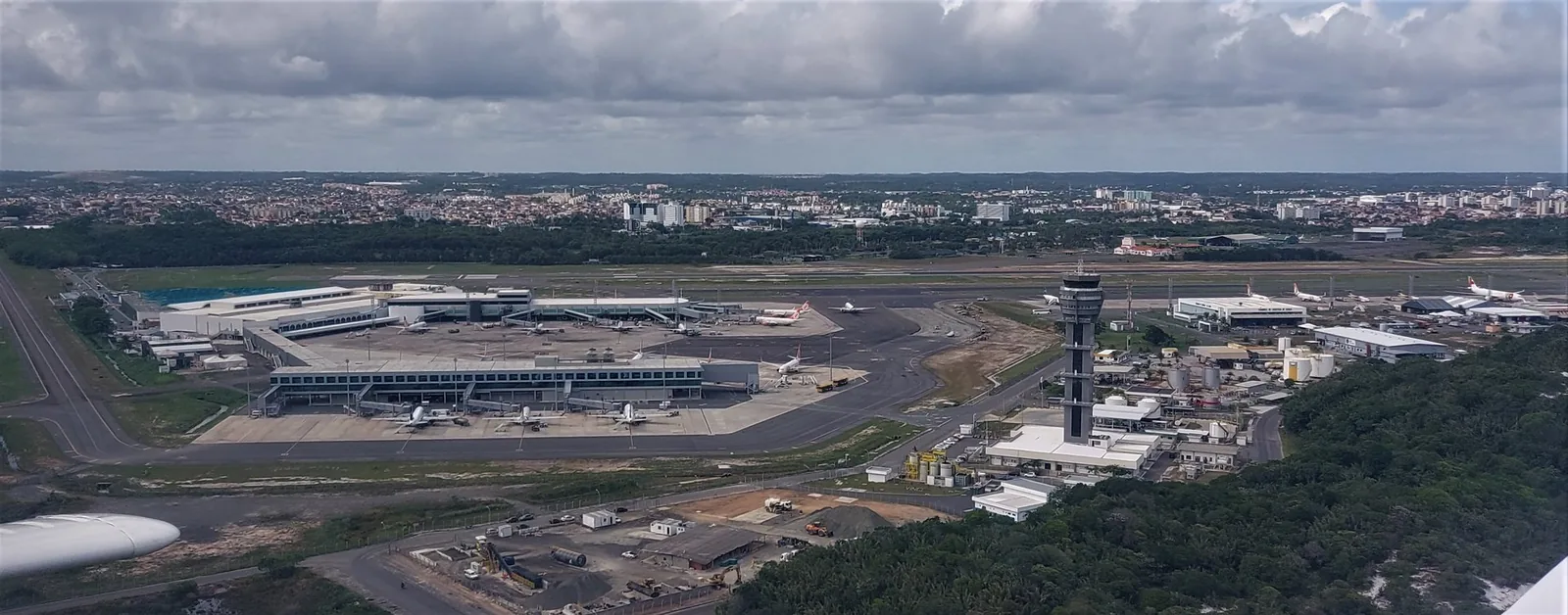
The Deputado Luís Eduardo Magalhães International Airport (IATA: SSA), also called Salvador Airport, is in Stella Maris, 28 km north of the Cidade Alta. Single terminal, three floors, duty-free at international departures, and reasonable infrastructure (not Lisbon, not Madrid, it's Salvador — clean, functional, simple).
On arrival, three transport options to the center:
Uber/99 — what we always recommend. Exit through the ground level, in the departures area (not the taxi area). The Uber pickup point is clearly signed. R$ 70 to R$ 110 to the Pelourinho, 35 to 50 minutes depending on traffic. Always Uber, never the random street taxi — the taxi charges a fixed airport fare of R$ 220 to the center, more than double the Uber, and there are sporadic reports of taxi drivers taking visitors the long way.
Via Avantgarde private transfer — if you reserved the suite with us, you can include a private transfer. Driver identified with a "Via Avantgarde — [your name]" sign at the arrivals gate, executive vehicle (Toyota Corolla, Hyundai HB20 Sedan or similar), onboard wifi, cold water, and the driver drops you at the suite door with the key (Via coordinates key handover by WhatsApp). R$ 220 one way or R$ 400 round trip. Request 24h ahead.
Executive bus — exits at domestic arrivals, R$ 18, 1h to Praça da Sé (Pelourinho). Not recommended for guests with large luggage or in peak hours, but the most economical and functional option.
Don't take a moped offering a ride at the airport; it's unregulated and Via guests who have tried have lost luggage.
Getting around the city
Salvador is a city of elevations — the Cidade Alta (where the Pelourinho, Barra, Rio Vermelho, and Via Avantgarde sit) is 75 meters above the Cidade Baixa (Comércio, Bonfim, Boa Viagem). The topography means few walks are linear. Use Google Maps, always — it understands Salvador's topography better than Waze.
Uber/99 are the universal apps. In Salvador, 99 is usually 10-20% cheaper than Uber for the same routes. Both accept international cards and PIX. Uber Black/99 Top exist for those who prefer newer vehicles. Typical fare: R$ 8-12 for short trips (Pelourinho to Barra), R$ 15-25 for medium trips (Pelourinho to Rio Vermelho), R$ 30-50 for long trips (Pelourinho to Itapuã or the airport). Peak-time multipliers (5-7 p.m.) or Carnival can double the fare.
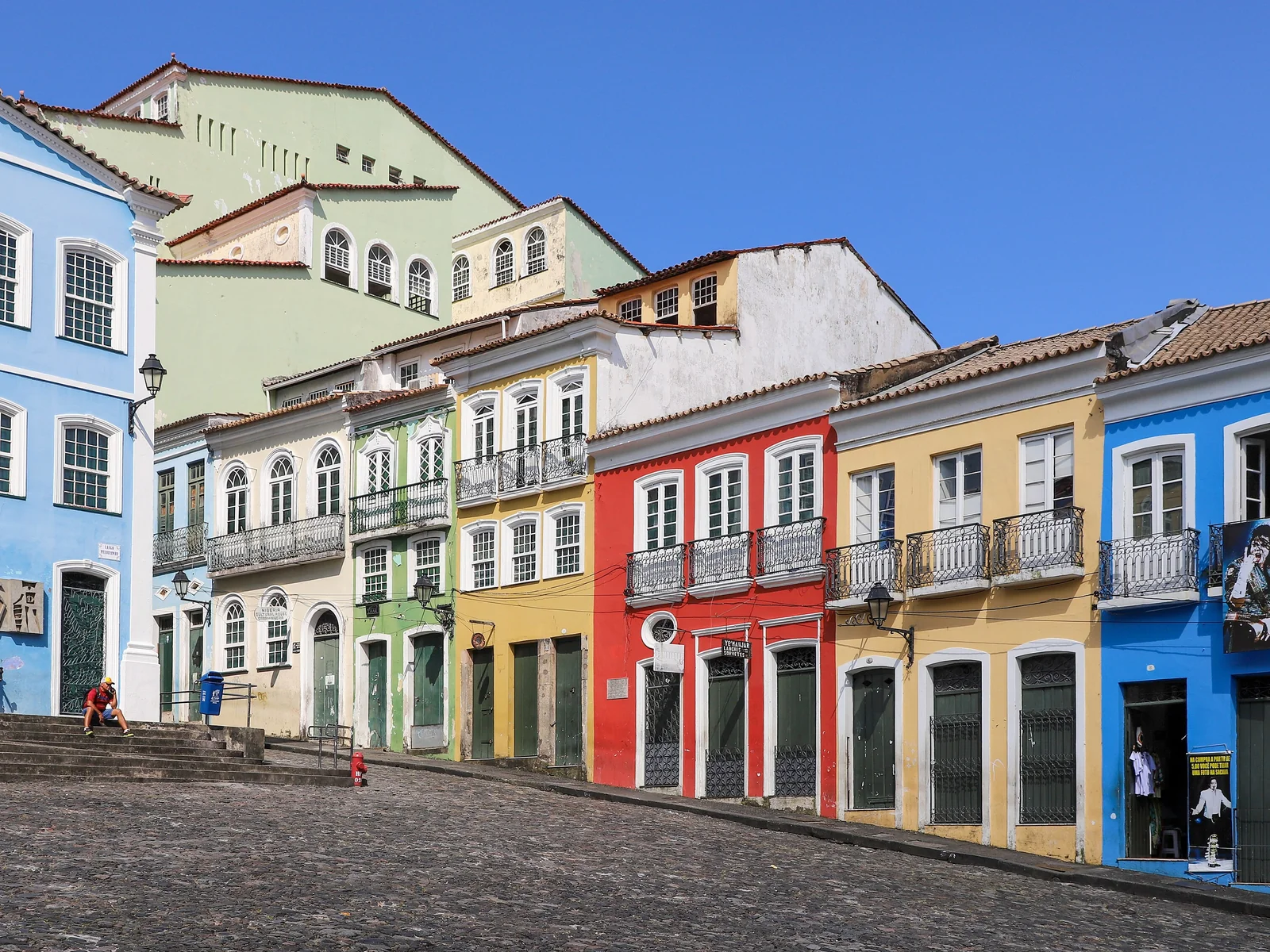
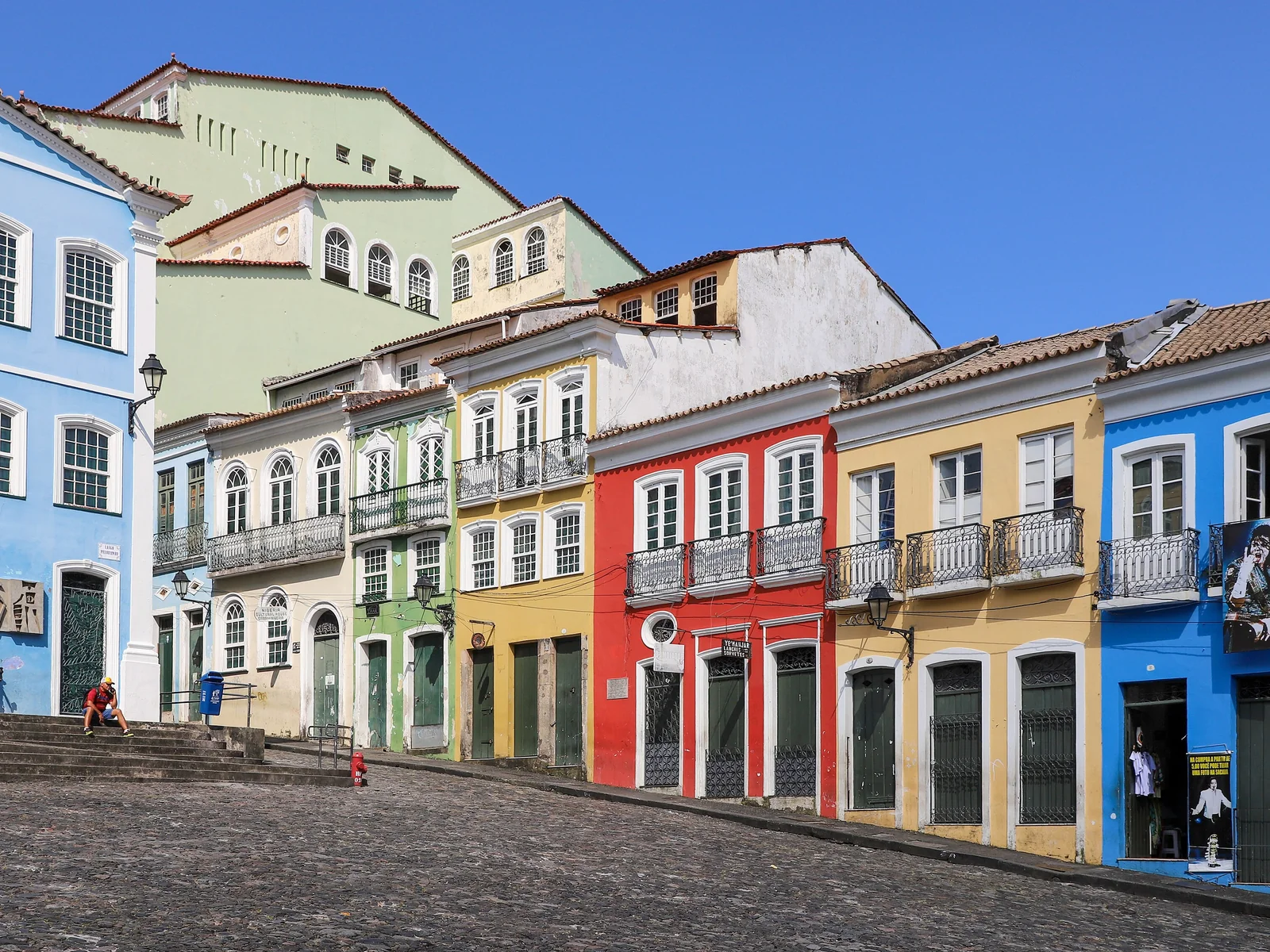
Walking: within the Cidade Alta — Pelourinho, Largo Cruzeiro do São Francisco, Praça Castro Alves, Largo do Carmo — is the best way to know the area. Sidewalks are uneven (mind narrow heels), but distances are short. Via suites are 5-10 minutes' walk from the Largo do Pelourinho.
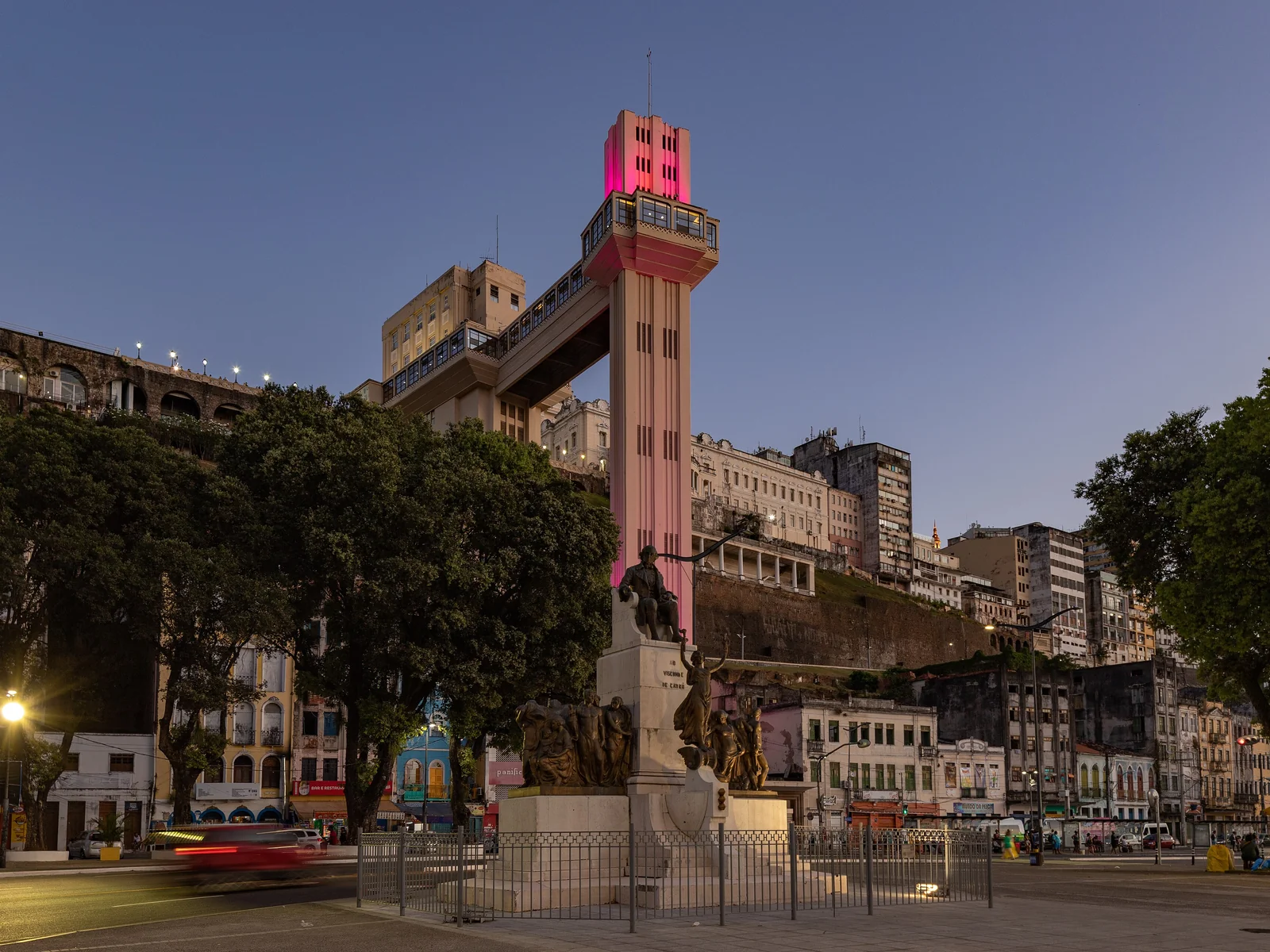
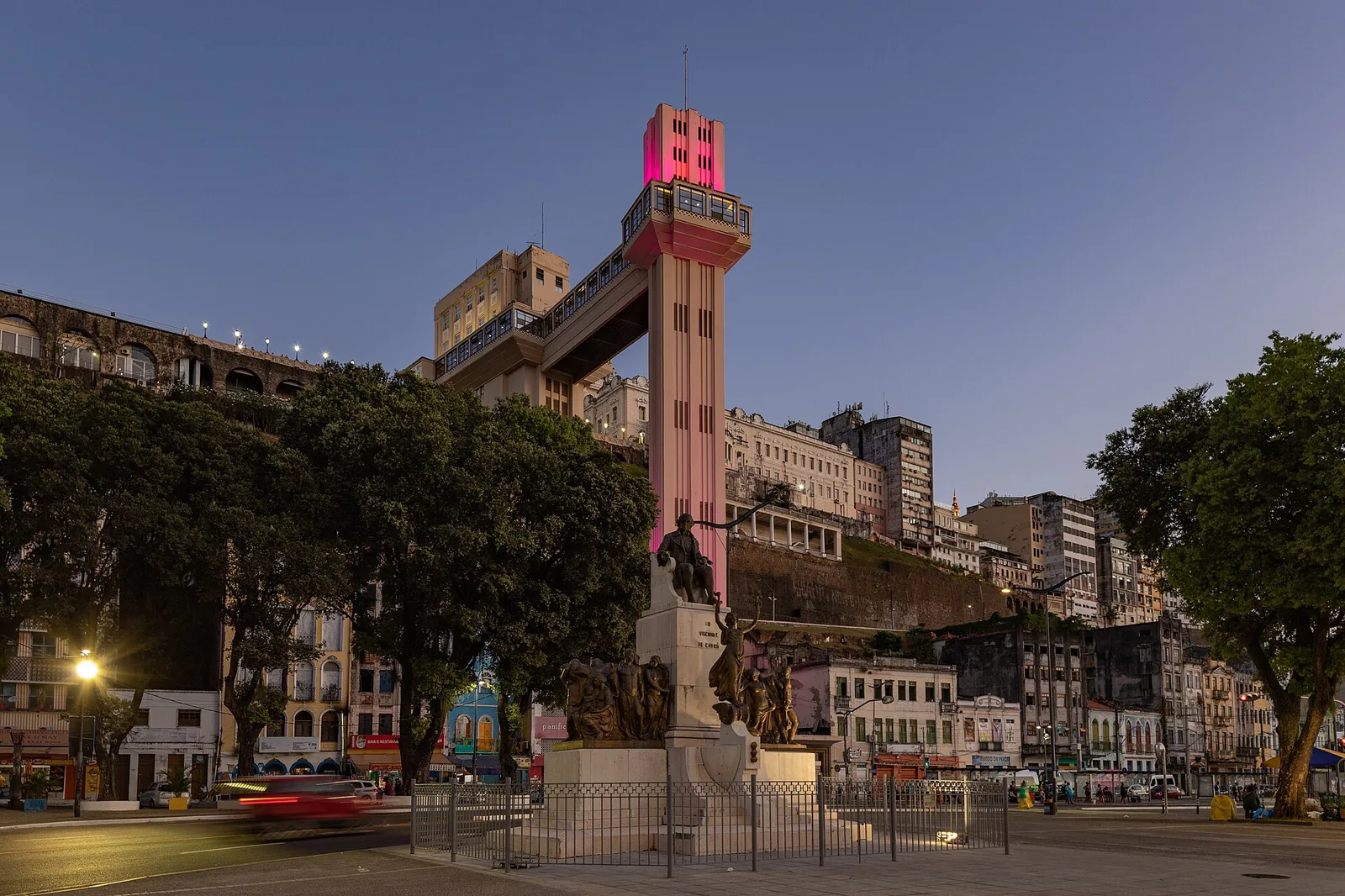
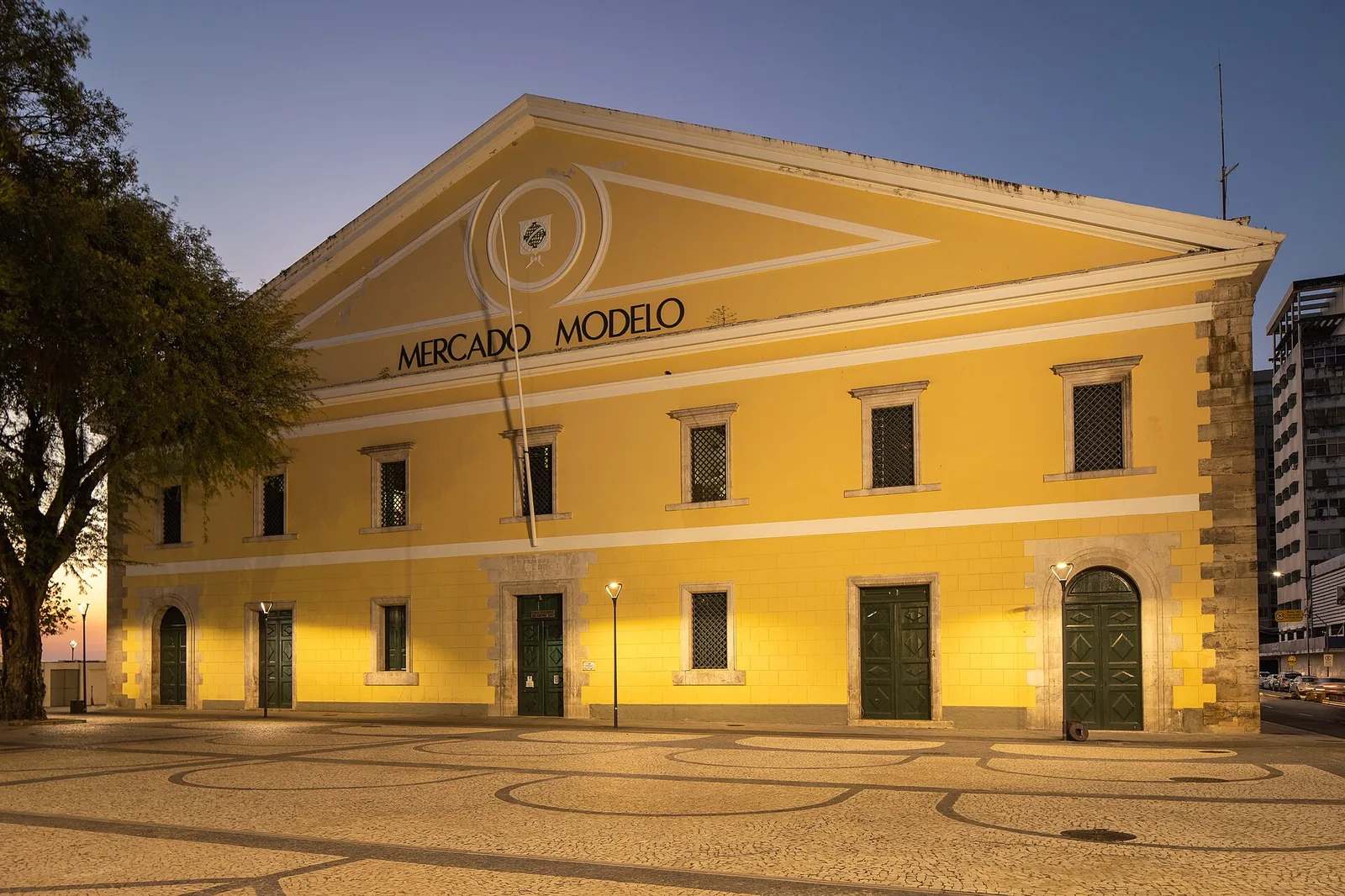
Elevador Lacerda: the historic public elevator (1873, the world's first) connects the Cidade Alta (Praça Tomé de Souza) to the Cidade Baixa (Comércio) in 30 seconds. R$ 0.15. Open 6 a.m. to 11 p.m. daily. The fastest, cheapest way down to the Mercado Modelo, the Trapiche Barnabé, and the Sorveteria da Ribeira. Use without hesitation.
Plano Inclinado Gonçalves: alternative to Lacerda, connects Praça da Sé to Comércio. R$ 0.50, slower, less touristy, more authentic.
Buses: they exist, they work, but not recommended for visitors — confusing system if you don't speak Portuguese, and Uber is so cheap it isn't worth it.
Rental car: unnecessary and not recommended. Salvador has chaotic traffic, hard parking, and the urban tourist destinations are all Uber-accessible. Rent a car only if doing a road trip to the Chapada Diamantina or the north coast. Rental: Movida, Localiza, Hertz at the airport. R$ 150-300/day for a compact sedan.
Safety by neighborhood
Let's be honest. Salvador's crime indicators are above the Brazilian average, and that shows up in statistics no one hides. But the violence is geographically concentrated in peripheral areas (Subúrbio Ferroviário, Cabula, Pirajá) that visitors don't go to. The tourist areas — Pelourinho, Barra, Rio Vermelho, Centro Histórico, Itapuã — are safe for visitors who follow basic rules.
Pelourinho and Cidade Alta (8 a.m. to 10 p.m.): safe. Strong police presence (Tourist Police and Military Police), permanent patrol of the historic center. Walk normally, no concern. After 10 p.m., still safe on Tuesdays, Wednesdays, Fridays, and Saturdays with cultural programming; other nights, take an Uber. Cautions: don't use your phone as an accessory (hold it or store in a closed pocket), no visible jewelry, leave the passport in the suite (with a copy in your pocket).
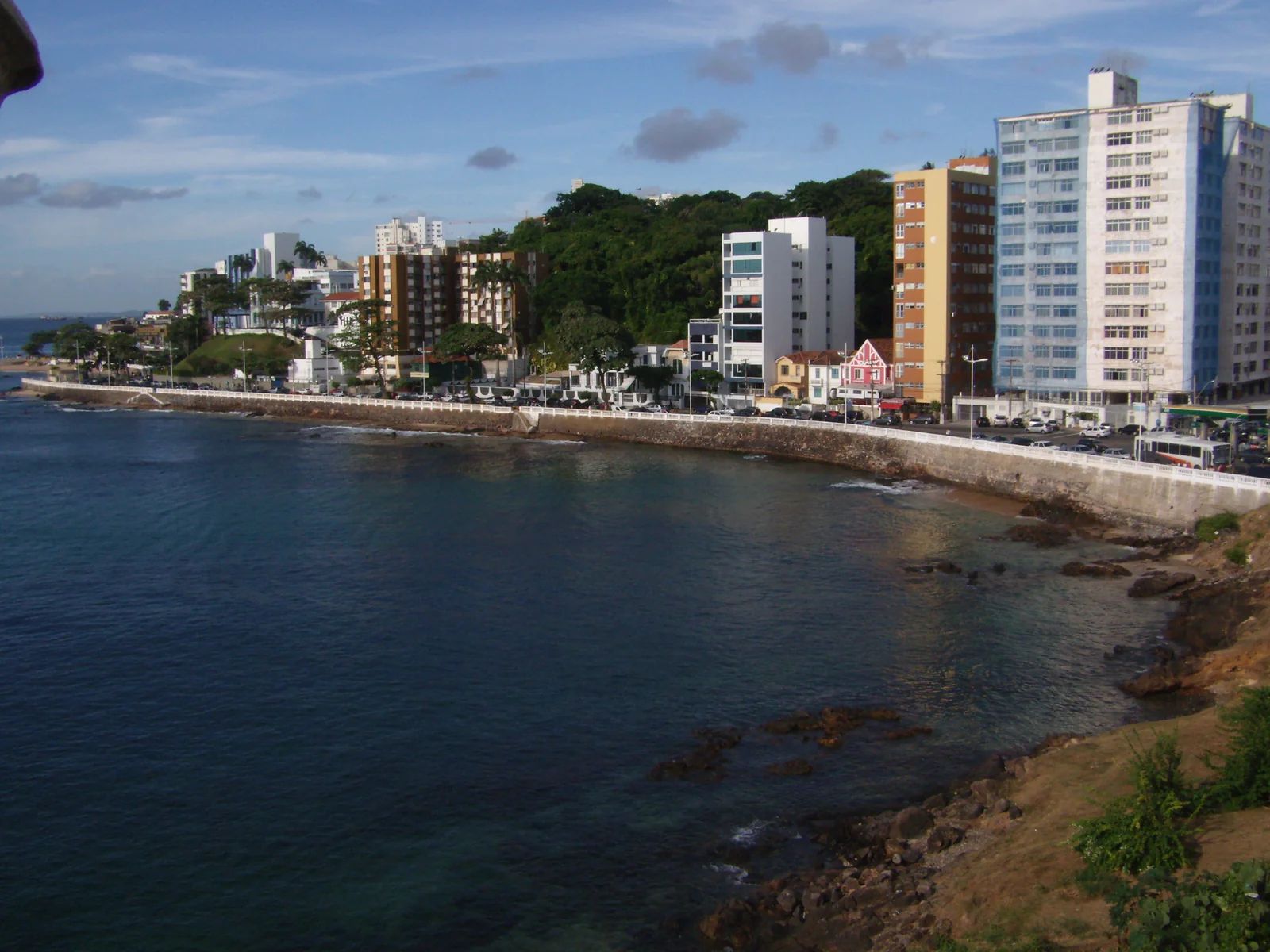
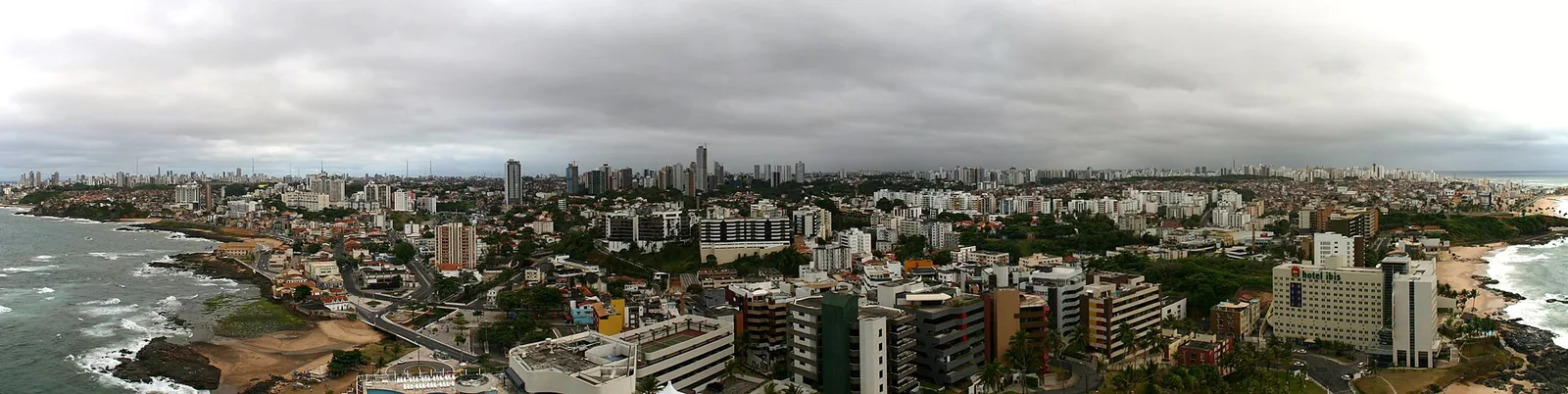
Barra (8 a.m. to 11 p.m.): very safe. Residential-tourist neighborhood with a busy boardwalk, outdoor restaurants, and sunset over the sea. Walk at night to Avenida Sete without concern.
Rio Vermelho (8 a.m. to 2 a.m.): safe within the bar quadrilateral (Largo da Mariquita, Largo de Santana, Praça Caramuru). Late-night exits on foot only within the neighborhood; for return to the Cidade Alta, always Uber.
Itapuã, Stella Maris, Praia do Forte: safe in tourist and commercial areas. As with any beach neighborhood, avoid long walks on deserted stretches of sand at dusk.
Comércio, Cidade Baixa: safe in business hours (8 to 6), avoid at night. This is the area of the Mercado Modelo, the Conceição da Praia church, and the Sorveteria da Ribeira. Visit in the morning or early afternoon, return to the Cidade Alta before dark.
Bonfim, Boa Viagem: safe by day and during religious festivals (Lavagem do Bonfim in January). At night, take an Uber to arrive and to leave.
Areas to avoid without a local guide: Subúrbio Ferroviário (peripheral industrial-residential zone), Cabula and Pirajá (large favelas), Periperi and São Caetano (neighborhoods far from the tourist circuit). There is no tourist reason to visit any of these neighborhoods, and a visitor without a guide stands out.
Universal rules that apply to any Brazilian city: never use your phone in the street if not actively walking; never count cash in the street (count inside a bank or shop); wear your backpack on your chest or a cross-body bag; don't get distracted with a stationary map at the corner (step into a café if you need to consult it). If a local asks for money, give R$ 5 without hesitation and keep walking — the subtle difference between asking and demanding is important to maintain.
Money, PIX, cards, and tipping
The real (R$) is the currency. In May 2026, R$ 1 ≈ US$ 0.18 (1 USD ≈ R$ 5.50) and ≈ € 0.17 (1 EUR ≈ R$ 6.00). Inflation runs around 4% a year, and the prices in this guide are May 2026.
Currency exchange: change before arriving (at a credentialed Brazilian exchange house, or via online banking) or at SSA arrivals. Don't change on the street. Recommended for getting reais: Cotação, at the Shopping Barra, gives a better spread than the airport.
ATMs: machines at Banco do Brasil, Bradesco, Itaú, and Caixa accept international cards (Visa, Mastercard, Plus, Cirrus) with a withdrawal fee of R$ 25-40 per operation, max R$ 1,000 or R$ 1,500 per withdrawal. Withdraw once on arrival — the larger the amount, the smaller the per-unit fee impact. ATMs at SSA, in every shopping mall (Barra, Salvador Shopping, Iguatemi), and at some hotels. Open 24/7.
Credit card: accepted at almost every restaurant, hotel, mall shop. Visa and Mastercard interchangeably; American Express has limited acceptance (50-70% of restaurants). Always notify your bank before traveling (or use the bank app to enable Brazilian transactions), or your first withdrawal or purchase may be blocked as suspected fraud.
PIX: Brazil's instant payment system. QR-code-based, transfers in seconds to any Brazilian account. For foreign visitors: use Wise (TransferWise) or Revolut, both have a Brazilian real account and full PIX functionality. Setting up PIX before the trip puts you on parity with locals — pay the street acarajé via PIX, the Uber via PIX, the coffee via PIX. In 2026, PIX is the most-used payment in Salvador, more than cash.
Tipping: at restaurants, the 10% gratuity is automatically added to the bill as "serviço" — considered standard. No tipping in a taxi or Uber. At a hotel, R$ 5-10 to the bag carrier is gracious. For a massage or guided tour, 10-15% is appropriate. There is no heavy "tipping culture" like the US; Brazilians don't expect more than the included service.
Cash on hand: always have R$ 100-300 in R$ 10, R$ 20, R$ 50 notes for street acarajé, the rare taxi that won't take card, small payments. Don't walk around with R$ 1,000+ in cash.
Language and essential phrases
Brazil speaks Portuguese, and Salvador specifically speaks a musically distinct variant — drawn-out Bahian accent, with regional slang. At hotels, tourist restaurants, and mall shops, you'll find reasonable English. Outside those places, Portuguese is the only language. A few phrases save the day.
Greetings:
- Bom dia / Boa tarde / Boa noite — good morning / good afternoon / good evening (or goodnight)
- Obrigado (man) / Obrigada (woman) — thank you
- Por favor — please
- Com licença — excuse me
- Desculpa — sorry
- Tudo bem? — how's it going?
- Tudo bom — fine, all good
Restaurant:
- A conta, por favor — the bill, please
- Sem pimenta, por favor — without chili, please (essential in Salvador, where everything comes with hot pepper)
- Eu sou vegetariano(a) — I'm vegetarian
- Eu tenho alergia a... — I'm allergic to...
- Quanto custa? — how much?
- Para viagem — to take away
- Aceita cartão? — do you take card?
Directions and Uber:
- Por favor, me leve a [endereço] — please take me to [address]
- Onde fica...? — where is...?
- Estou perdido(a) — I'm lost
- Devagar, por favor — slowly, please (for an Uber driver)
- É longe? — is it far?
Emergency:
- Police: 190
- Ambulance (SAMU): 192
- Fire department: 193
- Tourist Police (Salvador): (71) 3116-6817 — answers in English and Spanish
- Recommended translation app: Google Translate (offline, download Portuguese before the trip)
Weather — when to come and why
Salvador is 13° south of the Equator. It has no winter. Temperatures range from 22°C (June low) to 32°C (February high), averaging 25-28°C year-round. It rains all year too, but rain concentrates between May and July.
January to March — summer. 28-32°C heat, firm sun, brief afternoon rain, warm sea. High season (especially Carnival week). Reserve 4-6 months ahead.
April to May — autumn. 26-29°C, more frequent but brief rains. Good season — lower prices, fewer tourists, hot days mixed with afternoon rain.
June to August — Bahian "winter". 22-26°C, heavier rain in June and July (warning: the sea may be rough for Morro de São Paulo in this window), but August is already one of the year's best months. Low season, great prices, popular June festivals in the interior.
September to November — spring. 25-29°C, firm sun, scarce rain, warm calm sea. This is the window we recommend for guests who ask when to come: perfect weather, low crowds, mid-range prices. If I were the visitor, I'd come in October.
December. Start of summer, firm sun, afternoon rain, high crowds for year-end. New Year's Eve at Porto da Barra is one of Brazil's most beautiful experiences — fireworks at sea, white-clad crowd, fireworks shot from independent neighborhood blocs.
What to pack
The essentials. Light clothes in cotton or linen — anything polyester will sweat through immediately. Jeans are uncomfortable (heat, humidity); better linen pants or shorts. White shirts: white is Bahia's color. Wear white at Iemanjá (Feb 2), the Lavagem do Bonfim (second Thursday of January), Pelourinho Tuesdays. Five to six t-shirts are enough for a week — laundry is doable at any Via suite.
Footwear: comfortable sneakers (walking) + leather sandal or Havaiana flip-flops (restaurant AC and beach) + one pair of closed shoes (for nicer dinners). Don't bring narrow heels — Pelourinho's sidewalks destroy them.
Sun: SPF 50 mineral sunscreen (water-resistant) — Bahian sun is the strongest in Brazil. Wide-brimmed hat or cap. Sunglasses. Bikini or swim trunks (don't bring long beach pants; just gets in the way).
Mosquitos: repellent on every wooded beach (Itapuã, Stella Maris, Lagoa do Abaeté). Salvador has dengue endemically in cycles. Use Exposis or OFF! Family.
Electronics: the Brazilian outlet is type N (3 round prongs), 110V in some regions and 220V in others (Salvador is 220V). Bring a universal adapter (or buy one at any shop for R$ 30). Portable charger is useful for evenings in the Pelourinho or at the beach.
Medication: bring what you regularly take, with a prescription in English or Portuguese. In Salvador, 24-hour pharmacies Drogarias Pacheco and Ultrafarma are in every neighborhood. Without prescription, they sell antibiotics (azithromycin, amoxicillin), painkillers, antihistamines, and stomach protectors — which avoids a hospital visit for small things.
What not to bring: expensive jewelry (leave it home), laptop (unless you need it for work — Via has partial coworking in the suites), suit (no one wears one in Salvador, even at fancy dinner).
Eating and drinking — the basics
For a detailed guide, see the Salvador Dining Guide. Here just the fundamentals. Restaurants: 12-3 p.m. lunch, 7-11 p.m. dinner. Reserve in high season (December to February) and on weekends — usually via WhatsApp, rarely by phone. Acarajé: street food at a stand, R$ 12-25 each, always from a baiana in the wide skirt (eating only at a baiana stand is a rule that can save you from a stomach problem). Beer: chope = draft, long neck = 350 ml bottle, litrão = 600 ml shared bottle. Skol, Antarctica, Brahma, and Itaipava are the nationals; Heineken, Stella Artois, and Eisenbahn are the premium ones. R$ 10-18 per long neck.
Cachaça and caipirinha: quality cachaça in Salvador. Brands to try: Yaguara Ouro, Magnífica, Maria Izabel, Paratudo. Caipirinha at any bar, R$ 18-30. For visitors — always ask for a cachaça caipirinha (not vodka); the vodka version is the resort version, not the Brazilian one.
Water: never drink tap water. Buy a plastic bottle at the corner store, or ask for água sem gás (still) or com gás (sparkling) at any restaurant. R$ 5-8 per 500 ml bottle.
Health, water, and the visitor's stomach
Salvador is a tropical city, and the stomach of someone arriving from Europe or the US has a 50% chance of complaining in the first 3-5 days. Not the end of the world. Drink Floratil or a probiotic on day one (sold at any pharmacy, R$ 35), avoid desserts with unpasteurized cream, keep hydration high. If diarrhea hits, Imecol or Imodium (over the counter) resolve it in 24h.
Dengue, chikungunya, Zika: mosquito-borne illnesses present in Salvador in cycles. Use repellent, especially in wooded areas. Symptoms (high fever + joint pain + skin rash) require a hospital visit.
Sun: sunburn happens fast in Salvador. Thirty minutes without sunscreen on the beach and you're red. Reapply every 2 hours.
Quality private hospitals: Hospital São Rafael (Av. São Rafael), Hospital Aliança (Av. Juracy Magalhães), Hospital Português (Av. Princesa Isabel). All accept international insurance. 24-hour emergency care, English translator available.
Wifi, phone, and roaming
Wifi: free in every Via suite, every hotel, most restaurants (just ask — "qual a senha do wifi?"). At the airport and in shopping malls, free. Average Salvador speeds 50-100 Mbps.
Local SIM: for stays over 5 days, worth getting a Brazilian prepaid SIM. Vivo, Claro, and TIM are the three carriers. SIM at any official store (at the airport, Shopping Barra, Salvador Shopping) for R$ 30-50, with a 10 GB + unlimited calls package for R$ 50-80/month. Bring your passport (CPF not required for tourists). Your phone has to be unlocked from your home carrier before traveling.
e-SIM: the modern alternative. Airalo, Holafly, Nomad offer Brazil e-SIMs installable before the trip, no physical SIM swap. R$ 60-150 for 7 days with 5-10 GB. Works on iPhone XR or newer, Samsung Galaxy S20 or newer.
Outlets, voltage, and adapters
Salvador is 220V, 60 Hz. Outlets are type N (Brazilian standard, 3 round prongs). Modern phone and laptop chargers are dual-voltage (100-240V) — they only need the physical adapter. 110V hairdryers, flat irons, and shavers don't work on 220V; they burn out immediately. Check before flying.
Via suites have universal adapters available (mention it when booking).
Photography and etiquette
Photos: free in the street, at monuments, on the beach. In candomblé terreiros and inside churches during mass, do not photograph. In the Pelourinho, avoid photographing poor street people without permission — it's disrespectful. For a photo with the acarajé baianas, a R$ 5-10 tip is appreciated.
Drones: require ANAC authorization for amateur use. Don't fly over crowded beaches, the Pelourinho, or events. Fines R$ 1,500 to R$ 5,000.
Phone at the beach: never as an accessory. If taking a photo, take it and put the phone away. Waterproof pouches (R$ 15-25 at any shop) protect the device from sand, water, and pickpockets.
How Via Avantgarde helps
Booking with Via is more than booking a suite. Before flying, you receive a digital welcome pack with a map, a recommended-restaurant list, and the 24-hour concierge WhatsApp. On arrival, optional private transfer and key delivery. During your stay, a bilingual concierge — Nancy Ross and team — available to reserve restaurants, organize transfers, recommend a masseuse, schedule a terreiro visit, buy Carnival tickets, or simply suggest the right restaurant for the night.
What we deliver is not a reservation platform. It is the infrastructure of someone who lives in Salvador, lent to you for seven to ten days. An organized visitor in Salvador is a well-hosted visitor in Salvador.
Salvador, in images
Photographs of the neighborhood, restaurant, and beach featured in this guide, with credit to each photographer.
Ready to discover Salvador?
Book one of the four Via Avantgarde suites in the Pelourinho — and receive the complete guides with recommendations for your stay.