What Salvador Costs three budgets, in reais
Salvador Brazil trip cost in 2026: three daily budgets in reais with US$ and € equivalents, food and transport prices, Carnival maths and a one-week table.
The essentials in 30 seconds
The honest answer on Salvador Brazil trip cost, at August 2026 exchange rates (about R$ 5.10 to the US dollar, R$ 5.90 to the euro): a careful traveller gets by on R$ 150–220 a day, real comfort — a good double in the centre, moqueca dinners, Ubers on a whim — runs R$ 450–600 per person, and R$ 1,200 a day buys close to the top of what the city sells. Street food costs a few reais, museums charge R$ 20, a cross-town Uber is R$ 10–20, and the famous elevator costs one real. Cards work nearly everywhere, including street stands; Pix mostly does not work for foreigners; Carnival week rewrites every number. The line items are below.
The exchange rate does half the work
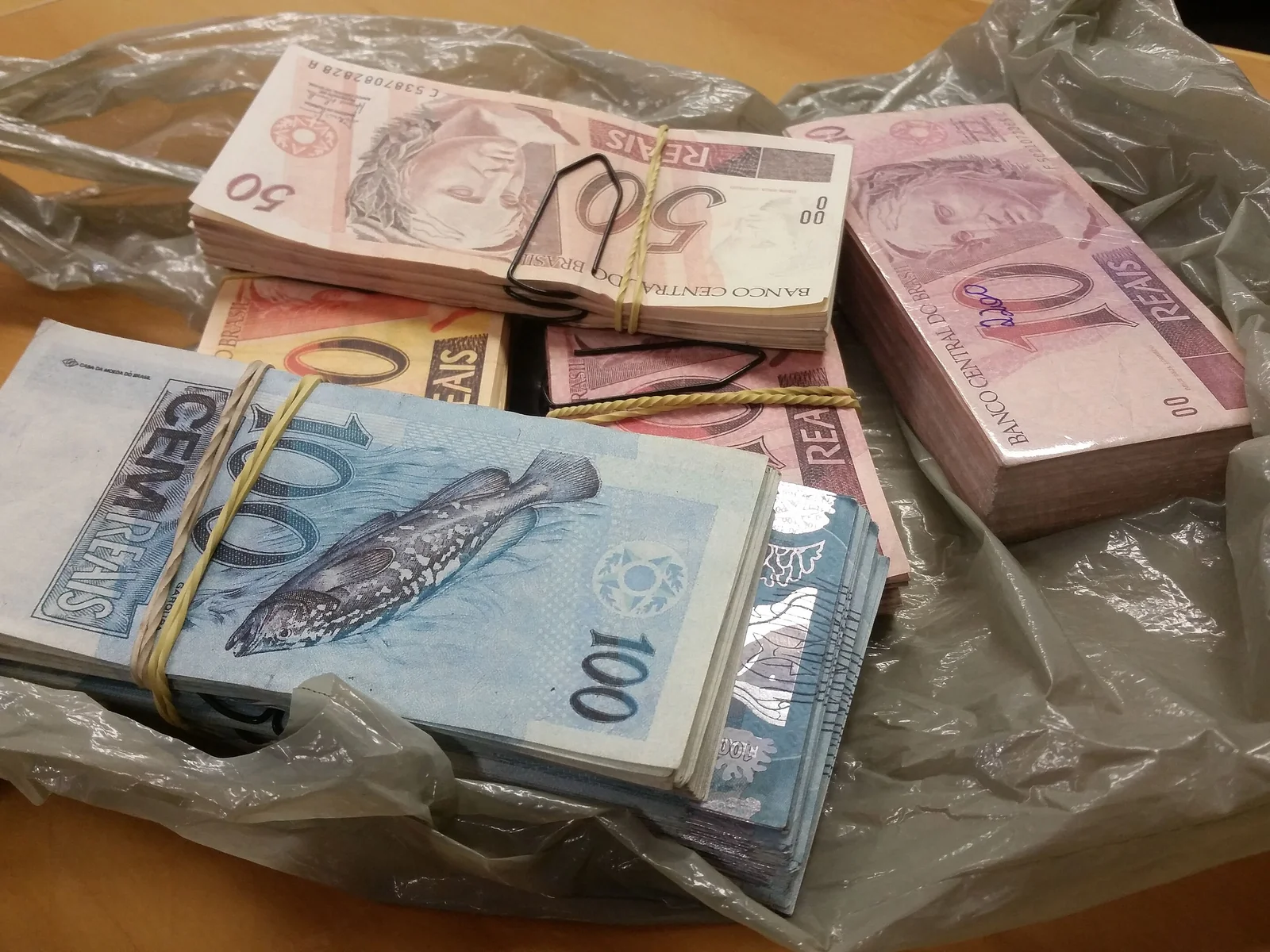
Every price in this guide is in reais, because that is the only currency Salvador deals in — shops and restaurants do not take dollars or euros, and nobody quotes prices in them. As of early August 2026, one US dollar buys about R$ 5.10 and one euro about R$ 5.90, so the quick head-maths is R$ 5 ≈ US$1 and R$ 6 ≈ €1. Half of your Salvador Brazil trip cost is decided on the currency market before you land, so check the live figure on the central bank's own converter before you build a budget: the real strengthened through the first half of 2026, and a ten percent move in the rate moves every number on this page with it.
What the current rate means in practice: for travellers earning in dollars, euros or pounds, Salvador is one of the cheapest genuinely great cities you can fly to. It is not Southeast Asia cheap. It is second-beer-without-checking-the-price cheap.
Salvador Brazil trip cost per day: three budgets
Shoestring — R$ 150–220 a day, about US$30–43 or €25–37. A dorm bed in or near the historic centre runs R$ 60–90 most of the year. Eat acarajé and per-kilo lunches, ride the R$ 5.90 bus, and fill the days with what Salvador does best anyway: the Pelourinho's streets, the beaches, the free Tuesday-night party. Add one R$ 20 museum. What sinks this budget is never food. It is rounds of drinks.
Comfortable — R$ 450–600 per person a day, about US$90–120 or €75–100, travelling as a pair. Half of a R$ 350–450 double with breakfast, a proper lunch, a shared moqueca somewhere good at night, Ubers whenever a hill looks steep, a beach chair and cold beer in the afternoon, and a schooner day absorbed across the week. This is the budget most readers of this site actually travel on, and it is the one the table further down prices out.
Treat-yourself — from about R$ 1,200 per person a day, US$235 or €200 and up. Salvador's upper end is smaller than Rio's and better value: across the hotel sector, the average daily rate in January 2026 — peak season — was just under R$ 900. Long seafood lunches, a private guide, a panoramic flight over the bay. Outside Carnival, the ceiling is genuinely hard to hit.
What things actually cost in 2026
Checked this year, rounded honestly:
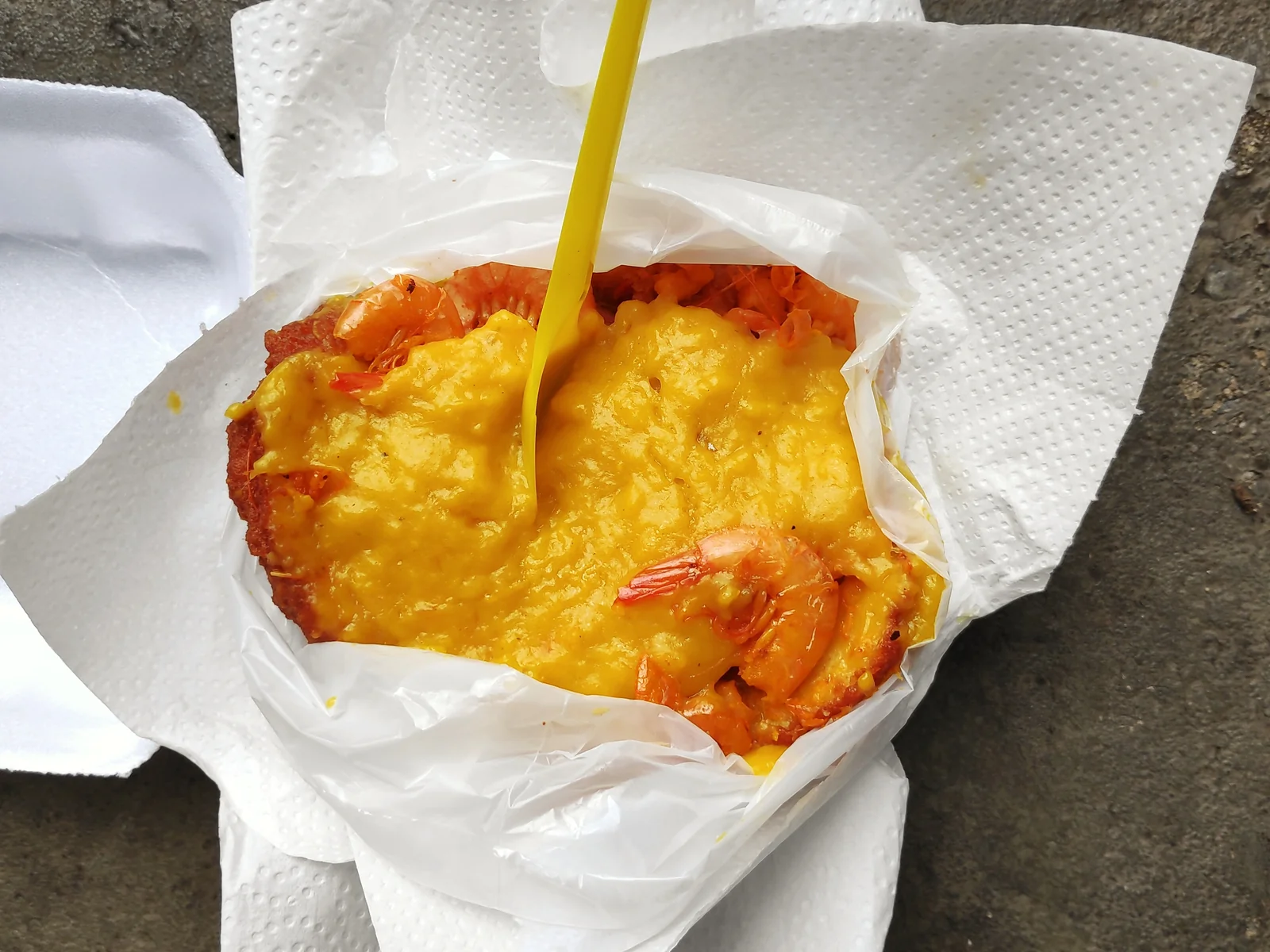
- Acarajé at a stand — R$ 10–15; the celebrated tabuleiros charge R$ 18–20 for the full version with camarão. Still one of the best-value dinners in Brazil.
- Moqueca for two — R$ 100–180 in a proper sit-down restaurant, arriving with rice, farofa and pirão; prawn versions sit at the top of the range. Where to order it is in our restaurant guide.
- Beer at a beach barraca — R$ 10–22 a can at Porto da Barra, depending on brand, vendor and how touristy you look; a February 2025 price survey found exactly that spread on one stretch of sand.
- Água de coco — R$ 5–8, drunk from the nut.
- UberX across the central beat — R$ 10–20 between the Pelourinho, Barra and Rio Vermelho at normal hours; R$ 60–110 from the airport.
- City bus — R$ 5.90 flat, fixed for all of 2026.
- Elevador Lacerda — R$ 1 since the 2025 renovation, up from the famous fifteen centavos. A 560 percent increase, and still the cheapest great view in Brazil.
- Museums — R$ 20 full price at the Museu Náutico in the Barra lighthouse and at the Casa do Carnaval, which is free on Wednesdays; church museums mostly charge R$ 5–15.
- A schooner day on the bay — around R$ 120–160 per person to Ilha dos Frades and Itaparica, plus a landing fee of R$ 25–30 paid on the island in cash or debit, lunch and drinks on top. Or skip the crowded boat and book our private schooner day.
What's cheap here, and what isn't
Cheap by any US or European measure: tropical fruit (a market bag of mangoes costs less than a single airport mango at home), getting around (see above), beach days (the sand is free and a chair comes with table service), live music (the Pelourinho's Tuesday-night Bênção party costs nothing, and pre-Carnival bloco rehearsals cost little), and culture generally — R$ 20 is the going rate for museums that would charge €15 in Europe.
Now the other list. Anything imported is taxed hard: sunscreen runs roughly double what you pay at home (bring it), electronics far more than that, and a bottle of imported wine in a restaurant can cost more than the food under it. Resort and design hotels price like resort and design hotels anywhere. And the postcard day trip is a quiet budget-eater: the Morro de São Paulo catamaran costs R$ 150–170 each way for the 2.5-hour crossing, and since 1 August 2026 the island's entry tax — the TUPA — is R$ 90 per person, so a couple pays about R$ 500 in fares and fees before the first caipirinha. Cheaper boats and better-value islands are compared in our day-trips guide.
The Carnival multiplier
Carnival 2027 runs 4–10 February — the city has added an extra day — and for that week the arithmetic on this page stops applying. Beds double to quadruple: for Carnival 2026, hostel beds started around R$ 120, well-located hotel rooms from about R$ 600, and apartments near the circuits listed for as much as R$ 42,000 for the six days. Most places impose five-to-seven-night minimums, Ubers surge, and a spot in a big bloco (the abadá shirt that lets you parade inside the ropes) can cost as much again as your room. None of this is a reason to skip it. It is, however, a different trip with a different budget, booked months out — the quieter, cheaper weeks either side are covered in when to visit Salvador.
Tipping: the 10% serviço reality
Restaurants and bars add a 10% serviço to the bill. It is legally optional and socially standard: Brazilians pay it as a matter of course, it goes to staff, and nobody expects a second tip on top of it. If it is printed on the bill, you are done. If a place has not added it — some baiana stands, lunch counters, street vendors — no tip is expected there either. You may ask for the serviço to be removed after genuinely poor service; in practice almost nobody does. Beyond that, drivers are not tipped (rounding up is a courtesy, not a duty), and a few reais for a porter or for housekeeping is appreciated, never demanded. The daily budgets above already include it.
Pix, cards, and the cash you still need
Three facts organise every Brazilian money question in 2026. First: Pix, the instant bank-transfer system, is now the country's most used payment method — its QR codes sit on every counter and most baiana trays. Second, the part that surprises visitors: Pix runs on Brazilian bank accounts and a CPF (the national tax number), so as a foreigner you generally cannot pay with it. A handful of fintech wallets now bridge foreign cards to Pix, and Wise can hold reais for travellers who go through the CPF process — the landscape shifts fast, so check what currently works shortly before you fly, and treat any of it as a bonus rather than a plan. Third: it barely matters, because card acceptance is near-universal — Visa and Mastercard, contactless, phone wallets, right down to street stands with a maquininha. Amex is patchier.
Cash is a supporting actor. Keep R$ 100–200 in small notes for market stalls at the Feira de São Joaquim, the odd beach vendor, lancha and ferry ticket windows, island landing fees, ribbon-and-candle money at the churches, and tips. Withdraw from bank ATMs indoors rather than standalone machines, and decline the conversion there too. The full mechanics — which ATMs, which fees, what to do about a blocked card — are in our guide to money in Brazil, with the wider survival notes in the practical A–Z.
A week in Salvador, priced line by line
The comfortable tier, per person, two people sharing a double in the historic centre, at August 2026 rates. Flights excluded; the restaurant figures include the serviço.
| Line item | R$ | ≈ US$ | ≈ € |
|---|---|---|---|
| Room — 7 nights, half of a R$ 400 double, breakfast included | 1,400 | 275 | 235 |
| Lunches and dinners out | 1,050 | 205 | 178 |
| Beach days — chairs, beers, coconuts | 280 | 55 | 47 |
| Ubers, buses and both airport runs | 400 | 78 | 68 |
| Museums and sights | 100 | 20 | 17 |
| Schooner day to the islands, fees included | 190 | 37 | 32 |
| Buffer for the unplanned | 300 | 59 | 51 |
| Total for the week | 3,720 | 730 | 630 |
A shoestring version of the same week lands near R$ 1,300; a no-questions-asked version clears R$ 8,000 without trying. If someone wants your Salvador Brazil trip cost as one number, for most travellers it is the flight, plus about US$700 a week on the ground.
One structural way to spend less: stay where the sights are. Base yourself in the Cidade Alta and the Pelourinho, the elevator, the viewpoints and the Tuesday drums are outside your door — the transport line in that table shrinks toward zero, and half of the best of Salvador turns out to be free. Our boutique suites put you exactly there, a few minutes' walk from all of it.
Salvador, in images
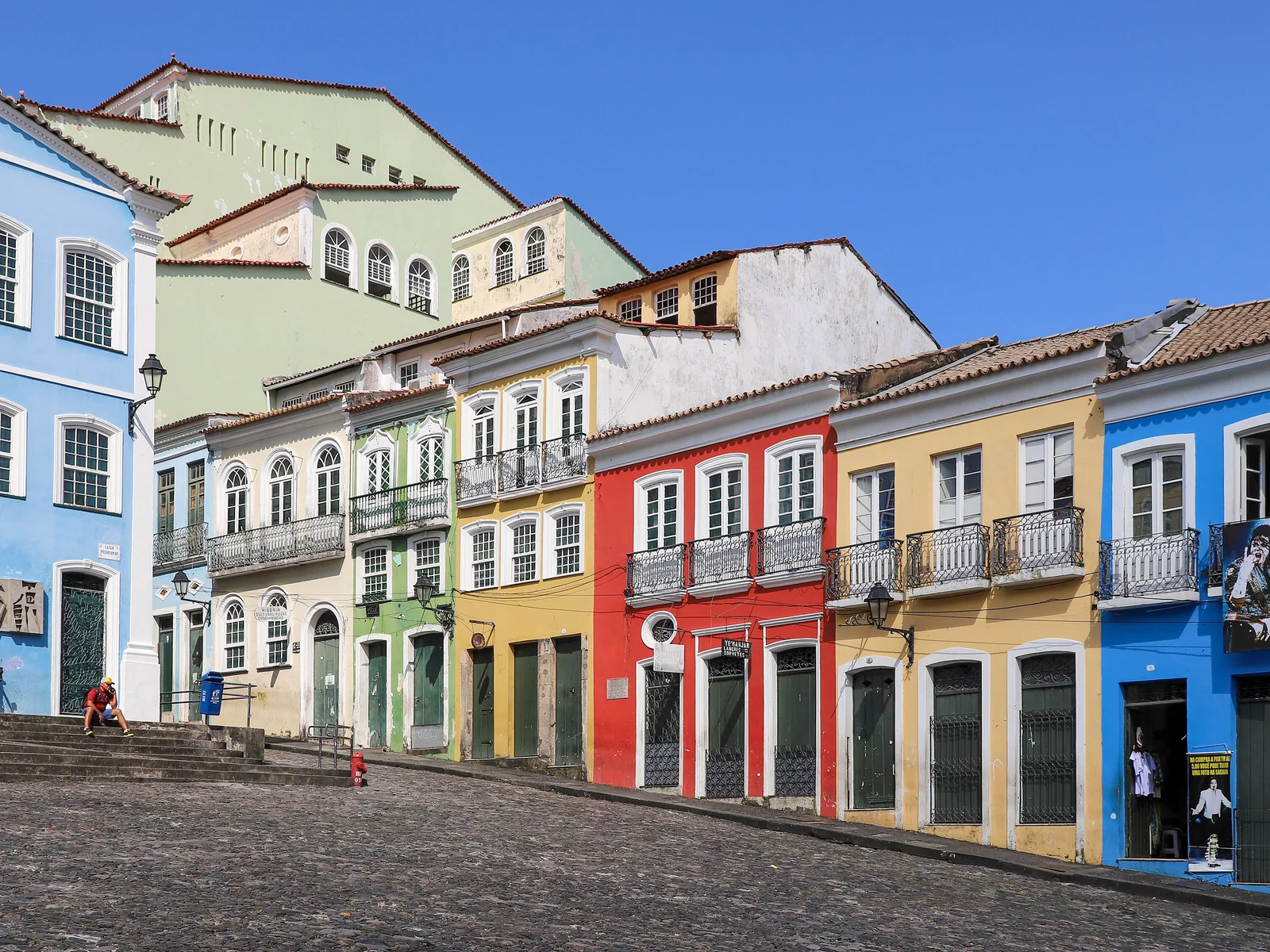
Photographs of the neighborhood, restaurant, and beach featured in this guide, with credit to each photographer.
Ready to discover Salvador?
Book one of the four Via Avantgarde suites in the Pelourinho — and receive the complete guides with recommendations for your stay.