Where to Stay in Salvador the five neighbourhoods compared
Where to stay in Salvador, Brazil: the historic centre, Barra, Rio Vermelho, Ondina and Stella Maris compared — who each neighbourhood suits and its downside.
The essentials in 30 seconds
Deciding where to stay in Salvador, Brazil comes down to three honest choices. The historic centre — Cidade Alta and Santo Antônio — puts the UNESCO old town, the Elevador Lacerda and the Tuesday street party outside your door, and goes quiet after dinner the other six nights. Barra has the lighthouse, a calm west-facing beach and the city’s applauded sunset, attached to its most tourist-worked seafront. Rio Vermelho is where Salvador eats and drinks, and pays for it in weekend noise. Ondina and the Corredor da Vitória are the conventional-hotel compromise between them; Itapuã and Stella Maris are the resort strip by the airport, forty minutes from everything else. Distances are short — an app car between central bairros runs R$ 10–25, about US$ 2–5 — so you are choosing an atmosphere, not an itinerary.
The map logic — a peninsula, two levels, one long arc of coast
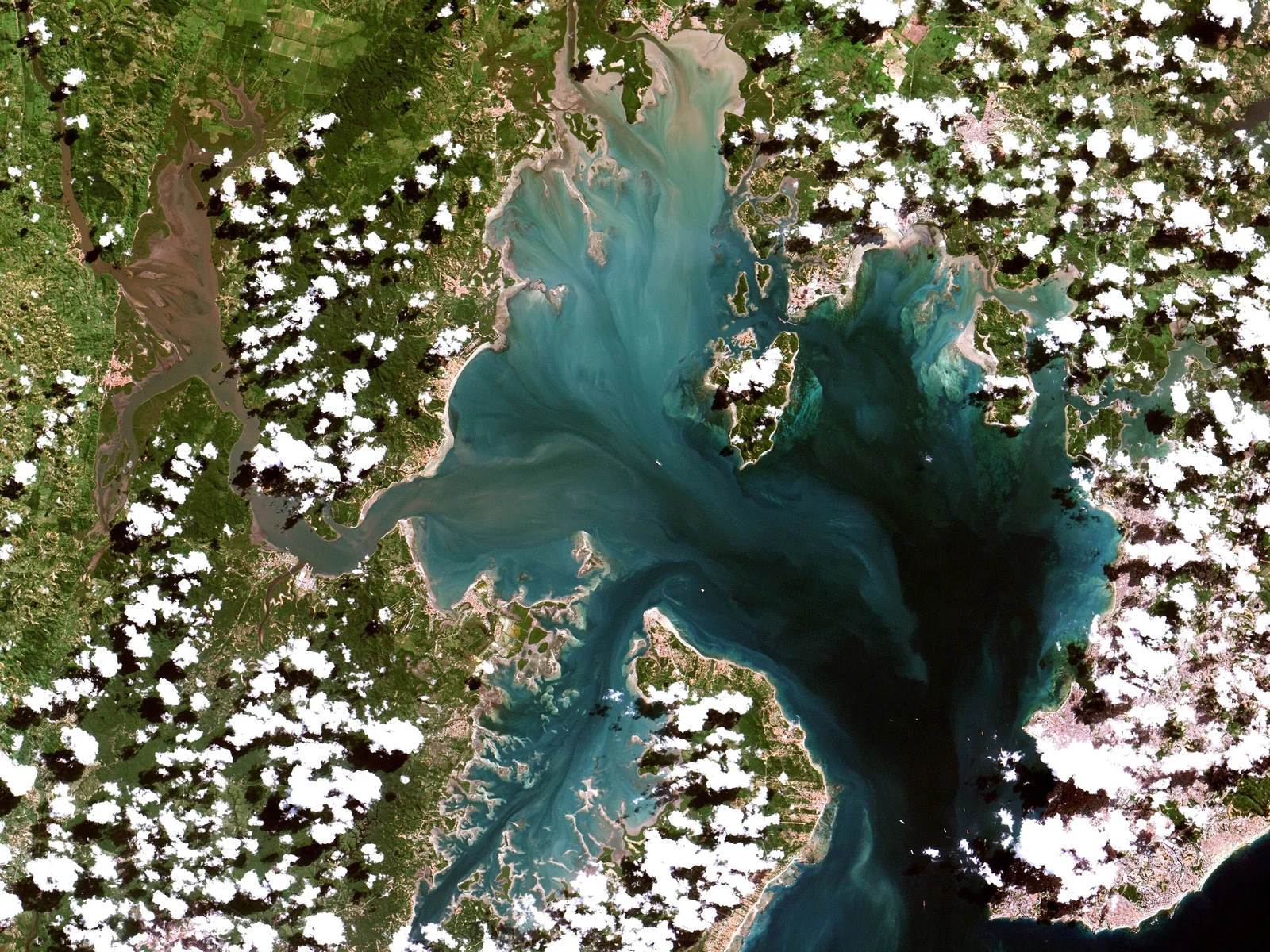
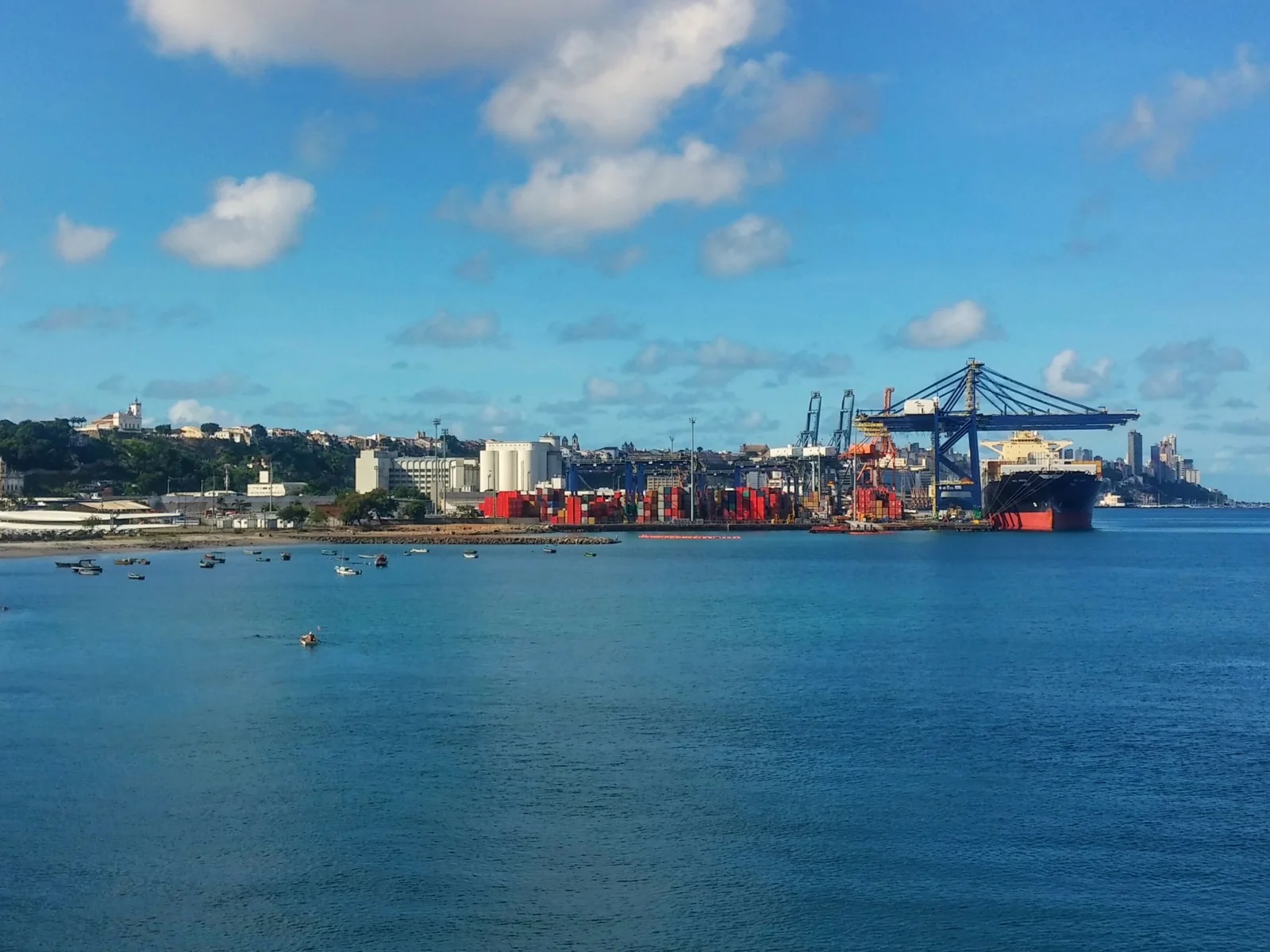
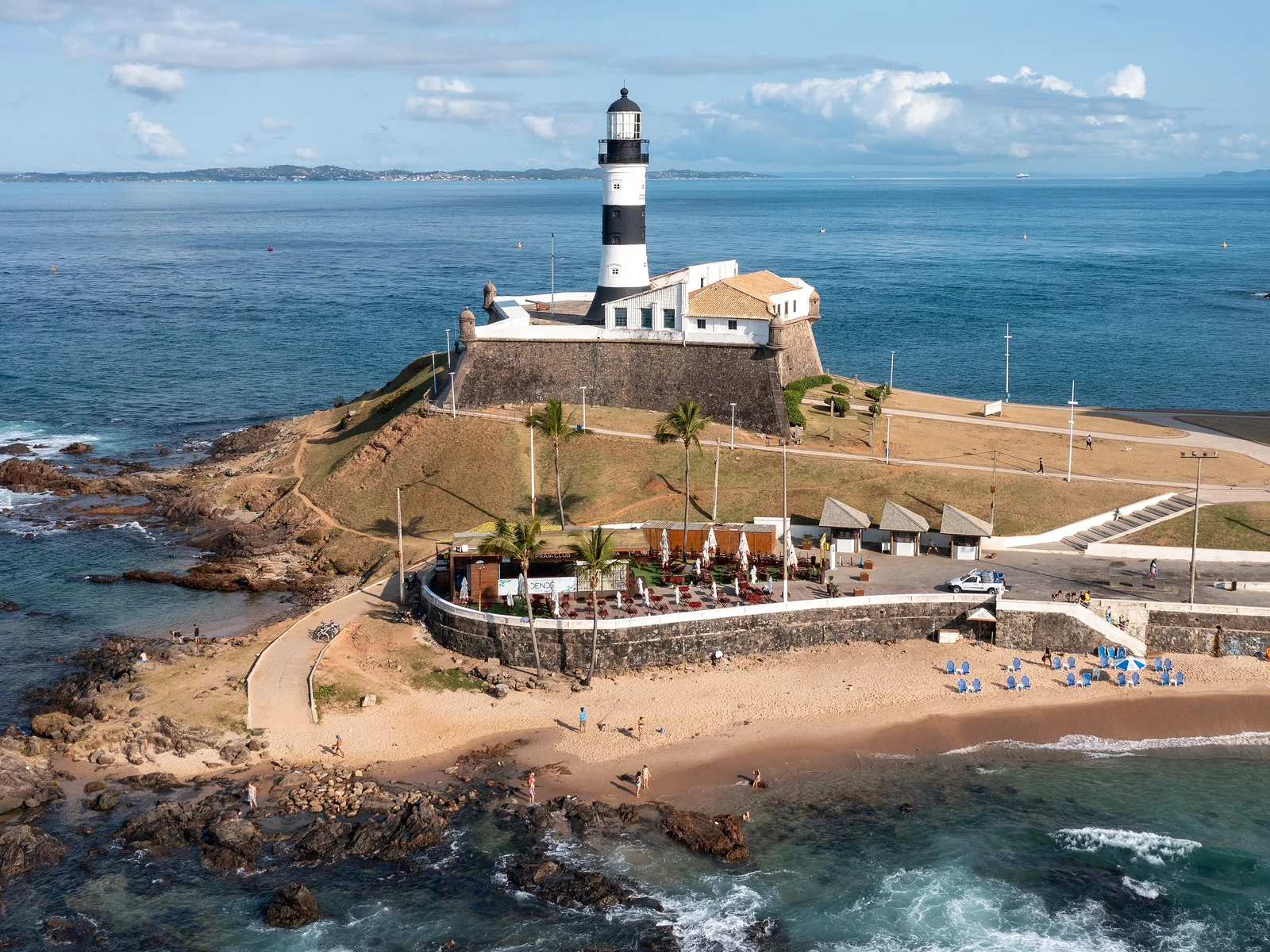
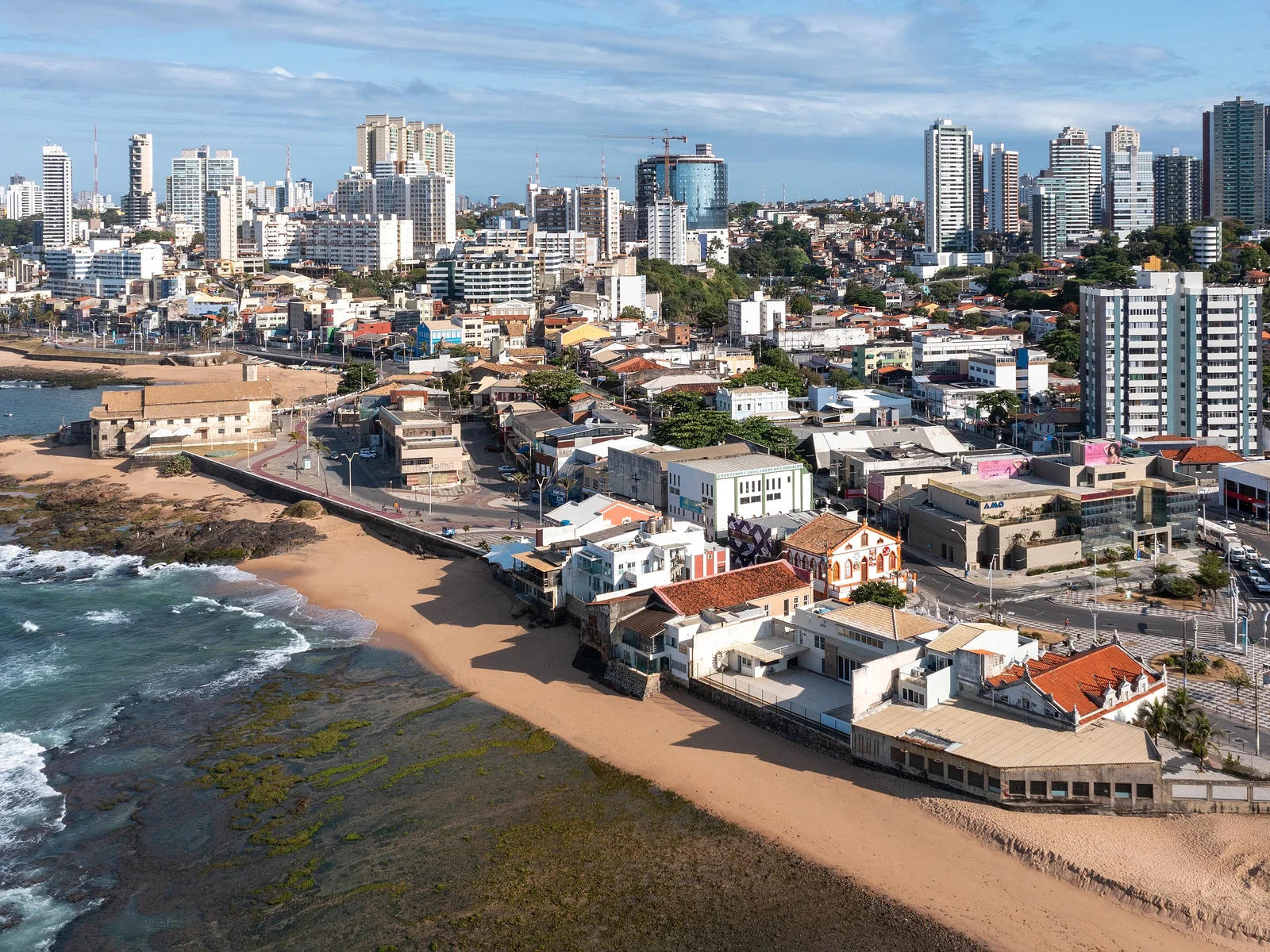
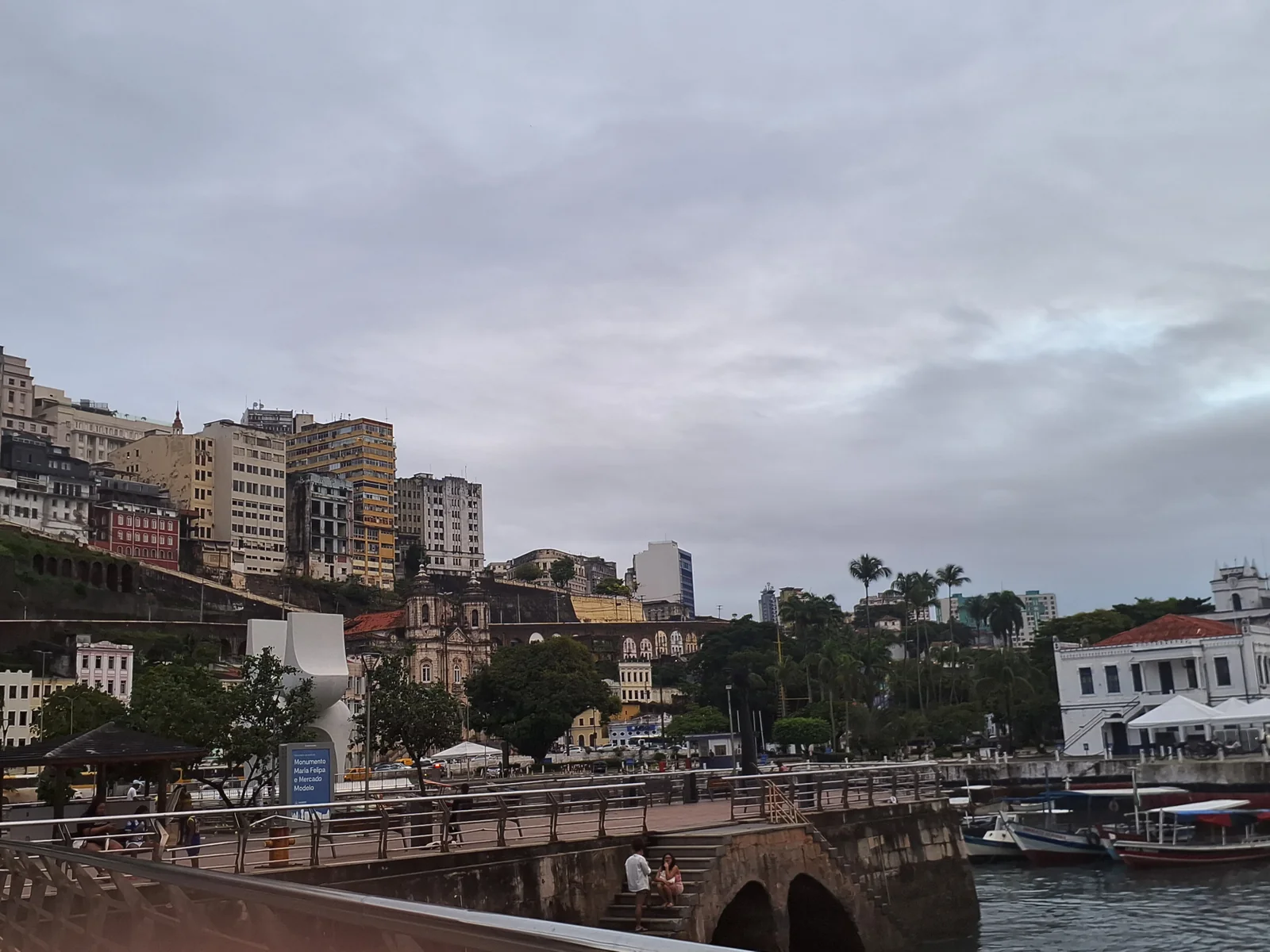
Salvador sits on the tip of a peninsula guarding the Baía de Todos os Santos, and the whole where-to-stay question reads straight off the map. The bay side is the history side: the old city stands on a bluff seventy-odd metres above its own port — Cidade Alta above, the Comércio below — stitched together by the Elevador Lacerda, refurbished and running again since February 2025, and free to ride in 2026. Round the point at the lighthouse, the coast turns to face the open Atlantic and becomes the orla, one long arc of beach neighbourhoods: Barra first, then Ondina and Rio Vermelho, and eventually — twenty-odd kilometres later — Itapuã and Stella Maris by the airport. Every address in this guide sits somewhere on that line, history at one end, sand at the other.
One transport note before the neighbourhoods themselves: the metro is for commuters, not visitors. Line 1 starts at Lapa, below the centre; Line 2 runs inland to the airport; neither goes anywhere near Barra, Rio Vermelho or the seafront. You will move by app car instead, which is cheap and painless — getting around Salvador covers the details.
The historic centre — for the Salvador you came for
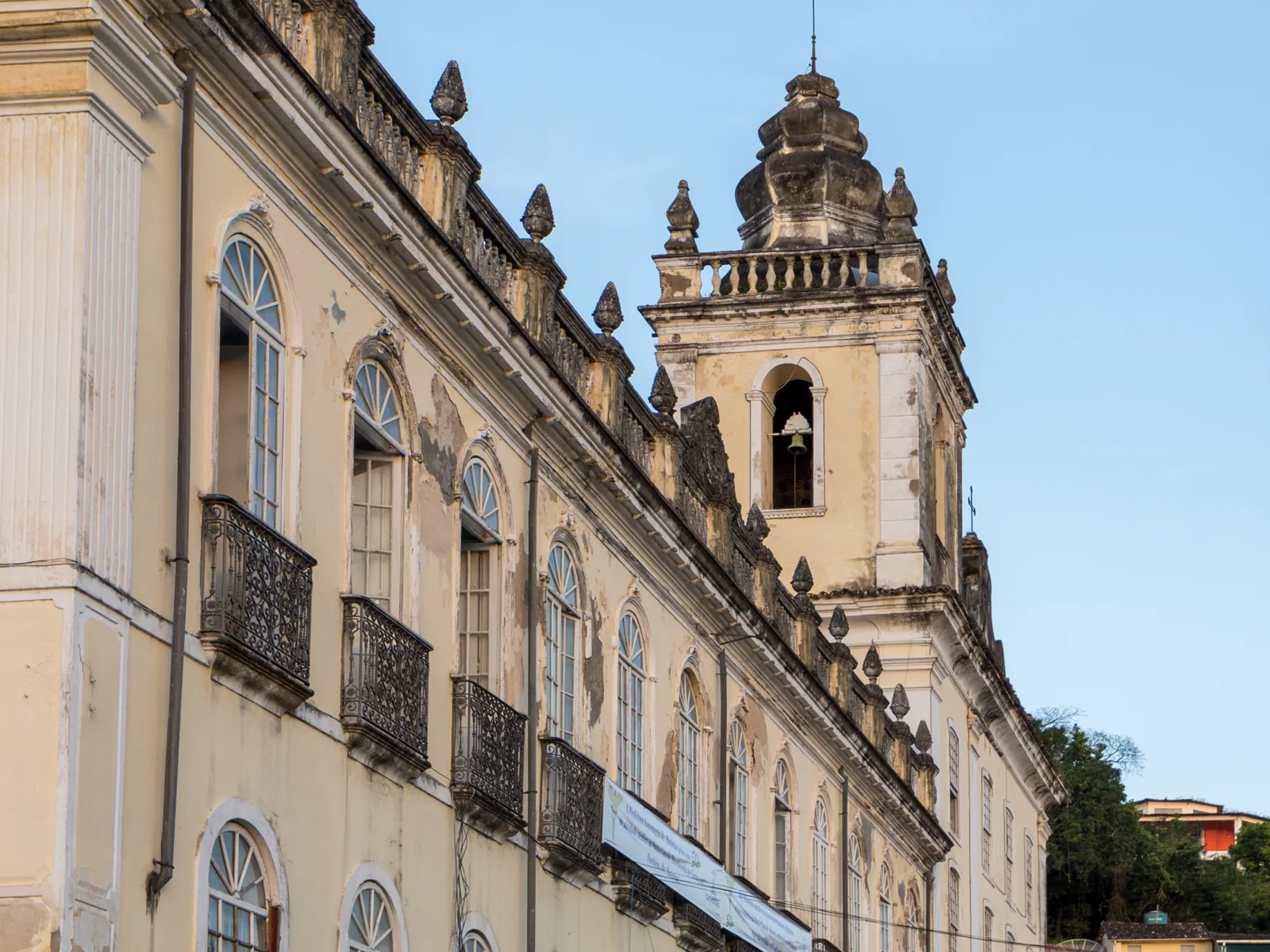
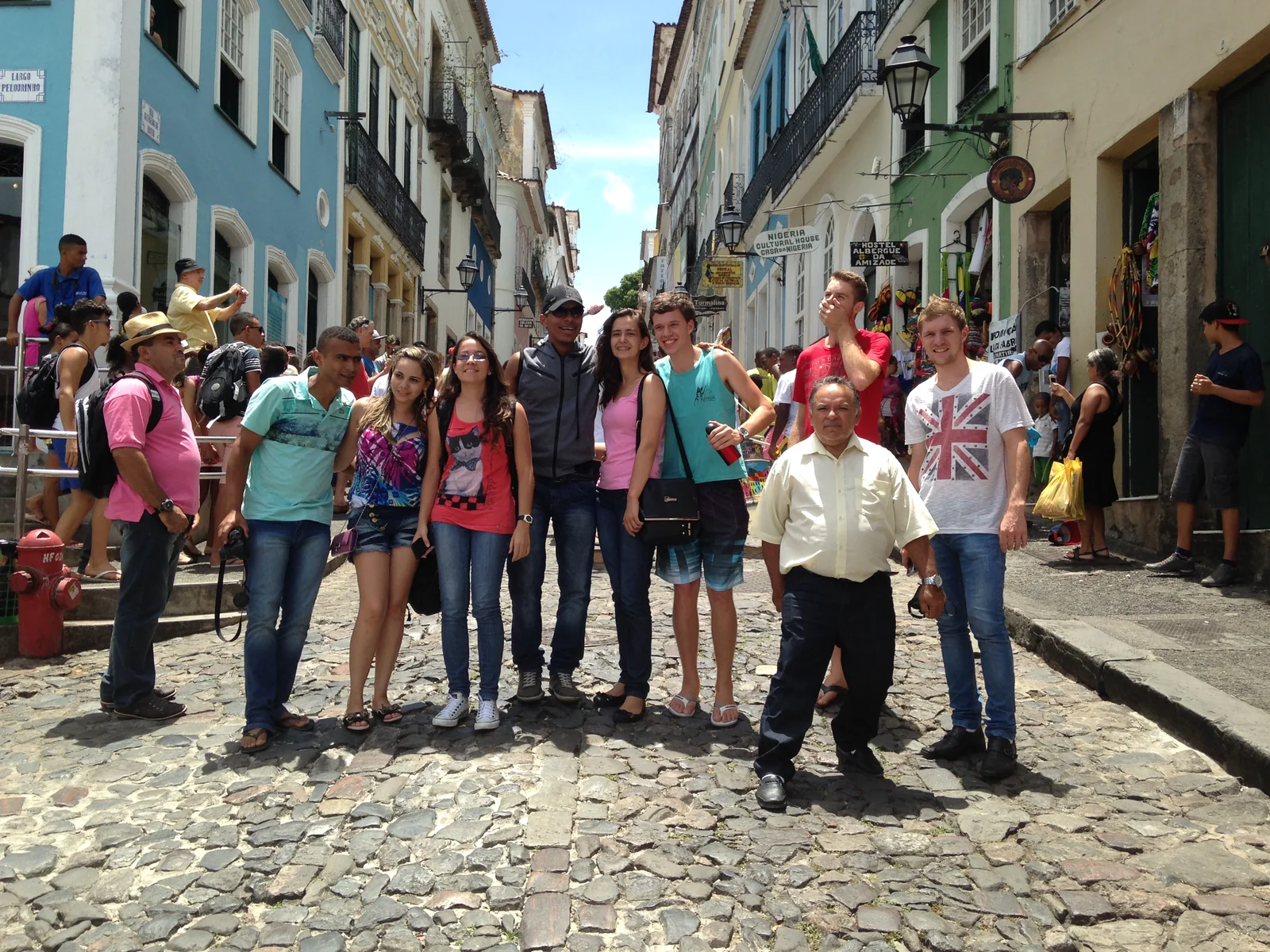
If this is your first visit and the Pelourinho is the reason you booked the flight, stay in the Cidade Alta. It is the only choice that puts you inside the World Heritage site instead of commuting to it: the Terreiro de Jesus before the tour groups come up, the gold light over the bay from the upper-city rim at the end of the afternoon, and on Tuesdays the Terça da Bênção — the old town’s weekly street party — starting a few doors away rather than a taxi ride across town. Church bells stand in for an alarm clock.
The quarter now has a proper range of beds. Along the ridge running north from the Pelourinho, in Santo Antônio Além do Carmo, restored townhouses have been turning into small pousadas for twenty years, many with bay-view terraces hidden out the back; it is the calmer, more residential end of the same hill, ten minutes on foot from the squares. At the southern end, on Rua Chile — held to be Brazil’s oldest street — the centre has serious hotels too: the Fera Palace, a 1934 Art Deco wedge modelled loosely on the Flatiron and restored into the old city’s five-star, and the Fasano Salvador, in the former headquarters of the A Tarde newspaper on Praça Castro Alves, with a rooftop pool facing the bay. Our guide to hotels near the Elevador Lacerda compares both with Villa Bahia, with walking times and sample rates. And, full disclosure, this is our own answer to the question: our four suites are in the Cidade Alta a few minutes from the Elevador Lacerda, because we think waking up inside the old city beats visiting it.
Now the honest part. Outside Tuesday night, the historic centre goes quiet after dinner — kitchens wind down by mid-evening, the squares empty, and your footsteps echo on streets that were full at noon. Evenings out mean a R$ 15–25 car to Rio Vermelho and back, and after dark you keep to the main lit streets rather than the shortcuts, exactly as our safety guide describes. None of that is a reason to stay away; it is the trade you are making, and Salvador at night lays out, hour by hour, what you get in return.
Barra — the lighthouse, the calm water and the sunset
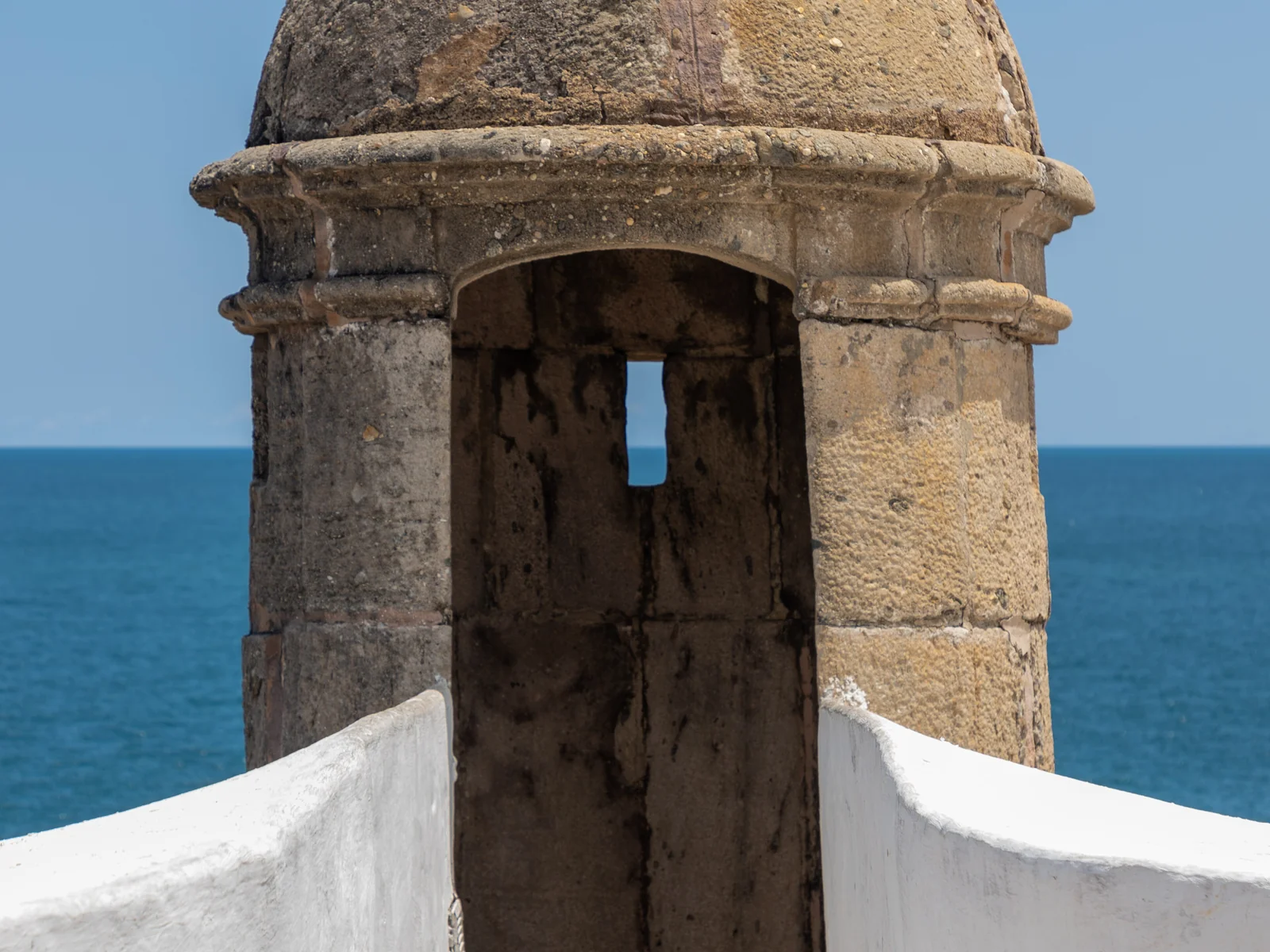
Barra is the sensible alternative for a first visit: a real neighbourhood wrapped around the Farol da Barra, with the most swimmable central beach in the city and its most famous view west. Porto da Barra is a small crescent of calm, clear bay water held between two colonial forts, and because it faces west the sun drops into the sea directly in front of the sand — the beach applauds. The lighthouse fort holds the small nautical museum, the seafront fills with runners at dusk, and there are bakeries, pharmacies and supermarkets on every other corner, which the historic centre still cannot claim. The Pelourinho is about fifteen minutes and R$ 15–20 away.
The trade is that this is the most tourist-worked stretch of coast in Salvador. In high season a vendor passes your towel every thirty seconds, the blocks nearest the sand lean toward chain restaurants, and on summer weekends Porto da Barra is full by mid-morning. Phone-snatching on the crowded beach is the neighbourhood’s signature petty crime; the usual crowded-sand rules apply double. Rooms are the city’s most plentiful — hundreds of apart-hotels, hostels and short-let flats in the towers behind the orla — which is exactly why February feels less like a neighbourhood and more like a resort.
Rio Vermelho — where the city eats, drinks and stays up
Rio Vermelho is Salvador’s bohemian quarter by biography and its nightlife district by function. Jorge Amado and Zélia Gattai lived here — their house is now the Casa do Rio Vermelho museum — and the city still goes out here: after dark the largos fill with tables, and from Thursday to Saturday the bars run to three or four. It is also the acarajé capital of Brazil, with the country’s two most famous stands a few hundred metres apart — Dinha on the Largo de Santana, Cira on the Largo da Mariquita — charging R$ 18–20 a fritter against R$ 10–15 at an ordinary street tray, and worth it at least once. And every 2 February the Festa de Iemanjá takes over the neighbourhood beach: the city’s biggest street festival outside Carnival, with baskets of flowers rowed out to the sea goddess from first light. Our music and nightlife guide maps the current bars and live-music nights.
Stay here if your evenings matter more than your mornings. The cost is symmetrical: on weekend nights a room on or near a largo hears the party until it ends, so pick a side street and pack the earplugs you assume you will not need. The little beaches are working beaches — fishing boats, the shrine of the Casa de Iemanjá — rather than swimming beaches; for actual water you go to Barra or out east. And every sight on your list is a R$ 15–25 ride away, because Rio Vermelho’s charms are almost entirely nocturnal.
Ondina and the Corredor da Vitória — the hotel-strip compromise
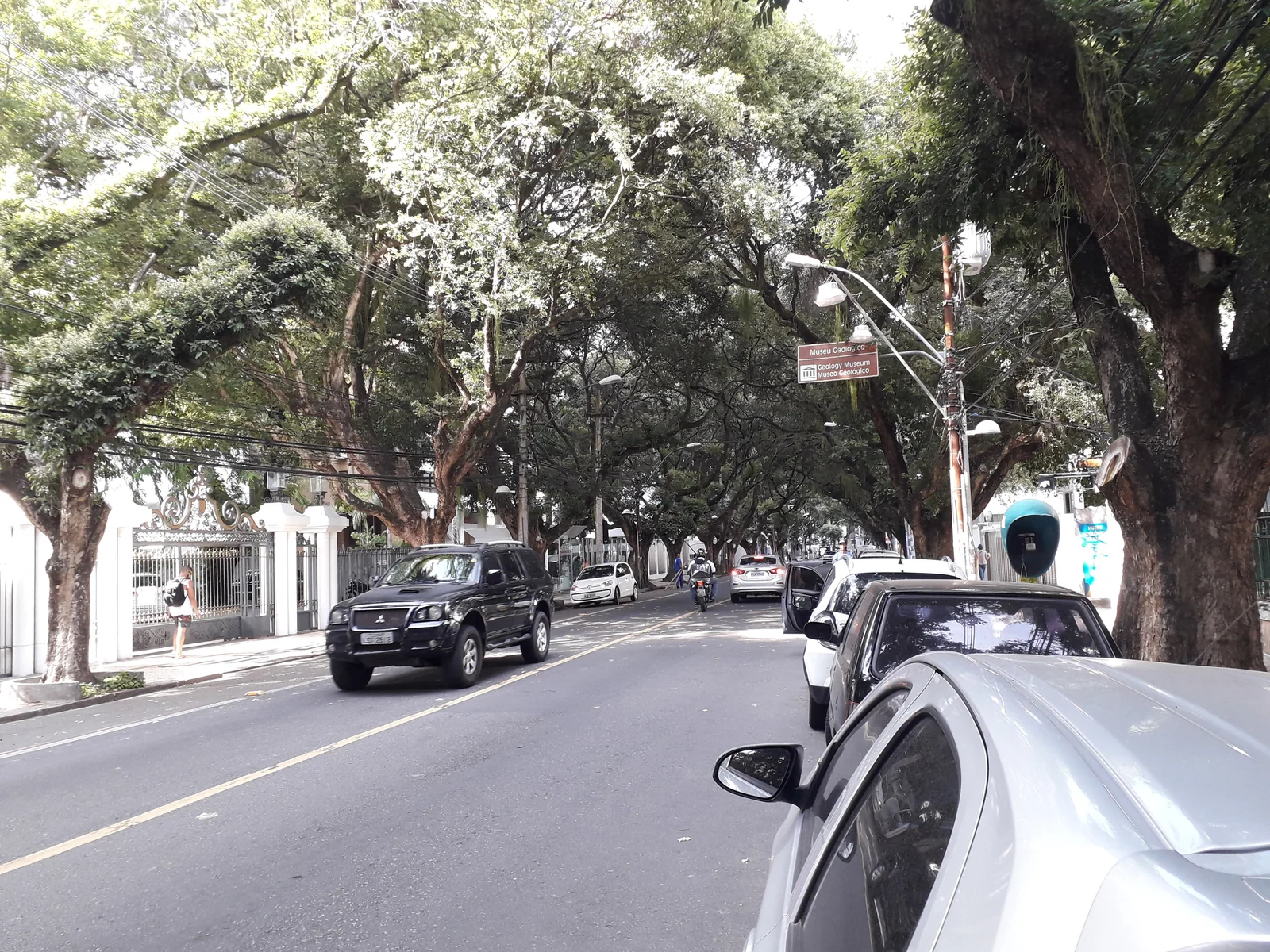
Between the centre and Barra, two addresses split the difference in different ways. The Corredor da Vitória is a leafy clifftop avenue of old-money apartment towers and consulates, home to the Museu Carlos Costa Pinto — the silver, jewellery and furniture of Bahia’s sugar aristocracy, R$ 20 in, afternoons only, closed Tuesdays. Stay around here for tree shade, calm and a short downhill walk to Porto da Barra at one end, with Campo Grande and the edge of the centre at the other. Ondina, on the seafront past Barra, is where the big conventional hotels line up — pools, parking, breakfast buffets, sea-view floors — above small pocket beaches between rocks.
The honest read: this is a base, not a place. The Vitória is residential and silent by ten; Ondina has hotel bars where a neighbourhood would have botecos; from either you will ride to everything you came for. The compromise earns its keep in two cases — Carnival, when the parade routes pass close by (more below), and any trip that simply wants a large, predictable hotel with a pool, which the historic centre cannot offer.
Itapuã and Stella Maris — sand first, city second
Out where the orla straightens toward the airport, Salvador becomes a beach town. Itapuã keeps some of the soul of its fishing-village decades — the striped lighthouse, the coconut groves, and the afternoon idleness Vinicius de Moraes set to music in Tarde em Itapuã, written in the years he lived here; behind the beach, the Lagoa do Abaeté is a dark-water lagoon ringed by white dunes, protected as a park. Stella Maris and Flamengo, the last stretch before the runway, are the resort-and-condo strip: surf schools, beach clubs, gated towers and the big convention-style hotels, with the airport ten minutes behind them.
Who this suits is obvious — families planning pool-and-beach days, surfers, and anyone ending a Bahia trip on an early flight; our airport guide covers that last morning. The flat truth is the distance: you are roughly thirty kilometres from the historic centre, forty minutes to an hour depending on traffic, which turns the old city into a once-per-trip excursion and rules out casual evenings anywhere else on this page. Sleep here for the sand, not for Salvador. Which stretches of this coast actually swim best, month by month, is in our beaches guide.
Where to stay in Salvador for Carnival week
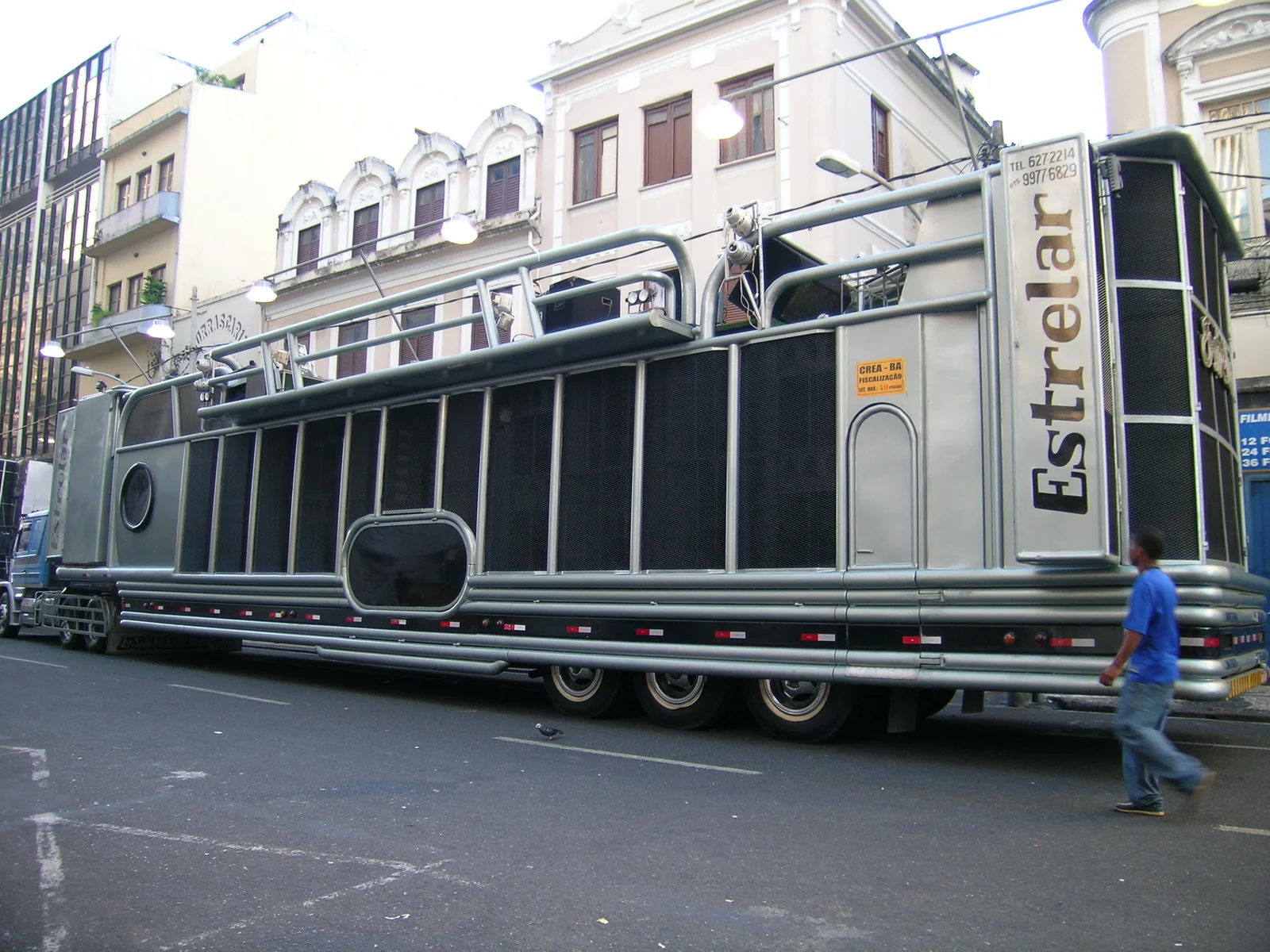
For one week a year the question rewrites itself, because Carnival happens in the streets of exactly these neighbourhoods. The Dodô circuit runs four kilometres of seafront from the Farol da Barra to Ondina — the star-name trios, the big paid camarotes, the televised one. The Osmar circuit, from Campo Grande at the centre’s edge, is the older, more traditional parade, where the afoxés and blocos afro come through. The Batatinha circuit fills the Pelourinho with brass bands and masks and no sound trucks at all — so for that one week the centre’s quiet-nights caveat inverts completely. Stay in Barra or Ondina to fall out of bed into the party, accepting that sleep is not part of the front-line package; two or three streets back is the sweet spot. The centre suits anyone who wants the older, stranger Carnival underfoot and a door to close on it.
The short version, neighbourhood by neighbourhood
| Neighbourhood | Choose it for | The catch | To the Pelourinho |
|---|---|---|---|
| Cidade Alta / Santo Antônio | Living inside the World Heritage site; Tuesday on the doorstep | Quiet, echoing nights the rest of the week | You are there |
| Barra | Calm swimmable beach, the sunset, easy services | The most tourist-dense seafront in the city | ~15 min |
| Rio Vermelho | Dinners, bars, acarajé, the 2 February festival | Weekend noise until 3–4 am near the largos | ~20 min |
| Ondina / Vitória | Full-service hotels; near the Carnival circuits | A base rather than a destination | 10–20 min |
| Itapuã / Stella Maris | Resort days, surf, early flights | 40–60 min from everything else here | 40–60 min |
If you are still torn: for a first visit of three to five nights with culture first, take the centre and treat Porto da Barra as your beach. If a swim every single morning is non-negotiable, take Barra and visit the centre in doses. If you plan to be out every night, take Rio Vermelho and budget for taxis. The full tour of the city’s bairros, including the ones this page deliberately skips, is in our neighbourhood guide.
In the end, where to stay in Salvador is a decision about what is outside the door at seven in the morning — surf, bar tables being stacked, or nearly five centuries of city. We built for the third: our suites sit in the Cidade Alta so the Pelourinho, the Elevador and the Tuesday drums are the walk before breakfast, and when you have picked your own answer, dates and rates are here.
Salvador, in images
Photographs of the neighborhood, restaurant, and beach featured in this guide, with credit to each photographer.
Ready to discover Salvador?
Book one of the four Via Avantgarde suites in the Pelourinho — and receive the complete guides with recommendations for your stay.