History & Afro-Brazilian Heritage Pelourinho, candomblé, capoeira
Brazil's first capital, the port that received more enslaved Africans than any other in the Americas, and the culture that rose from that tragedy: candomblé, capoeira, and the Pelourinho today.
The essentials in 30 seconds
Salvador was the first capital of Brazil (1549–1763) and the port that received more enslaved Africans than any other in the Americas — between 1.3 and 1.8 million people are estimated to have disembarked in the Bay of All Saints over three centuries of the trade. The city that rose from that tragedy is now the heart of Afro-Brazilian culture: candomblé was born here, capoeira was born here, samba-reggae was born here, and the Pelourinho — the best-preserved colonial ensemble in the Americas, UNESCO-listed since 1985 — is the stage where all of it still happens. To understand Bahia, you have to understand that Salvador is a Black city: 80% of its 2.4 million people are Afro-descendants, the largest majority-Black city outside the African continent. This guide explains what to see, what to feel, and what to respect.
The port that received the world — and kept the secret
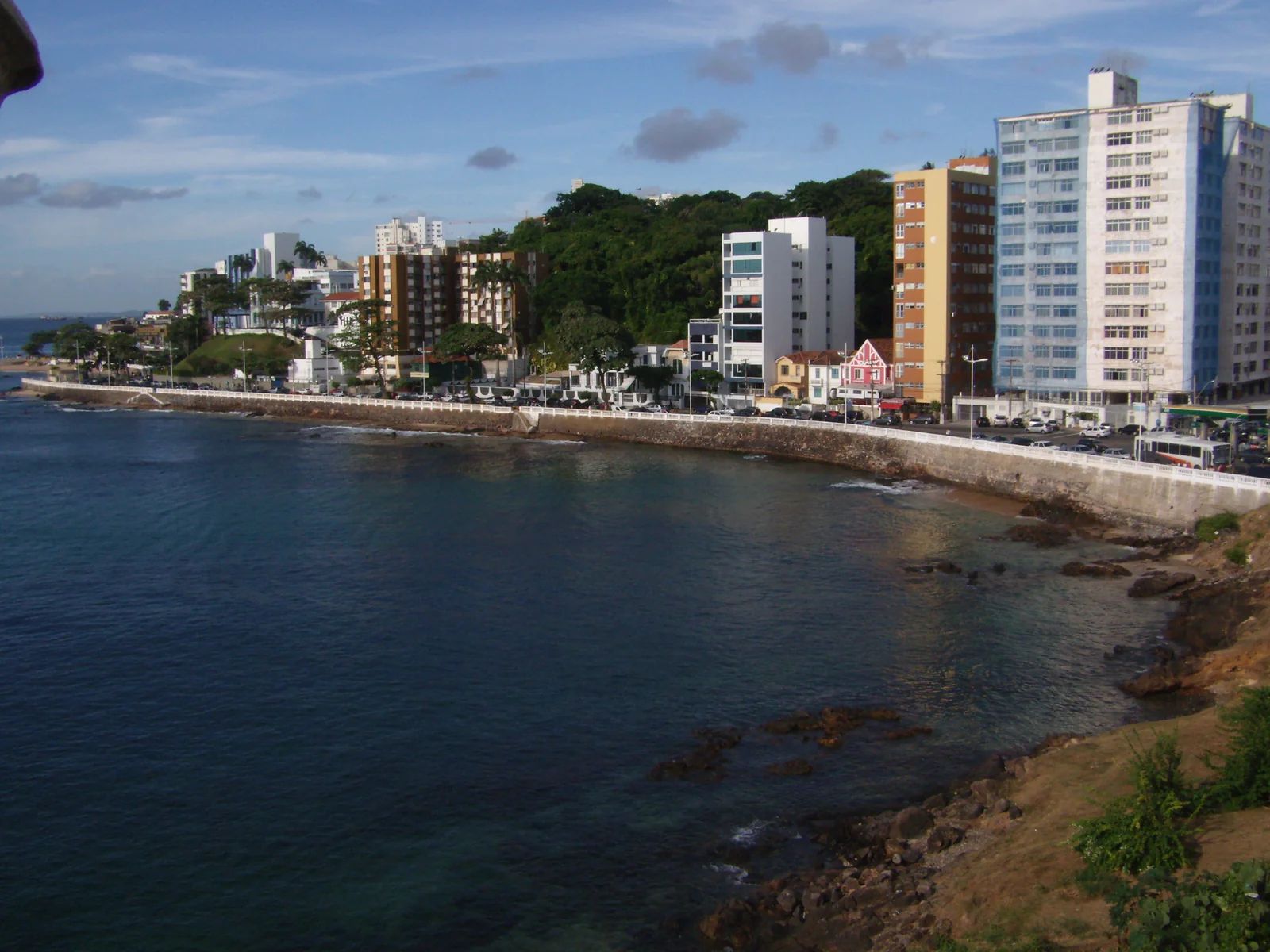
When Tomé de Souza landed in 1549 and founded the City of Salvador in the Bay of All Saints, he was opening the first colonial port in the Portuguese Americas, and the first capital of a colony that would become Brazil. For 214 years, until the capital was moved to Rio de Janeiro in 1763, Salvador was the Brazilian city. This was where ships arrived. This was where the gold of Minas Gerais shipped out from. And this was where enslaved Africans came ashore.
The numbers are difficult to absorb. Between 1550 and 1888, the year of abolition, an estimated 4.8 million enslaved Africans disembarked in Brazil — nearly ten times the number that disembarked in the United States (about 388,000). Of those 4.8 million, close to one third arrived in Salvador, mostly from four regions of West and West-Central Africa: the Bight of Benin (Yoruba, Jeje, Hausa peoples), the Gulf of Guinea, the Costa da Mina, and the kingdoms of Kongo and Angola (Bantu peoples). Each brought a language, a religion, music, food. Salvador is what survived from that forced encounter.
The Pelourinho — the name tells the truth
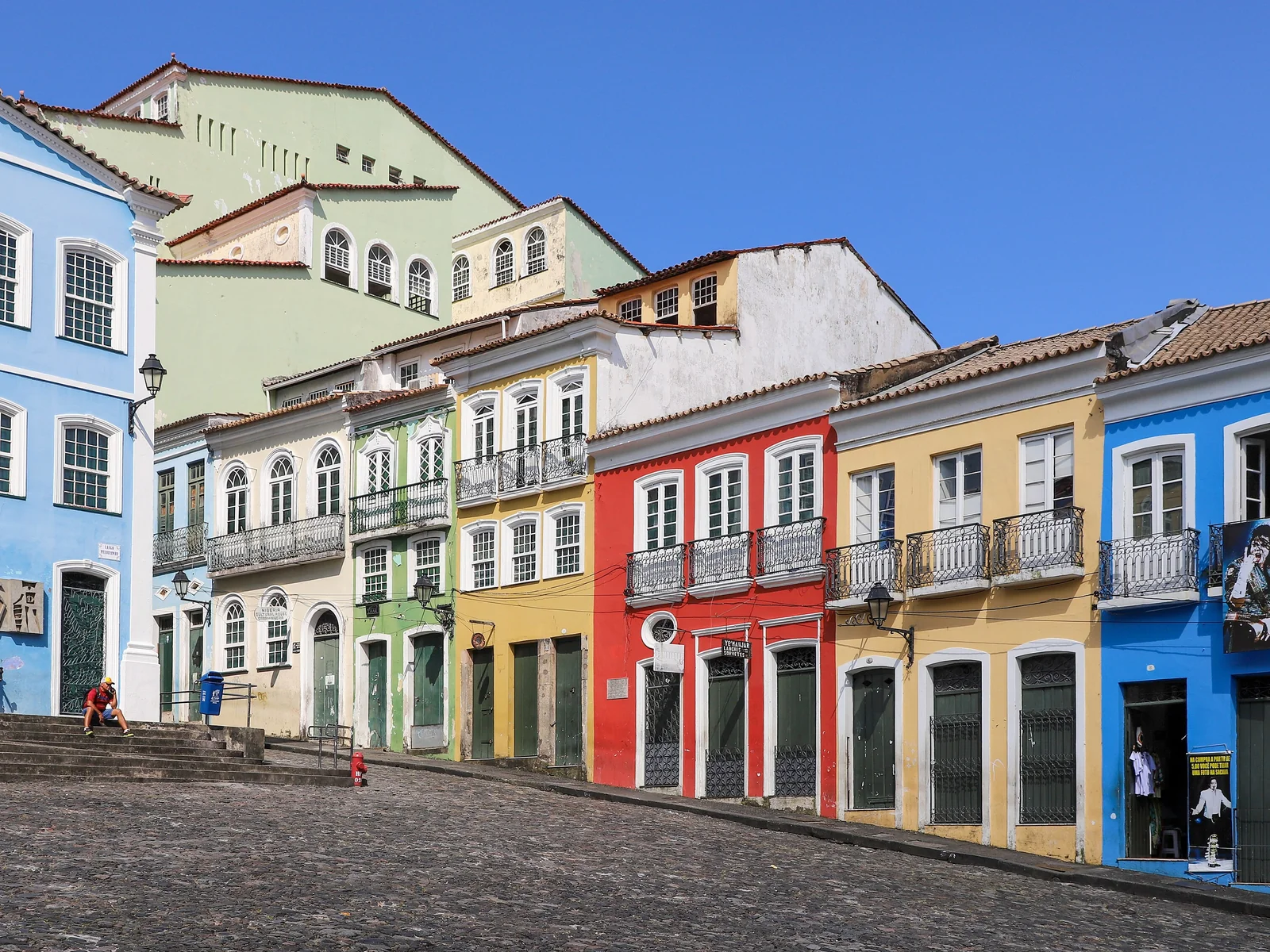
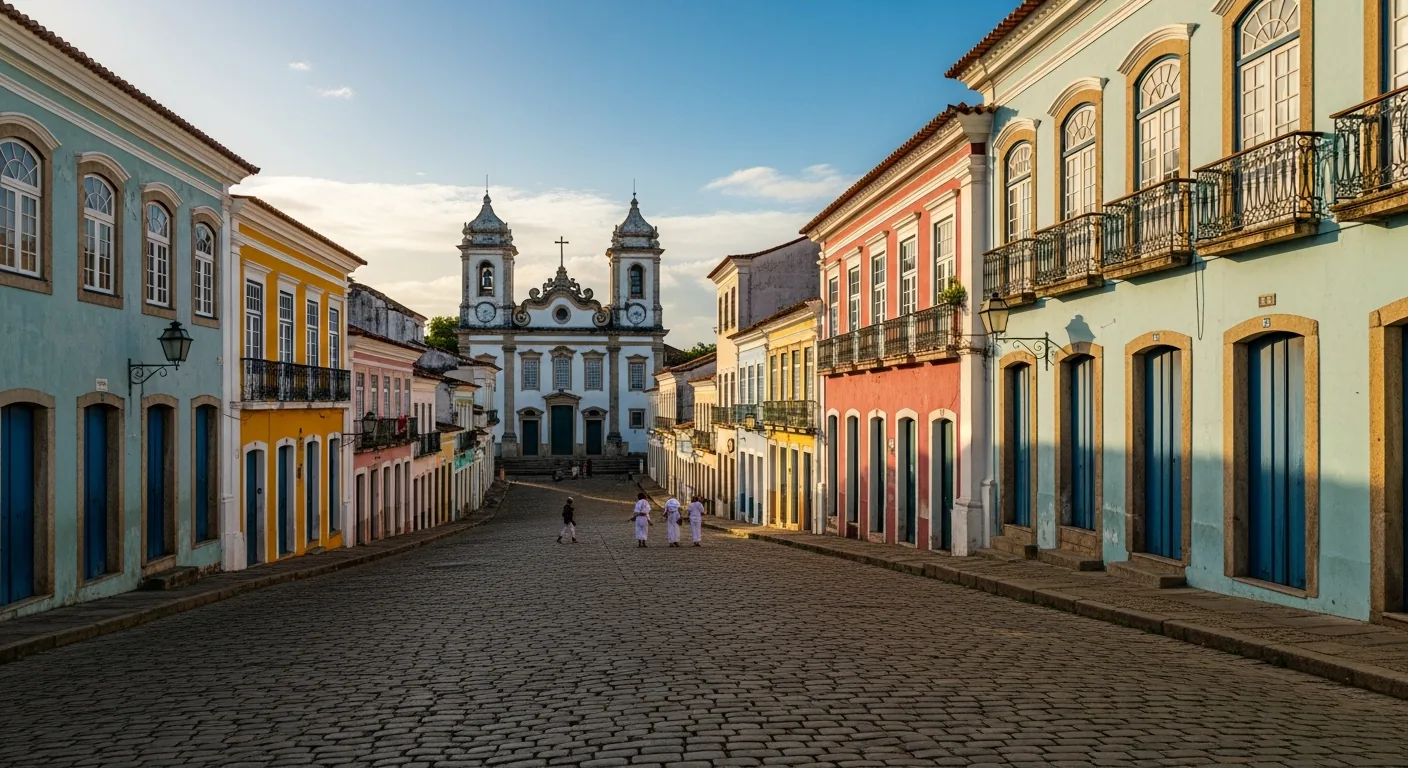
The word Pelourinho is not a folkloric detail: it was literally the stone post where enslaved Africans were tied, whipped, and exhibited as public punishment. The Largo do Pelourinho of today — the most photographed corner of Salvador, with its colored colonial townhouses lined down the slope — is the exact place where those public floggings happened, from the sixteenth century until abolition. To walk it is to walk Brazil's hardest history. It is also to walk the place where, after centuries, an entire culture re-emerged.
The Pelourinho has lived three lives. The first, sixteenth to nineteenth century, was the public square of the colonial capital. The second, from the late nineteenth century until the 1980s, was progressive decay: after abolition and the economic shift to the lower city, the colonial townhouses became tenements and a zone of extreme poverty. The third life began in 1985, when the Centro Histórico was named a UNESCO World Heritage Site, and in 1992, when the Bahia government launched the controversial Restoration Programme that displaced thousands of low-income residents and restored the facades. The result is the postcard you see now — beautiful, vibrant, and never simple.
What you'll see today, walking down the slope, is the Igreja de Nossa Senhora do Rosário dos Pretos (the Black Brotherhood's church), the Largo do Pelourinho proper, the Jorge Amado Foundation, the Olodum House, and the Carnival House. Around them, dozens of artisan studios, restaurants, and — Tuesdays and Sundays — open-air capoeira rodas, samba sessions, and percussion. The Pelourinho is permanent theater, and the stage is exactly where the post used to stand.
The Church of Nossa Senhora do Rosário dos Pretos — built by the enslaved themselves
In the heart of the Largo do Pelourinho stands one of Brazil's most affecting churches. The Igreja de Nossa Senhora do Rosário dos Pretos was built over more than a century (1704–1820) by the enslaved themselves, in hours snatched from forced labor, with money raised inside the Brotherhood of the Rosary — one of the few institutions in which Africans could organize collectively under colony rule. The blue-and-white facade is what survives of that collective architecture. Inside, the altar's blend of Catholic saints and syncretic orixás is the physical record of how candomblé survived: behind Our Lady of the Rosary, Iemanjá; behind Saint George, Ogum; behind Saint Barbara, Iansã.
Go to the Tuesday-night masses, when the choir sings in Yoruba and Portuguese and the atabaque drums mix with the organ. It is the only Catholic mass in the world where candomblé drums are played inside the nave. No entry fee for mass; daytime visit is a token R$ 5, with crypt access.
Visit also the Cemitério dos Pretos next door, where many of the enslaved who built the church are buried — one of the few necropolises dedicated to Africans in colonial Brazil.
Candomblé — the religion that came on the ships
Candomblé is the religion that the Yoruba, Jeje, and Bantu peoples preserved when they crossed the Atlantic in chains. Everything — the pantheon of orixás, the drum rhythms, the votive foods, the chants in Yoruba — survived intact, in clandestinity, for three hundred years, hidden behind the Catholic saints whom the colonists forced upon them. Salvador is, today, the world capital of candomblé, with more than two thousand registered houses of worship in Bahia.
Three founding houses belong on any serious itinerary. The first is the Ilê Axé Iyá Nassô Oká — known as the Casa Branca do Engenho Velho, in the Vasco da Gama neighborhood. Founded around 1830 by three enslaved women from Ketu (now Benin), it is the oldest continuously functioning terreiro in Brazil and was federally heritage-listed by IPHAN in 1986 — the first listing of a candomblé temple in the country's history. The second is the Ilê Iyá Omi Axé Iyamassê — the Terreiro do Gantois, in the Alto do Gantois — founded in 1849 by Mãe Júlia, and led to this day by the lineage of Mãe Menininha do Gantois (1894–1986), the most internationally known priestess in Brazilian candomblé. The third is the Ilê Axé Opô Afonjá, in São Gonçalo do Retiro — founded in 1910 and led for much of the twentieth century by Mãe Stella de Oxóssi, the first mãe-de-santo to become a national public intellectual.
You can visit the houses, but under clear rules: never without prior arrangement, always in white clothing, always silent during public festivals (events open to non-initiates), never photograph the saint's room, never use the word "macumba" (which is pejorative). Via Avantgarde arranges guided visits with a local researcher, always coordinated with the house in question.
The orixás — a family that crossed the Atlantic
The orixás are the natural and ancestral forces honored in candomblé. They came with the Yoruba from the Kingdom of Oyo (now southwest Nigeria), and each one governs a piece of the world. Oxalá — father of all, lord of creation. Iemanjá — mother of the salt waters, the sea, motherhood. Oxum — lady of fresh waters, fertility, gold, love. Iansã (Oyá) — lady of the winds, of storms, of the dead. Xangô — lord of justice and thunder. Ogum — warrior, lord of iron and the roads. Oxóssi — hunter, lord of the forests. Exu — messenger between the world of men and that of the orixás (and the orixá least understood outside Bahia, frequently confused with the Christian "demon" by missionaries and media).
Each orixá has a color, a day of the week, a votive food, a drum rhythm, a dance, a costume. When you see a baiana de acarajé in her wide white skirt on the Pelourinho streets, you are seeing the ceremonial dress of a daughter-of-Oxalá. When you see someone in blue and white at the Lavagem do Bonfim, that is Iemanjá. When you see the red-and-white of Xangô, that is a son of Xangô. All of Salvador is dressed in orixá, even the people who don't know it.
Capoeira — the dance that was a fight
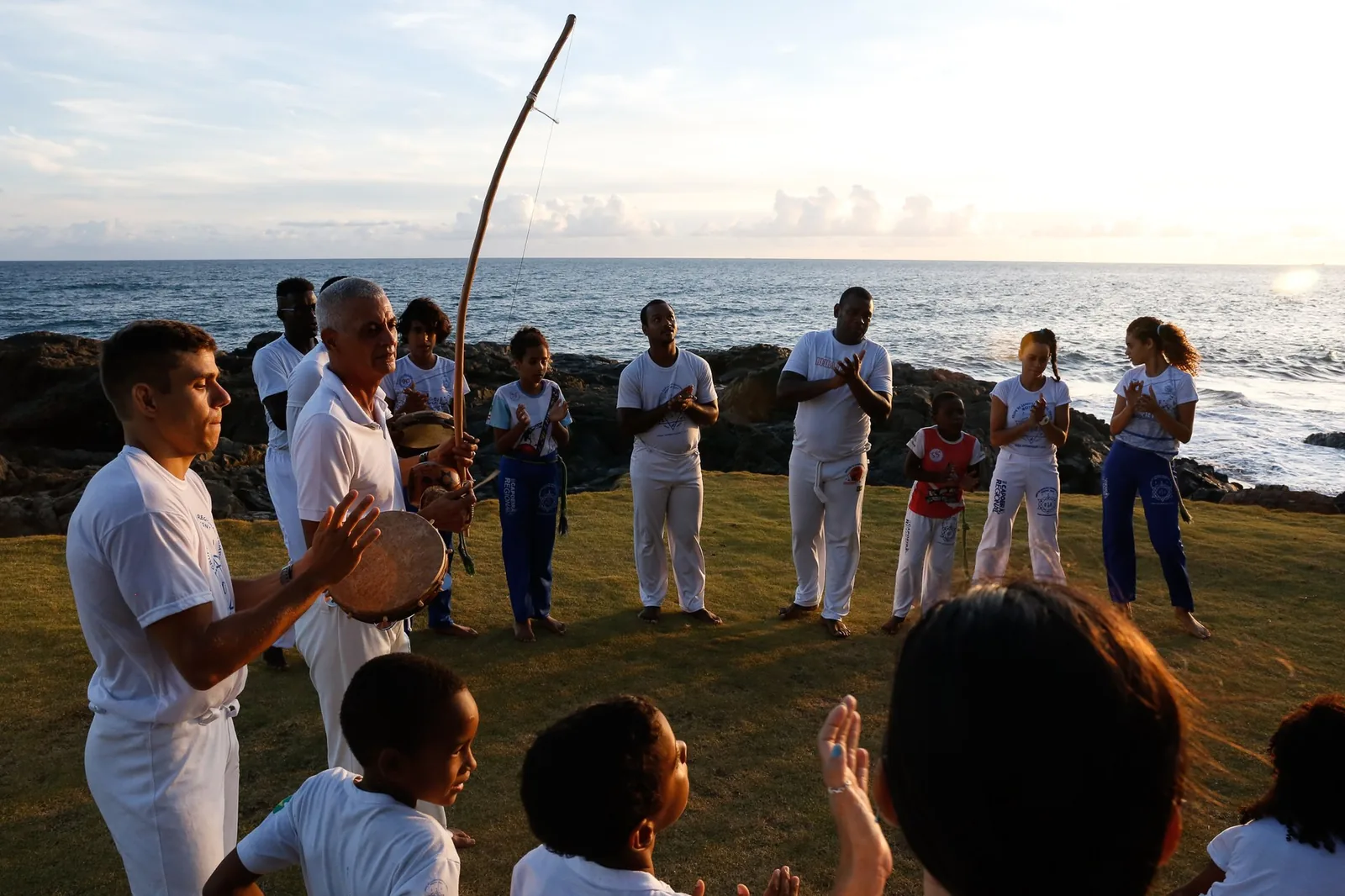
Capoeira was born in the sugar mills of the Recôncavo and the slave quarters of Salvador as a fight disguised as a dance. Enslaved Africans — forbidden from carrying weapons or practicing martial arts — developed a combat system that, to the overseers' eyes, looked like play. The berimbau set the tempo, the roda gave the structure, and the moves — ginga, chapéu de couro, meia-lua, rabo-de-arraia — hid punches, kicks, and sweeps of brutal technical sophistication. Capoeira was criminalized under the 1890 Brazilian Penal Code and only decriminalized in 1937, under Vargas, who turned it into a "national sport" — one of the cruelest ironies in Brazilian cultural history.
Two schools, both born in Salvador. Capoeira Regional was codified by Mestre Bimba (Manoel dos Reis Machado, 1899–1974), who opened the first legally registered capoeira academy in Brazil in 1932 — the Centro de Cultura Física e Capoeira Regional. Bimba modernized the art, introduced a teaching syllabus, taught in uniform, and proved the fight worked — in 1937 he was received by Vargas at the Palácio do Catete. Capoeira Angola was codified by Mestre Pastinha (Vicente Ferreira Pastinha, 1889–1981), who opened his Centro Esportivo de Capoeira Angola in 1941 in the Pelourinho. Pastinha's capoeira is slower, closer to the ground, more ritual — closer to what was played in the nineteenth century.
Today, in Salvador, capoeira is everywhere. Open rodas happen Tuesdays and Sundays in the Largo do Pelourinho and in front of the Forte da Capoeira, in Santo Antônio. The main academies for visitors are the Mestre Bimba Association (Praça da Sé), the Mestre Bimba Foundation (Pelourinho), and the Forte da Capoeira — a seventeenth-century fortress restored as a capoeira center, with classes open to visitors and a permanent museum. Entry R$ 10. Trial classes around R$ 50 to R$ 80.
Igreja de São Francisco — and the gold that hides a story
Up the Praça Anchieta from the Largo, you reach the Igreja e Convento de São Francisco (1708–1755) — one of the richest baroque churches in the Americas. Eight hundred kilos of gold leaf cover the interior in layers that catch the light from the stained glass. The cloister of eighteenth-century Portuguese azulejo tiles tells allegorical scenes in sequential panels. R$ 10 entry, and worth a full hour.
What's seldom said to tourists is who carved that ceiling. The sculptors were largely enslaved — particularly Mestre Manuel Inácio da Costa and teams of Black artisans under Portuguese masters. And there is a persistent legend, recorded by Pierre Verger and Jorge Amado: that the Black sculptors, knowing the colonists would never pay them, secretly carved into the baroque details exaggerated female genitals, distorted faces, and Yoruba symbols disguised as cherubs. Look closely. You will find them.
Museu Afro-Brasileiro — history told by those who lived it
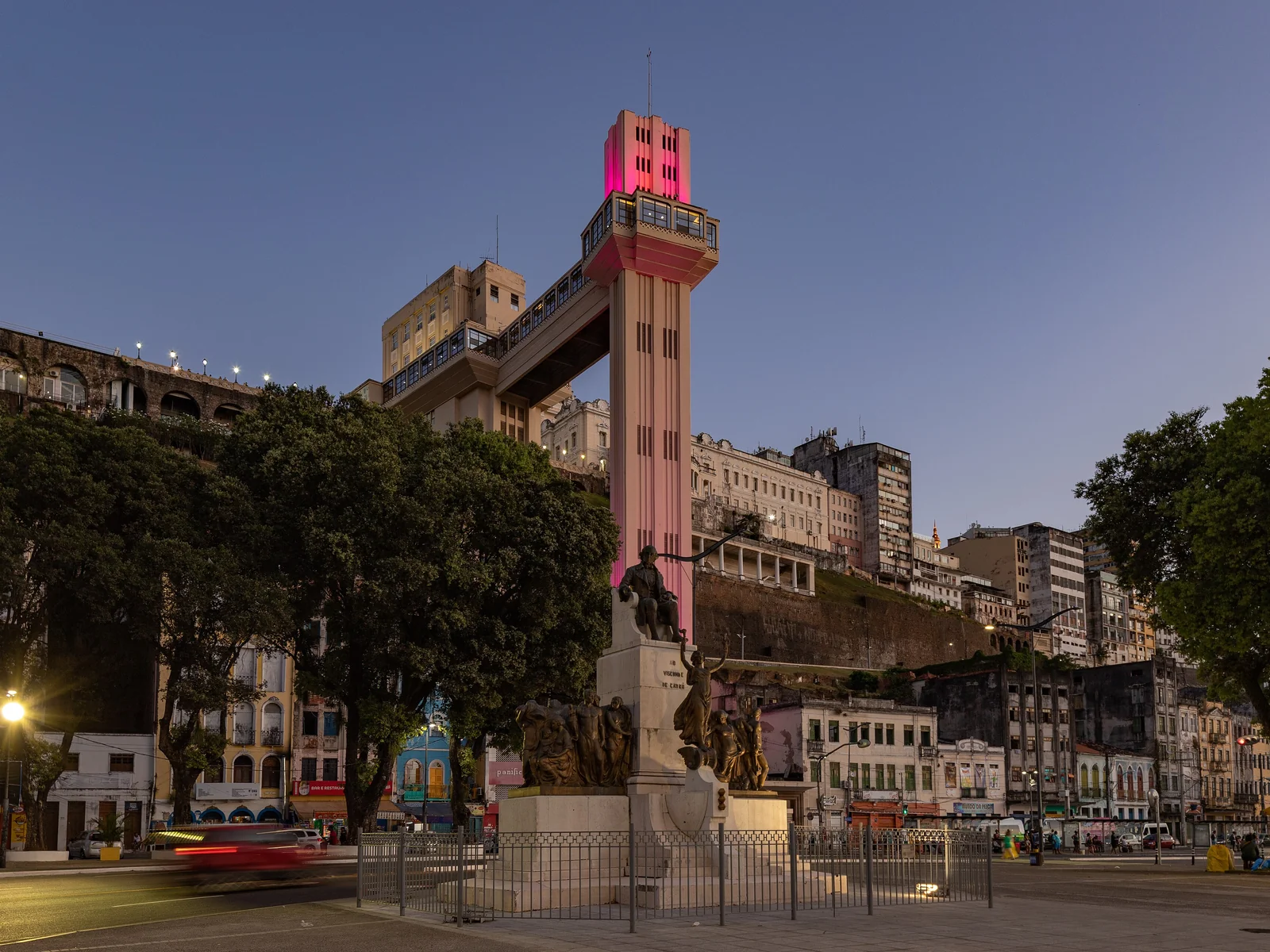
The Museu Afro-Brasileiro (MAFRO/UFBA) sits inside the old Faculdade de Medicina, on the Praça Terreiro de Jesus — Brazil's first medical school (1808). It is small, free, and absolutely essential. Five rooms covering the transatlantic trade, life on the sugar mills, religion, food, and contemporary Afro-Bahian culture. The most striking piece is the set of 27 wooden panels carved by Carybé in 1968–69, depicting the orixás at monumental scale — originally commissioned for the Banco da Bahia and transferred to the museum in 1982. Carybé (1911–1997) was the Argentine-Bahian artist who painted Bahia more than any Brazilian, and the orixá panels are the iconographic masterpiece of Afro-Bahian visual culture.
Pair the visit with the neighboring Museum of Ethnology and Archaeology (MAE), in the same building, and the Cathedral Basilica of Salvador, across the square — the church where the Jesuits baptized newly arrived enslaved people, before it was elevated to a cathedral in 1933.
The Jorge Amado House and the literature of Black Bahia
In the heart of the Pelourinho, at Largo do Pelourinho 51, stands the Jorge Amado Foundation. Jorge Amado (1912–2001) is the writer who made Bahia legible to the world — Captains of the Sands, Gabriela, Clove and Cinnamon, Tieta, Dona Flor and Her Two Husbands. More than a novelist, he was an ethnographer of Afro-Bahian culture: he was the man who introduced candomblé, capoeira, and Bahian cooking to the Brazil-outside-Bahia, with a sensuality that scandalized the conservative critics of the 1950s and 60s. The house is now a cultural foundation with a library, permanent exhibition, and lecture cycles. Entry R$ 5. Go especially for the collection of first editions in more than forty languages.
Other essential reading for understanding Black Bahia: Antônio Risério (A History of the City of Bahia), João José Reis (Slave Rebellion in Brazil, on the 1835 Malê Revolt), and Pierre Verger (Notícias da Bahia, 1850 and the orixá essays).
Quilombos and resistance — the other capital
Afro-Brazilian history is not only captivity. Around Salvador, dozens of quilombos — communities of fugitive enslaved people — were founded, some still existing as remaining quilombola communities, recognized by the 1988 Constitution and titled by INCRA. The best known in the Recôncavo are Quilombo do Cabula (now a Salvador neighborhood), Quilombo Rio dos Macacos (still fighting for title), and Quilombo do Engenho da Ponte (in São Francisco do Conde).
Further out, in the Chapada Diamantina, the Vale do Capão is one of the oldest visitable rural quilombola communities in Brazil — and the Remanso community, in Lençóis, was the gateway to nineteenth-century diamond mining (Bahia is where the diamond was rough before it became a jewel in Antwerp).
The Malê Revolt — the Bahia that almost was
On January 25, 1835, on the eve of the Bonfim feast day, Muslim Africans — called malês, from the Yoruba imale (Muslim) — staged one of the largest urban slave revolts in the Americas. The plan was to occupy Salvador, free the enslaved, deport the white elite, and establish an Afro-Bahian Islamic republic. The revolt was crushed in a single night, with at least 70 Africans killed in combat and hundreds imprisoned, but the shock it produced changed colonial policy: from 1835 on, Bahia and Pernambuco hardened surveillance, planted informants among the enslaved, and the fear of another Malê Revolt was cited for decades in every debate over abolition.
It is Brazil's least-known major story — and its most revealing. To go deeper, read João José Reis's Slave Rebellion in Brazil, the definitive book on the subject. The Memorial dos Malês, in the Comércio district, is small and free.
Lavagem do Bonfim — syncretism on the street
Every second Thursday of January, two million Bahians follow an eight-kilometer procession from the Conceição da Praia Church (in the lower city) to the Igreja de Nosso Senhor do Bonfim (in the Bonfim neighborhood). It is the Lavagem do Bonfim — one of the oldest and most syncretic religious festivals in the world. Hundreds of baianas in white, with baskets of flowers and scented water, ritually wash the church steps, symbolically "cleaning" the temple for the new year. The Catholic Senhor do Bonfim is, in candomblé, Oxalá — the father of all orixás, dressed in white. That's syncretism: everyone is praying to the same orixá, and each calls him by another name.
The festival starts at 8 a.m. with the trio elétrico departure and ends around 2 p.m. with the procession on the Bonfim hilltop and the Thursday lunch at neighborhood bars. It is not a tourist event — it is a Salvador event with tourists in it. Wear white. Don't drive; Uber to Comércio and walk the procession.
Festa de Iemanjá — February 2
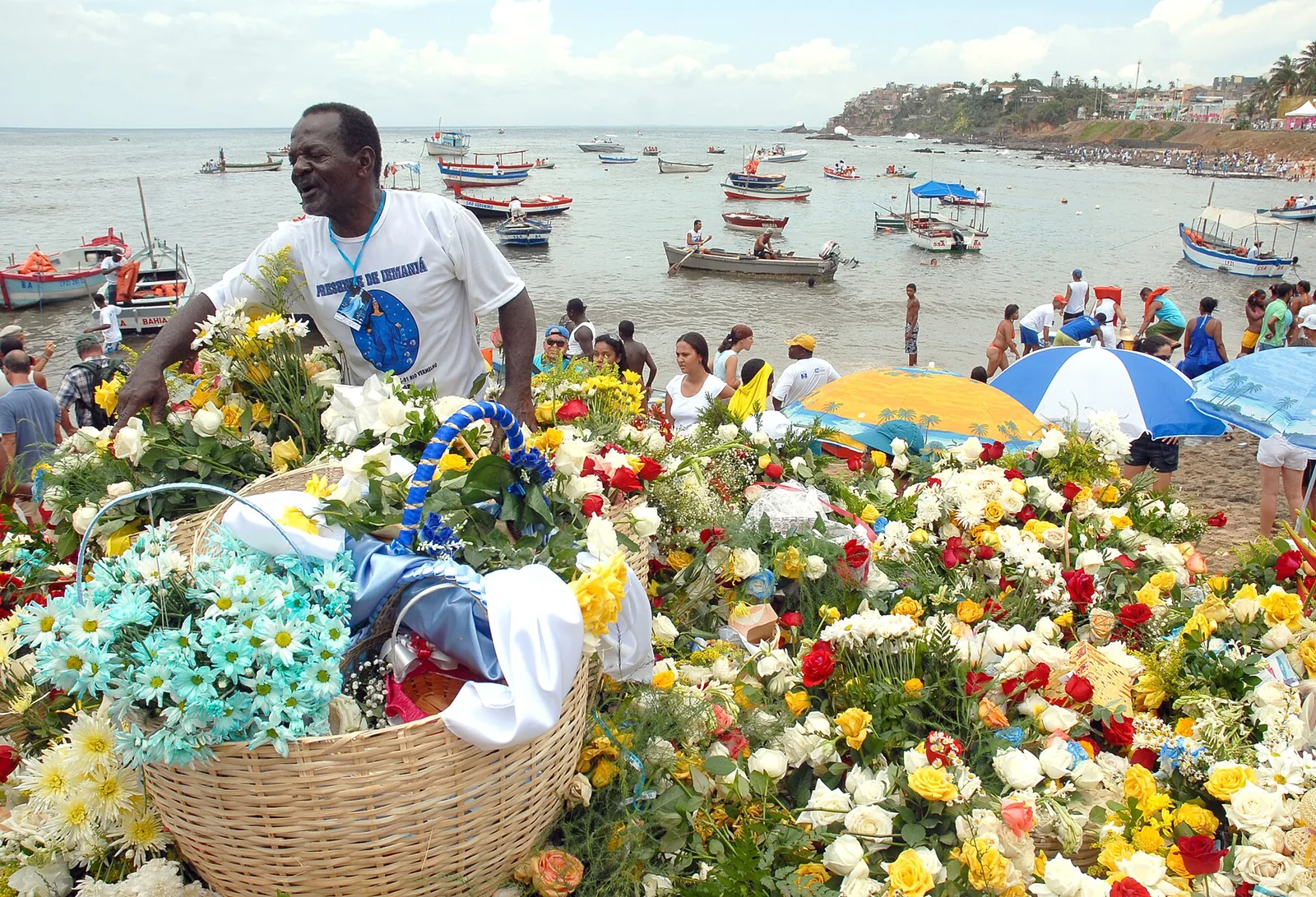
Twenty days after the Lavagem, on February 2, the Rio Vermelho beach hosts the largest popular festival to the orixá Iemanjá, mother of the waters. Hundreds of thousands of people, in blue and white, bring offerings — flowers, perfumes, mirrors, soap, letters — in baskets that fishermen carry out by boat to be deposited at sea. The principal offering departs at 4 p.m. from the Casa do Peso, the small century-old terreiro next to the beach. By night, all of Rio Vermelho is in festival: kiosks, bands, axé music loud, and the bars (Cantina da Lua, Cassio Olho-Maluco, the Mariquita classics) running till dawn. It is the largest popular Afro-Brazilian religious festival in the world. Wear blue and white; bring a small personal gift (a white rose, a perfume) to deliver yourself with your offering.
How to visit with respect
Some practical notes. Clothing: white in any terreiro, any Iemanjá festival, the Lavagem do Bonfim, and the Tuesday Pelourinho mass. Language: never say "macumba" (pejorative); say candomblé or religion of African origin. Photography: never inside the saint's room, never during trance, never without permission. Money: Afro-cultural tourism in Salvador is not expensive — museum tickets R$ 5 to R$ 15, capoeira R$ 10 to R$ 20 to watch a roda, the Rosário mass is free.
For deeper immersion, Via Avantgarde arranges half-day or full-day programs with academic guides — Bahian historians and anthropologists, generally affiliated with UFBA, who lead the Pelourinho-Bonfim-Terreiro circuit at a depth no guidebook reaches. Around R$ 600 to R$ 1,200 per group depending on length. Mention it when you book.
Half-day itinerary: cultural Pelourinho
For guests who want to see the essentials in one shift: 9:00 — Igreja de São Francisco (45 min); 10:00 — Praça Terreiro de Jesus, Cathedral, Museu Afro-Brasileiro (1 h 15); 11:30 — descent of the Largo do Pelourinho to the Casa de Jorge Amado (30 min); 12:00 — Igreja de Nossa Senhora do Rosário dos Pretos (30 min); 12:30 — moqueca lunch at Maria Mata Mouro or Uauá, both in the Pelourinho. If it's Tuesday or Sunday, stay until 5 p.m. for the open capoeira roda. Total cost, including entries, guide, and lunch: R$ 250 to R$ 350 per person.
The Pelourinho at night
The Pelourinho is one of the few areas of the historic center that stays alive at night, especially Tuesdays and Fridays. Terças da Bênção — a long-running cultural program that begins with the 6 p.m. mass at São Francisco and continues with sets by Olodum, Filhos de Gandhi, and samba-reggae bands at the Largo Tereza Batista and Largo Quincas Berro D'água — is one of the city's most authentic experiences. Free or symbolic ticket (R$ 5 to R$ 15). The Pelourinho is safe to walk until 11 p.m.; after that, take an Uber.
Via guests, in the Cidade Alta a 5–10 minute walk from the Pelourinho, have the full geographic advantage: walk to dinner, walk home, live the Pelourinho's nights as neighbors, not as bus passengers.
Salvador, in images
Photographs of the neighborhood, restaurant, and beach featured in this guide, with credit to each photographer.

Ready to discover Salvador?
Book one of the four Via Avantgarde suites in the Pelourinho — and receive the complete guides with recommendations for your stay.