The Lavagem do Bonfim the biggest festival after Carnival
Guide to the Lavagem do Bonfim in Salvador: when it happens, the baianas' 8 km procession, the washing of the steps, its origin in slavery and how to experience it.
The essentials in 30 seconds
The Lavagem do Bonfim — the Washing of the Bonfim — is Salvador's biggest festival after Carnival: a January morning when hundreds of baianas in white lead an eight-kilometre procession from the lower city to the Colina Sagrada and wash the steps of the Bonfim church with scented water and flowers. More than a million people follow, and what starts as a devotion turns into a vast street party that effectively opens the city's summer festival season. This guide explains what happens and when, the origin most visitors never hear, where to stand, what to wear, and how it connects to the wider January-to-Carnival calendar. It is free, joyous and hot — come prepared.
What the Lavagem is
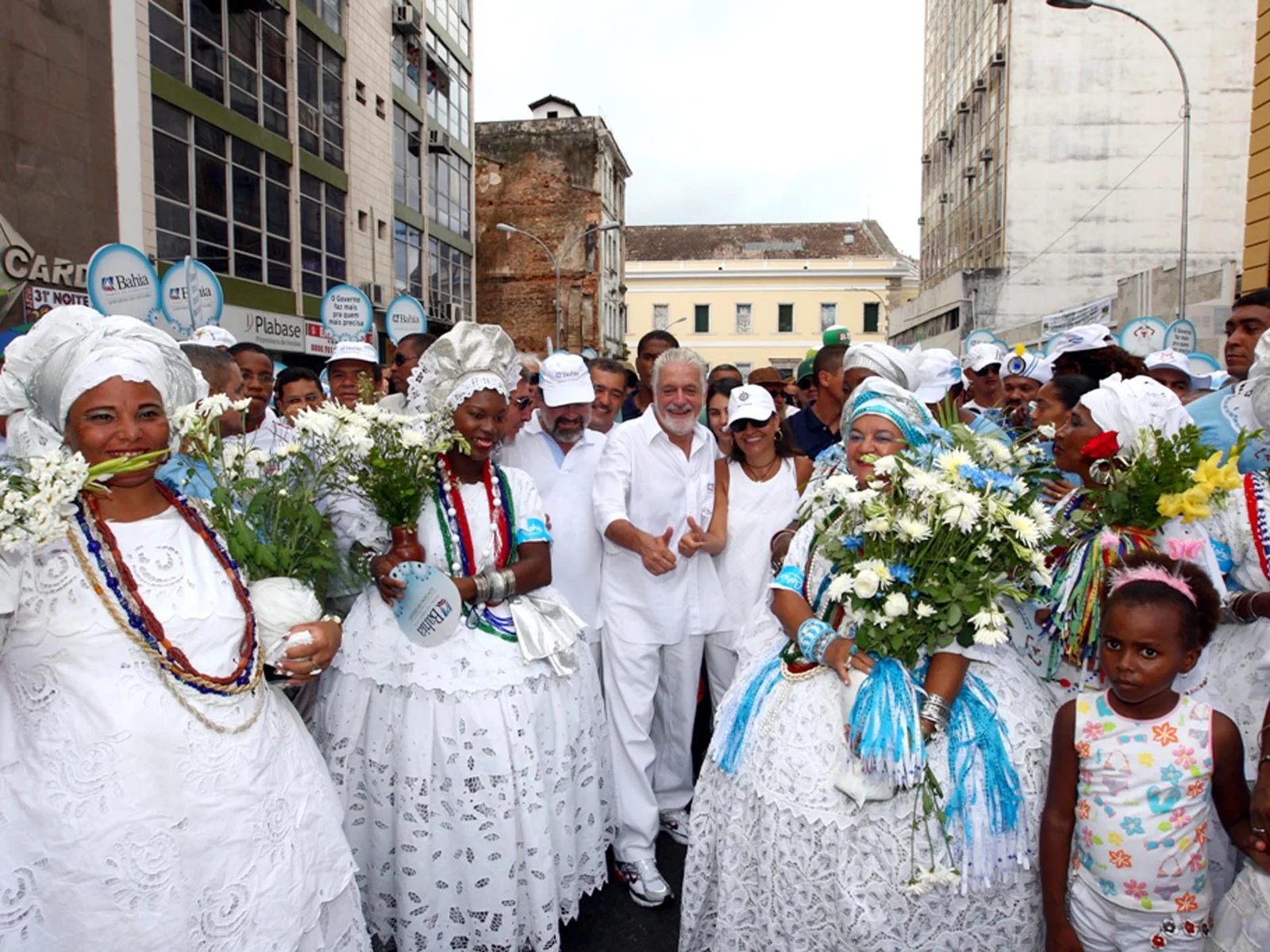
The Lavagem do Bonfim is a ritual washing of the Igreja do Senhor do Bonfim, the most venerated church in Bahia, and it is the loudest single expression of the city's double faith. Traditionally held on the second Thursday of January, it centres on the baianas — women in the full white lace dress of Bahia — who carry clay pots of água de cheiro, perfumed water, on their heads for eight kilometres and then wash the church's forecourt and steps in a slow, dancing rite. It is at once a Catholic act of devotion to the Senhor do Bonfim and a candomblé homage to Oxalá, the orixá he is syncretised with, and nobody in the crowd finds that strange. For how that syncretism works, our candomblé guide is the background.
The eight-kilometre procession
The day is built around the walk. The procession forms in the morning at the Igreja da Conceição da Praia, down in the Comércio near the Mercado Modelo, and moves the full eight kilometres out along the bay to the Colina Sagrada on the Itapagipe peninsula. At the front are the baianas and the religious brotherhoods; behind them comes everyone else — families, blocos, drink carts, sound trucks and tens of thousands on foot — so the tail of the procession is already a party while the head is still a prayer. The whole thing takes hours and moves at a shuffle; you do not need to walk all of it, and most visitors join partway or wait near the hill for it to arrive around midday.
The washing — and the closed doors
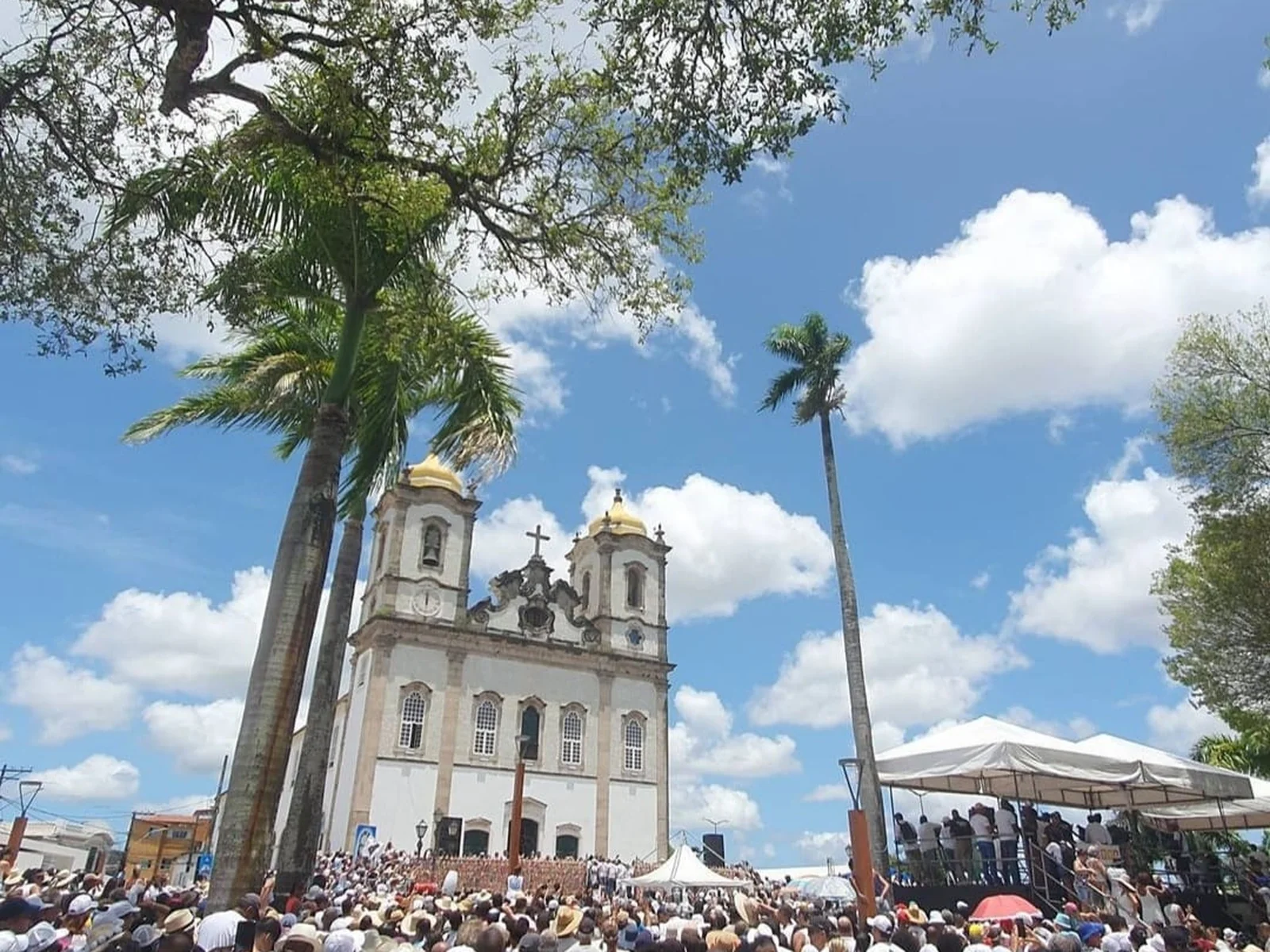
When the baianas reach the church, they climb the steps and wash them, sweeping the scented water and white flowers across the stone in a rhythm set by drums and song. Watch one detail closely: the church doors stay shut. For generations the Catholic hierarchy has kept the basilica closed during the washing, uneasy at a rite so openly shared with candomblé — so the most famous religious image in Bahia is of a devotion happening on the threshold of a locked church. That tension is the whole story of Salvador in a single frame, and it is why the Lavagem feels less like an official ceremony than like the city insisting on believing its own way.
The origin most visitors never hear
The ritual was born in coercion. In the eighteenth century, enslaved Africans were made to clean and prepare the church for its patronal feast, hauling water up the hill to scrub the building for their masters' worship. Out of that forced labour the enslaved and freed Black population made something of their own: they turned the cleaning into a procession, carried it in their own dress, set it to their own drums, and folded their own orixás into the Catholic saint. What looks today like a picturesque folk custom is in fact an act of cultural survival — a people taking a chore imposed on them and remaking it as their own celebration. That deeper history runs through our Afro-Brazilian heritage guide.
How to experience it
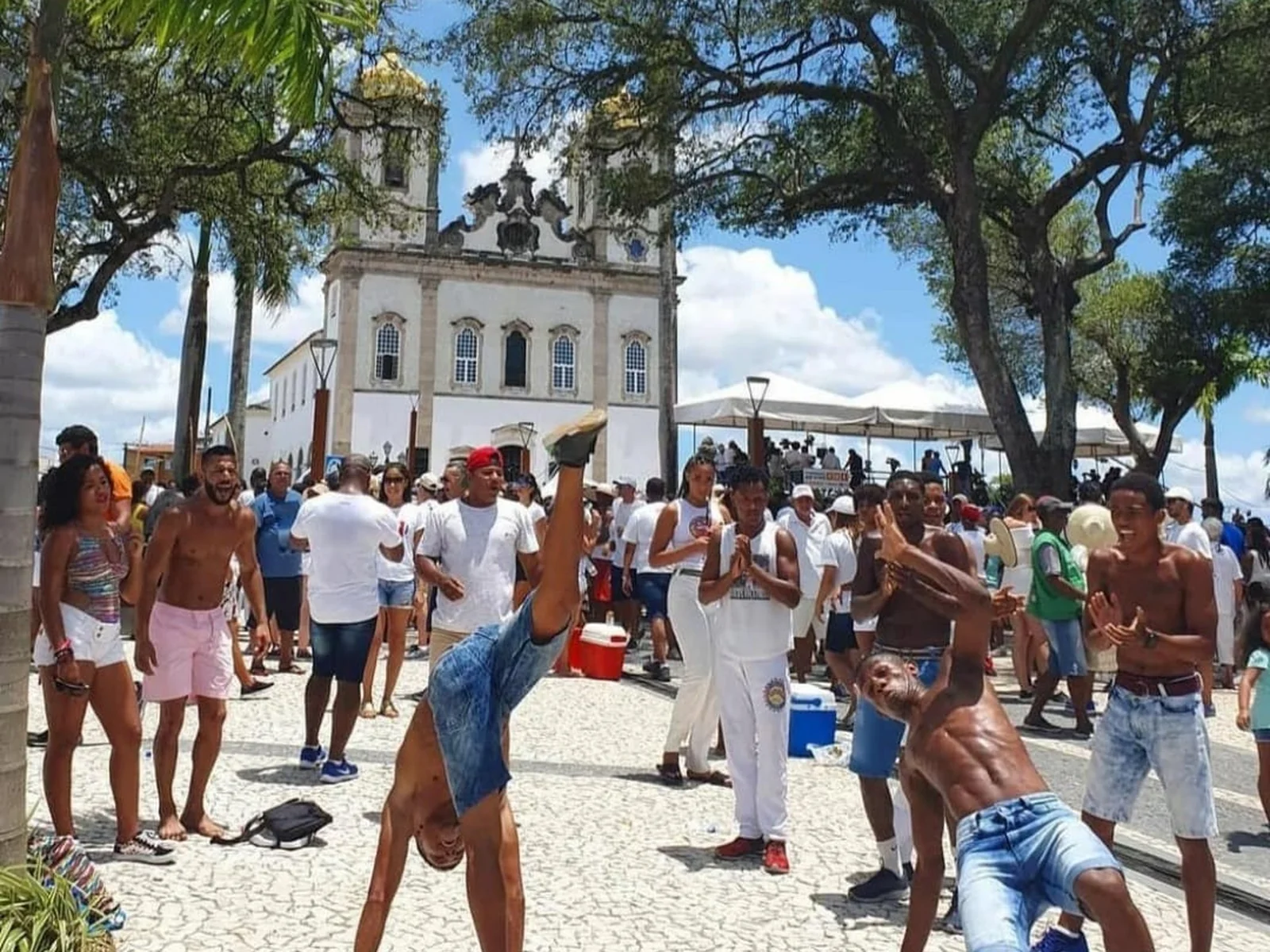
You have three good options. Walk part of the procession for the atmosphere; stake out a spot near the top of the hill by late morning to watch the baianas arrive and wash the steps, which is the emotional core; or treat it mainly as the party it becomes and settle in around the Bonfim square, where the beer, the music and the crowd run into the evening. Wear white — it is the colour of the day and of Oxalá, and you will feel out of place in anything else. Beyond that, come as you would to any huge outdoor event in peak summer heat, and give yourself over to it; the Lavagem rewards people who join in rather than watch from the edge.
Where it fits — and where to stay
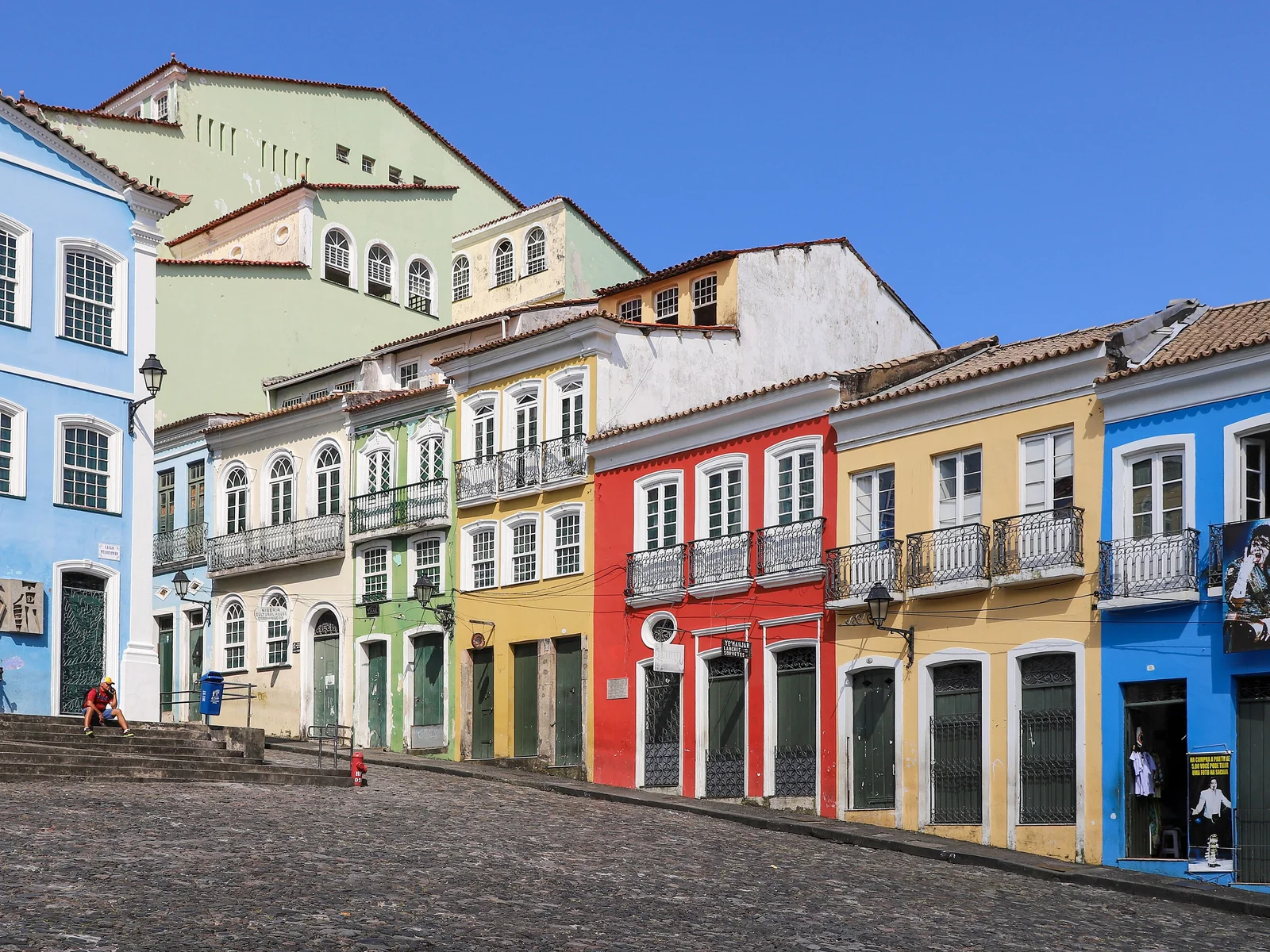
The Lavagem is the opening note of the best time of year to be in Salvador. It runs into the Festa da Ribeira the following Monday, then the Festa de Iemanjá on 2 February, and finally into Carnival — a two-month crescendo of street celebration. If you are timing a trip to catch it, base yourself in the historic centre: the procession begins a few minutes downhill near the Mercado Modelo, and being able to walk home from the day rather than fight for a taxi is worth a great deal. Our four suites sit up in the Cidade Alta, right by the top of the Elevador Lacerda; have a look at our four suites if you are planning a January stay.
Salvador, in images
Photographs of the neighborhood, restaurant, and beach featured in this guide, with credit to each photographer.
Ready to discover Salvador?
Book one of the four Via Avantgarde suites in the Pelourinho — and receive the complete guides with recommendations for your stay.