The Museums of Salvador the ones worth your afternoon
Museums in Salvador, Brazil: MAM's Saturday jazz on the bay, Carybé's orixá panels at MAFRO, the Casa do Carnaval and six more — hours, prices and what to skip.
The essentials in 30 seconds
The museums in Salvador, Brazil are small, cheap and uneven — and the best of them explain the city faster than any walking tour. Three to plan around: MAM-BA, the modern-art museum in a colonial estate right on the water, at its best on the Saturday evenings when the JAM no MAM jazz session takes over the courtyard; MAFRO on the Terreiro de Jesus, home of Carybé's carved orixá panels; and the Casa do Carnaval, which is more fun than a museum has any right to be. Nothing charges more than R$ 20 (around €3), several are free, and nearly everything closes on Mondays. Grouped by neighbourhood, none of it needs more than half a day at a time.
How museums in Salvador actually work
Adjust your expectations and you'll have a better week: these are not the institutions of São Paulo or Mexico City. Collections are compact, air conditioning is intermittent, and captions are mostly Portuguese, with English catching up room by room. What you get instead is proximity — the story of the Atlantic slave trade told a hundred metres from where it happened, Carnival explained a block from where it runs — and prices that barely register. Full tickets top out at R$ 20, students and over-60s pay half at the ticketed ones, and the state-run art museums are simply free. The whole list below, admission included, costs less than a single museum entry in most European capitals.
The one rule that will bite you: Mondays. MAM, MAB, the contemporary-art palacete and all the city-run museums are shut. The exceptions are the Museu Náutico in the lighthouse, which opens daily, and MAFRO, which keeps university hours because it is a university museum — weekdays only, 9 am to 5 pm, closed Saturday and Sunday. Plan the Pelourinho museums for a weekday morning and you dodge both traps at once.
MAM-BA at the Solar do Unhão — and the Saturday-night jazz
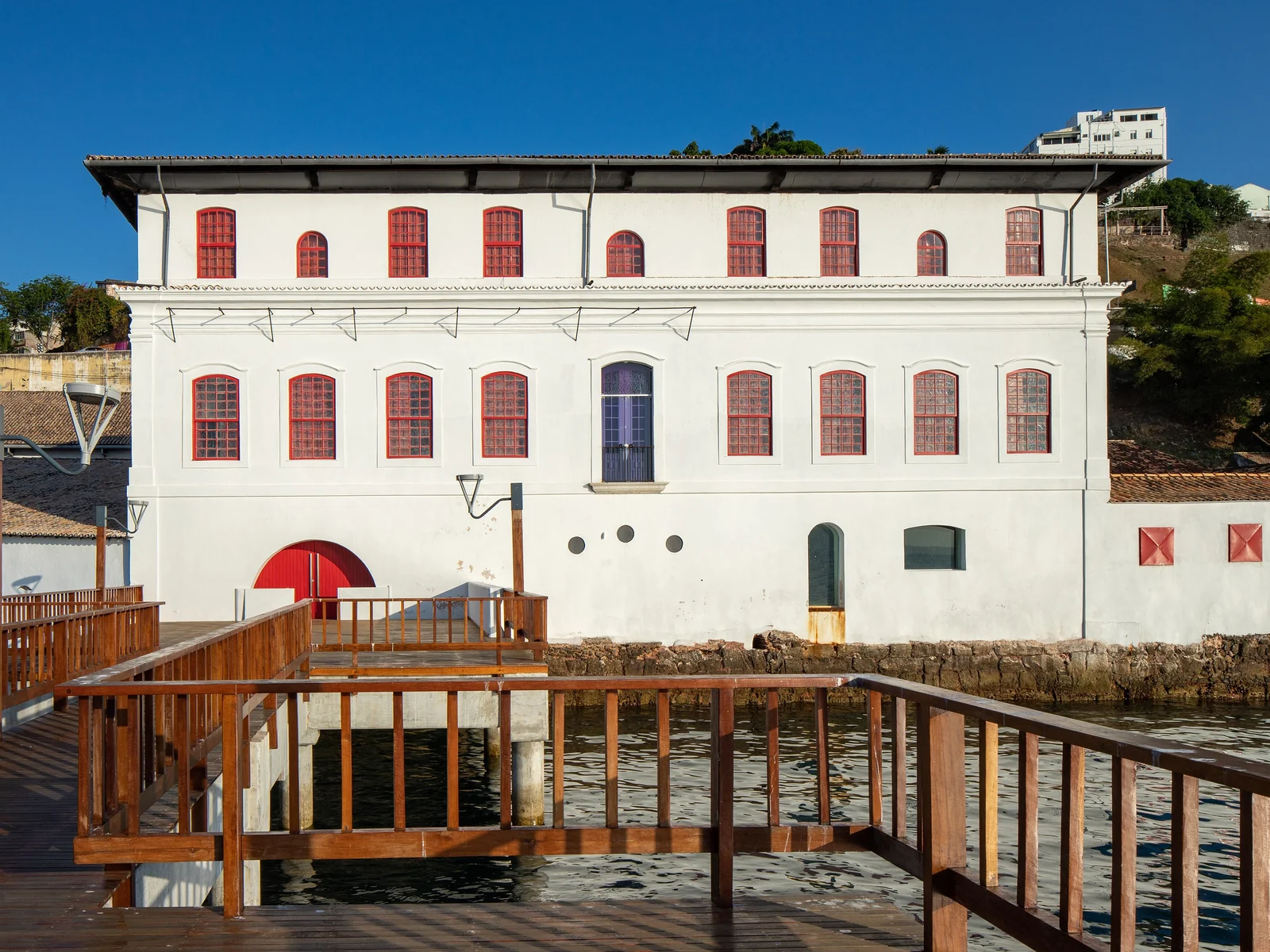
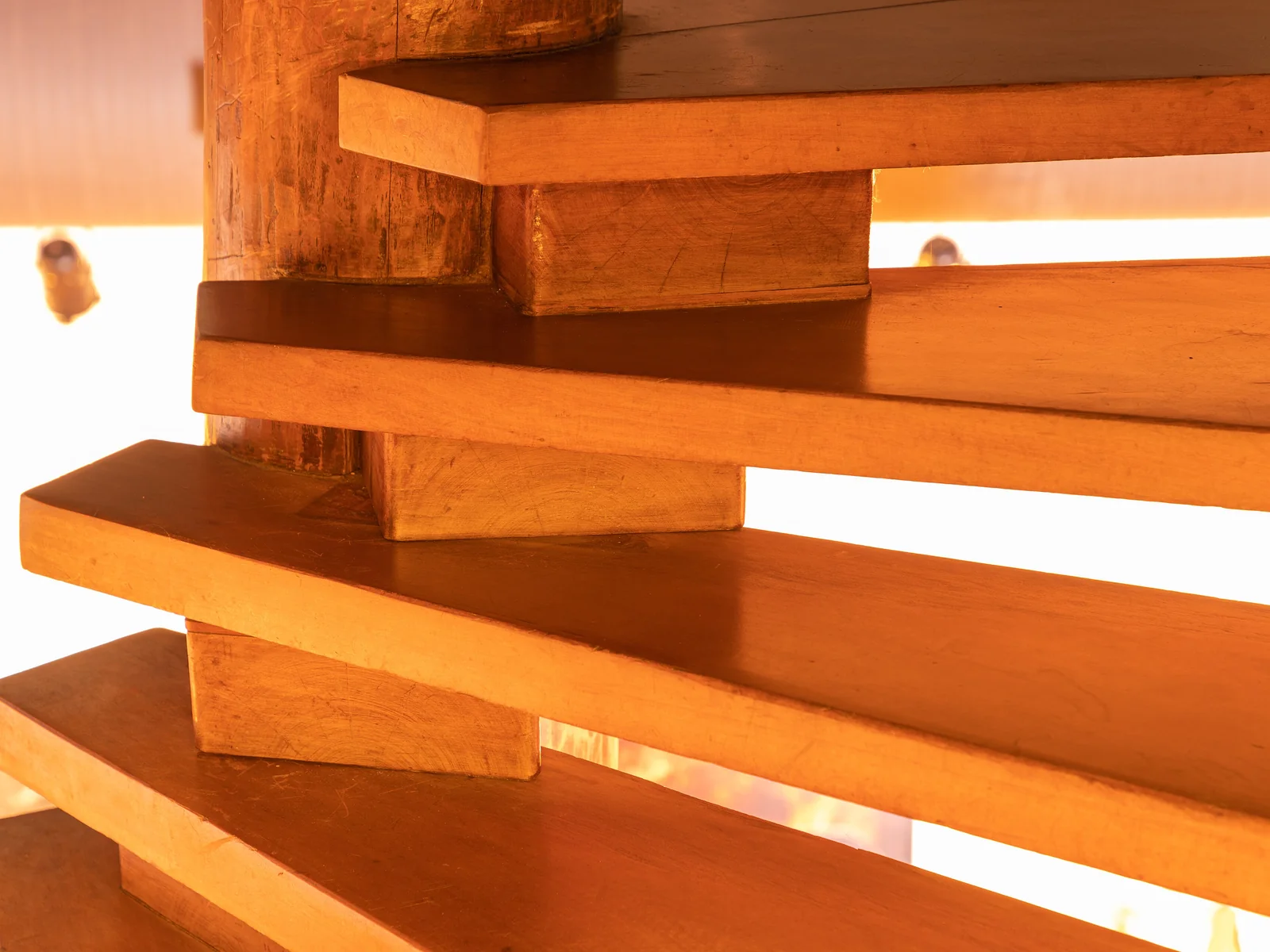
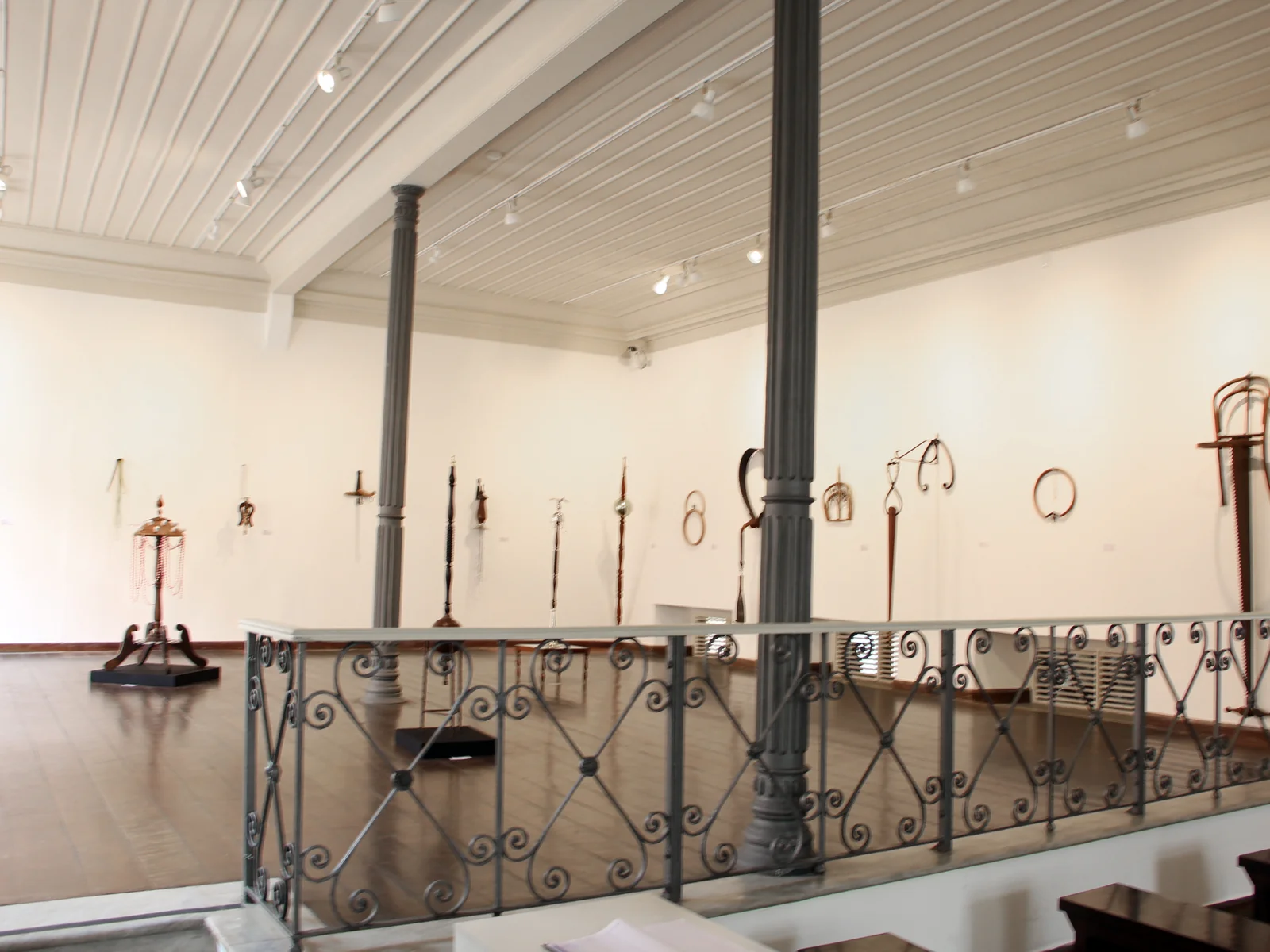
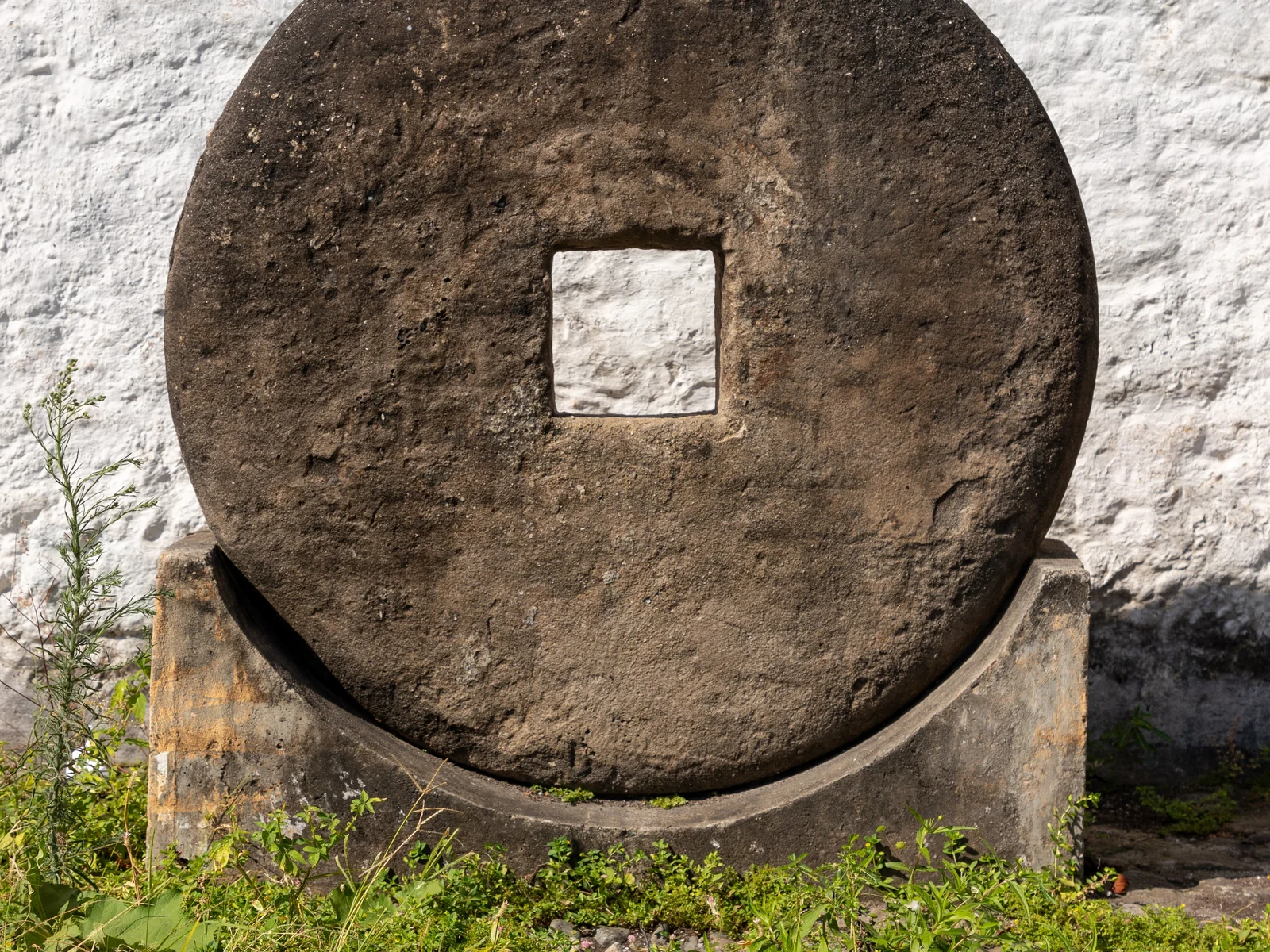
The Museu de Arte Moderna da Bahia occupies the Solar do Unhão on the Avenida Contorno, a seventeenth-century waterfront estate — big house, chapel, mill and the quarters of the enslaved people who worked it — stacked between the cliff and the Baía de Todos os Santos. The museum has been here since 1963, when the architect Lina Bo Bardi restored the complex and built, in the main house, a helicoidal wooden staircase joined like an ox-cart, without a single nail; it has been the museum's calling card ever since. The galleries rotate Bahian modernists and contemporary shows, and the sculpture garden on the sea wall is reason enough to come. Entry is free; hours are Tuesday to Friday 1 pm to 7 pm, weekends and holidays 2 pm to 7 pm. Sunset from the ramp, with the bay going orange behind the sculptures, costs nothing and outclasses a fair amount of what hangs inside.
Then there is JAM no MAM, the museum's long-running jazz session and, by our measure, the single best museum-adjacent thing in the city. On selected Saturdays — roughly every other week; as of mid-2026 the calendar lists dates from August through December — the courtyard becomes an open-air stage. Gates open at 5 pm, the music runs 6 to 9 pm, and the house band Geleia Solar plays jazz standards with a Bahian accent, plus invited guests. Tickets are sold through Sympla in tiers from R$ 10 to R$ 40, half-price versions of each, and the cheap tiers sell out first. Come for the 5 pm light, stay for the drums.
Terreiro de Jesus: MAFRO and Carybé's orixás
The Museu Afro-Brasileiro fills part of the old Faculdade de Medicina on the Terreiro de Jesus — Brazil's first medical school, now part of the federal university — and it is the museum to keep if you can keep only one. The collection walks from West Africa to Bahia: masks, textiles, divination trays, and the ritual objects of candomblé presented as a living religion rather than a curiosity. The last room is the reason to come. Carybé's Mural dos Orixás — twenty-seven cedar panels, each three metres tall, inlaid with metal and shell, one for each orixá with its emblems and animals — was commissioned for a bank headquarters, finished in 1968, and ended up on long-term loan here, which is where it belongs. Entry R$ 10, half R$ 5; weekdays only, 9 am to 5 pm. Give it ninety minutes, and read our Afro-Brazilian history guide first — the rooms land differently with the background in place.
Around the cathedral: Casa do Carnaval and the Memorial das Baianas
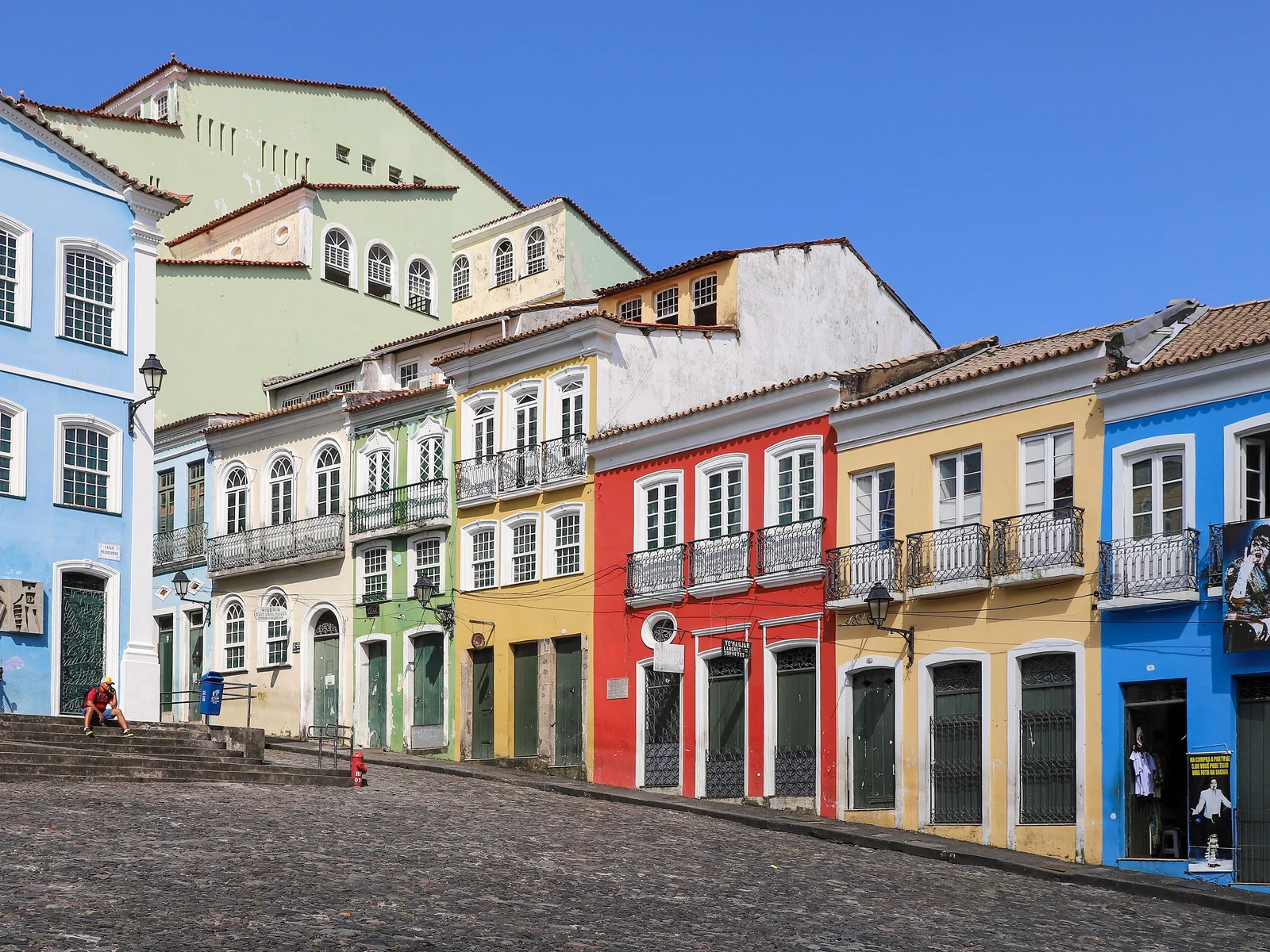
Two minutes apart, both an easy walk from anywhere in the historic centre — our Pelourinho guide puts them on a map. The Casa do Carnaval da Bahia, on the Praça Ramos de Queirós just behind the cathedral, opened in February 2018 with a curatorship by the designer Gringo Cardia, and it treats the world's biggest street party as something worth studying: costumes, the history of the trio elétrico, film rooms of past parades, and a final hall where staff teach you bloco choreographies. Nobody leaves bored. Tuesday to Sunday, 9 am to 5 pm, last entry 4 pm; R$ 20, half R$ 10, free on Wednesdays. Two hours if you dance, one if you won't.
The Memorial das Baianas, beneath the Cruz Caída sculpture on the Praça da Sé, is a single-subject museum about the women who sell acarajé — the starched white dress, the turbans, and a trade registered with IPHAN as intangible national heritage. It costs R$ 5, opens Monday to Saturday on short hours, and takes twenty minutes. See it before you eat from a tray; the fritter tastes different once you know what the uniform carries. Our Bahian food guide covers the eating half.
Below the bluff: Cidade da Música da Bahia
Down in the Comércio, in the blue-tiled mansion at Praça Visconde de Cayru 19 — a minute from the base of the Elevador Lacerda — the Cidade da Música da Bahia opened in September 2021 and is the most modern museum in the state: four floors on Bahian music from samba de roda to axé, more than 740 hours of recordings and interviews behind touchscreens, listening rooms, and booths where you record yourself singing over classic tracks. It is genuinely good with children and dangerous for anyone who likes headphones; ninety minutes evaporate. Tuesday to Sunday, 9 am to 5 pm, last entry 4 pm; R$ 20, half R$ 10. Pair it with the Mercado Modelo across the square, and if it lights a fuse, our music and nightlife guide tells you where the live version happens.
Vitória and Graça: MAB and the Palacete das Artes
The Museu de Arte da Bahia, at Avenida Sete de Setembro 2340 on the Corredor da Vitória, is the state's conventional one: colonial furniture, porcelain, fans, and engravings and maps of the old city, rehung after a phased restoration that ran from late 2023 into 2025. Entry is free; afternoons only — Tuesday to Friday 1 pm to 6 pm, weekends 1 pm to 5 pm. Honest verdict: if your time is short, this is the skippable one, unless quiet rooms of decorative arts are your idea of a holiday — in which case it is forty-five well-spent minutes on the way to Barra.
Ten minutes further, in Graça, the Palacete das Artes — an early-twentieth-century mansion built for the comendador Bernardo Martins Catharino — spent years as the Museu Rodin Bahia; since September 2023 it has housed the Museu de Arte Contemporânea da Bahia. The long Rodin plaster loan from Paris ended back in 2012, but four Rodin bronzes still stand in the garden, now sharing the grounds with video installations, a skateable sculpture and open-air film nights. Entry is free and it closes Mondays; the garden is one of the calmest places in the city to sit for half an hour. Go for the grounds and treat whatever show is on as a bonus.
Barra and Rio Vermelho: the lighthouse and the writer's house
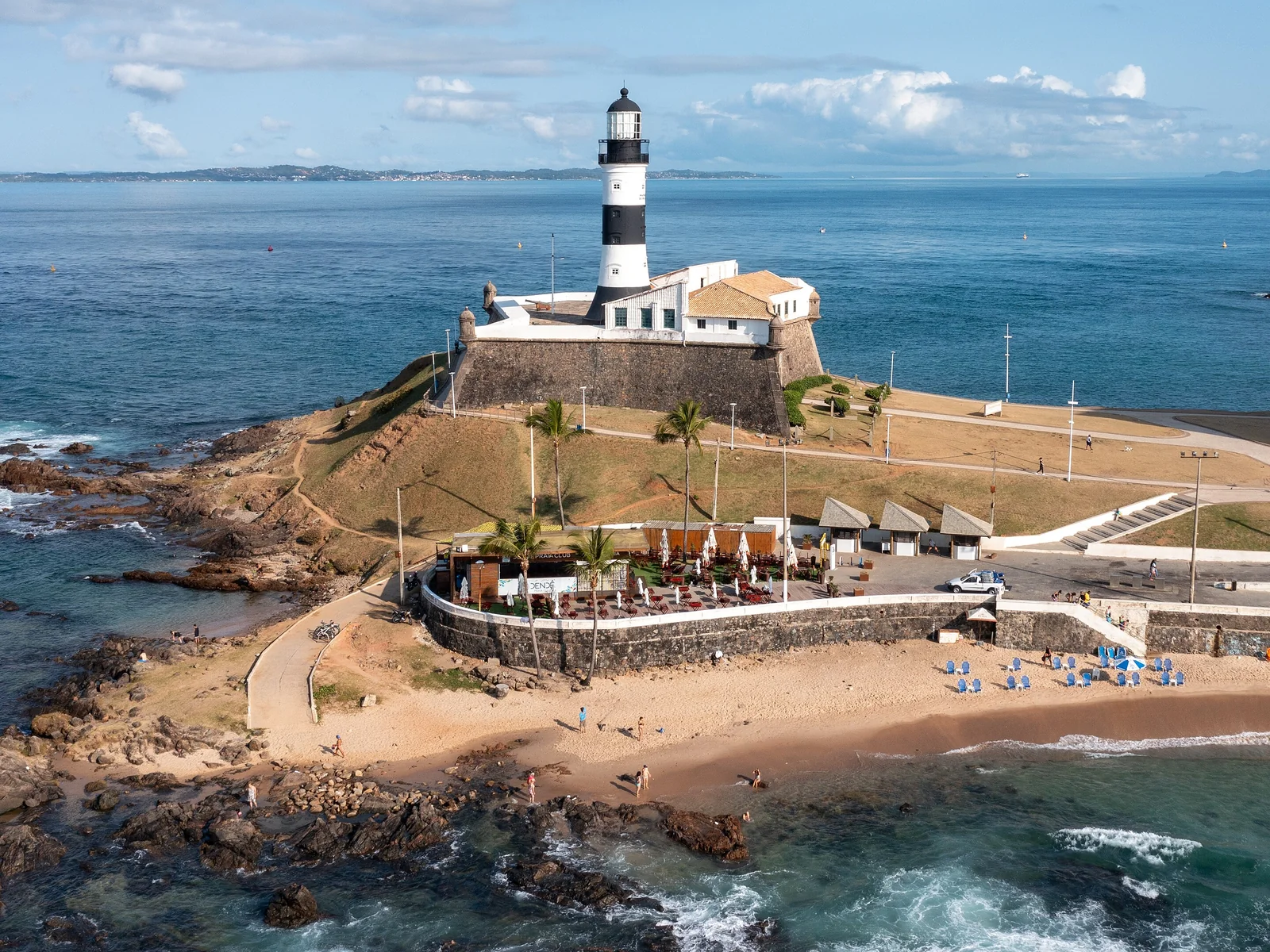
At the mouth of the bay, the Museu Náutico da Bahia has filled the Forte de Santo Antônio da Barra since 1998. The fort carries the Farol da Barra, finished in 1698 after the galleon Santíssimo Sacramento went down on the reefs here in 1668 — the oldest lighthouse in the Americas, first fuelled by whale oil. The best cases hold what divers raised from the Sacramento in 1976: cutlery, dishes, personal kit, ordinary things that make a 350-year-old shipwreck feel recent. Open daily, 9 am to 6 pm — one of the two on this list that ignore Monday — R$ 20, half R$ 10, and the terrace at sunset is a small Salvador ritual in its own right.
In Rio Vermelho, the Casa do Rio Vermelho at Rua Alagoinhas 33 is the house Jorge Amado and Zélia Gattai bought in 1960 — paid for with MGM's money for the film rights to Gabriela — and lived in for four decades. Opened to visitors after a long restoration, it is the least museum-like stop on this list: his study and typewriter, her photographs, the pool Sartre swam in, and, in the garden, the mango tree under which both writers' ashes are buried, marked by two tiled benches made by their friend Carybé. Readers of Amado should give it two hours; everyone else will still enjoy one. Tuesday to Sunday 9 am to 5 pm, last entry 4 pm; R$ 20, half R$ 10, free on Wednesdays.
Half-days that work (and the Monday problem)
The museums in Salvador cluster tightly enough that pairing them is easy. Plans that hold up in practice:
- Pelourinho weekday morning — MAFRO at opening, Casa do Carnaval at 11, the Memorial das Baianas for twenty minutes, lunch in the centre. The full historic-centre set, done by 1 pm.
- Comércio afternoon — ride the Elevador Lacerda down, do the Cidade da Música, browse the Mercado Modelo, ride back up. No taxis involved.
- JAM Saturday — MAM from 3 pm for the collection and the staircase, courtyard from 5, jazz until 9. The best single museum evening in the city, and it ends with the bay at night.
- Vitória to Barra — MAB at 1 pm, the Palacete garden afterwards, then the lighthouse museum and its terrace for sunset. All three sit on one bus-or-Uber line down the coast.
- Rio Vermelho morning — the Casa do Rio Vermelho early, then stay for the neighbourhood's lunch counters instead of trekking back.
And Monday? MAFRO and the lighthouse are open; everything else is dark. If the sky is dark too, our rainy-day guide reshuffles the same pieces around the weather.
Staying in the Cidade Alta turns most of this list into a stroll: from our suites by the Elevador Lacerda, MAFRO and the Casa do Carnaval are five minutes on foot, the Cidade da Música is one elevator ride, and the JAM courtyard is a short taxi along the water. See the museums in the morning and you're back before the afternoon heat peaks — with the whole evening left for the city that produced them.
Salvador, in images
Photographs of the neighborhood, restaurant, and beach featured in this guide, with credit to each photographer.
Ready to discover Salvador?
Book one of the four Via Avantgarde suites in the Pelourinho — and receive the complete guides with recommendations for your stay.